


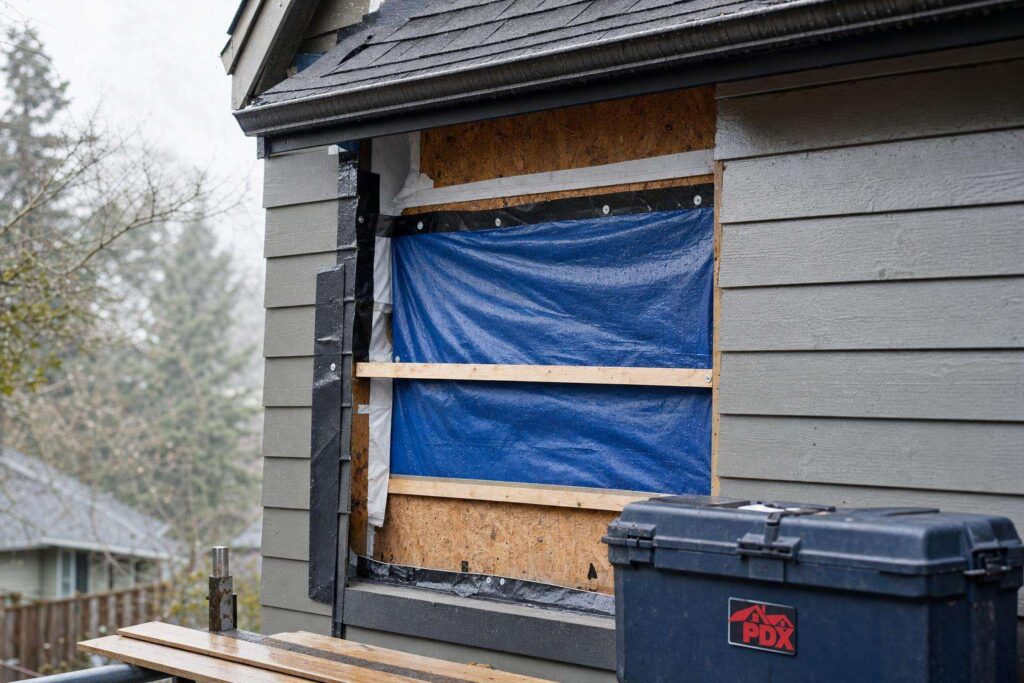
Why Temporary Weather Protection Matters During Siding Repairs
Planned siding repairs are often the right move when your exterior has localized damage, failing trim, loose panels, or moisture concerns. But once siding is removed, the wall assembly behind it can be more vulnerable to Portland rain, wind, and temperature swings.
Temporary weather protection helps reduce exposure while work is in progress. It is not a replacement for proper siding installation, but it is an important part of a well-managed repair plan. For homeowners in Portland, OR, this step is especially important because damp conditions can change quickly throughout the day.
What Temporary Weather Protection Is Designed to Do
During siding repair and maintenance, temporary protection is used to help shield exposed areas until permanent materials are installed. Depending on the project, this may include weather-resistant coverings, secured tarps, temporary flashing, or careful staging of work areas.
- Limit rain exposure: Helps keep open wall sections from taking on unnecessary moisture.
- Protect sheathing and framing: Reduces the risk of exposed structural components being affected by weather.
- Support a clean work sequence: Allows crews to remove and replace siding in controlled sections.
- Help identify hidden issues: Gives the contractor time to evaluate what is behind damaged siding without leaving areas exposed.
Common Situations That Call for Temporary Protection
Not every siding repair requires the same level of protection. The right approach depends on the repair area, weather forecast, product type, and condition of the wall behind the siding.
Localized Siding Damage
If only a small section of siding is being repaired, temporary protection may be limited to that work zone. This is common for isolated cracks, impact damage, or trim-related repairs.
Moisture Investigation
When siding is opened to check for hidden moisture, the repair area may need protection while the contractor determines the next step. If damaged sheathing or flashing is found, the scope may need to be adjusted before siding is closed back up.
Phased Siding Replacement
For larger siding replacement projects, crews may work in sections to reduce exposure. This is especially useful for homes with fiber cement siding or other exterior systems that require careful preparation and fastening.
Roofline and Wall Intersections
Areas where siding meets roofing materials, flashing, gutters, or trim need close attention. If an issue near the roofline is discovered, a Portland roofing contractor may also evaluate whether roof repair is needed to prevent ongoing water intrusion.
How a Professional Crew Plans Around Portland Weather
A licensed roofing company or siding contractor should think ahead before removing exterior materials. Temporary weather protection works best when it is part of the project plan, not an afterthought.
- Review the forecast: Crews should consider rain, wind, and temperature before opening large wall sections.
- Stage materials carefully: Siding, trim, wrap, flashing, and fasteners should be ready before removal begins.
- Work in manageable sections: Smaller open areas are easier to protect if the weather changes.
- Secure coverings properly: Temporary materials should be fastened to reduce movement from wind.
- Inspect before closing walls: The wall should be evaluated before new siding is installed over it.
Temporary Protection Is Not a Substitute for Correct Installation
Temporary coverings help protect your home during the repair process, but they do not solve underlying exterior problems by themselves. If water has been entering behind the siding, the source must be identified and corrected. That may involve flashing improvements, trim replacement, siding replacement, or related roof repair.
For homes with asphalt shingle roofing, roof-to-wall transitions should be reviewed carefully. Poor flashing details can affect both the roof and siding system. In some cases, roof installation or roofing materials may need to be discussed as part of broader home exterior upgrades.
What Homeowners Should Ask Before Work Begins
Before planned siding repairs start, it is reasonable to ask how your contractor will protect the home if weather changes. Clear expectations help prevent confusion and make the project easier to manage.
- Which sections of siding will be opened first?
- How will exposed areas be covered at the end of each workday?
- What happens if rain or high wind arrives during the project?
- Will the crew inspect sheathing, flashing, and trim before installing new siding?
- Who should the homeowner contact if there is a concern after hours?
If active leaking is discovered during siding or roof work, an emergency roof repair evaluation may be recommended depending on the location and severity of the issue.
Signs Your Siding Repair Plan May Need a Closer Look
Some exterior problems look minor at first but may point to a larger moisture issue. A careful contractor will explain what they see and recommend practical next steps without overstating the problem.
- Soft or swollen trim near windows, doors, or rooflines
- Staining below siding joints or penetrations
- Loose siding panels after wind or storm exposure
- Gaps around flashing, vents, or utility penetrations
- Interior staining that appears near an exterior wall
Plan Siding Repairs With Weather in Mind
Temporary weather protection is a key part of responsible siding repair in the Portland Metro area. It helps protect your home while crews complete the work, assess hidden conditions, and prepare the wall for long-term performance.
Pdx roofing and siding provides knowledgeable exterior guidance for roofing, siding repair, siding replacement, and related home exterior upgrades in Portland, OR. Services and offers are subject to availability and approval.
Schedule Exterior Service With Pdx roofing and siding
If you are planning siding repairs and want a contractor who understands Northwest weather, contact Pdx roofing and siding to discuss your project and protection plan. For practical next steps, Book roof installation service and talk with the team about timing, scope, and the right path for your situation.