
Why Saving Siding Materials Matters
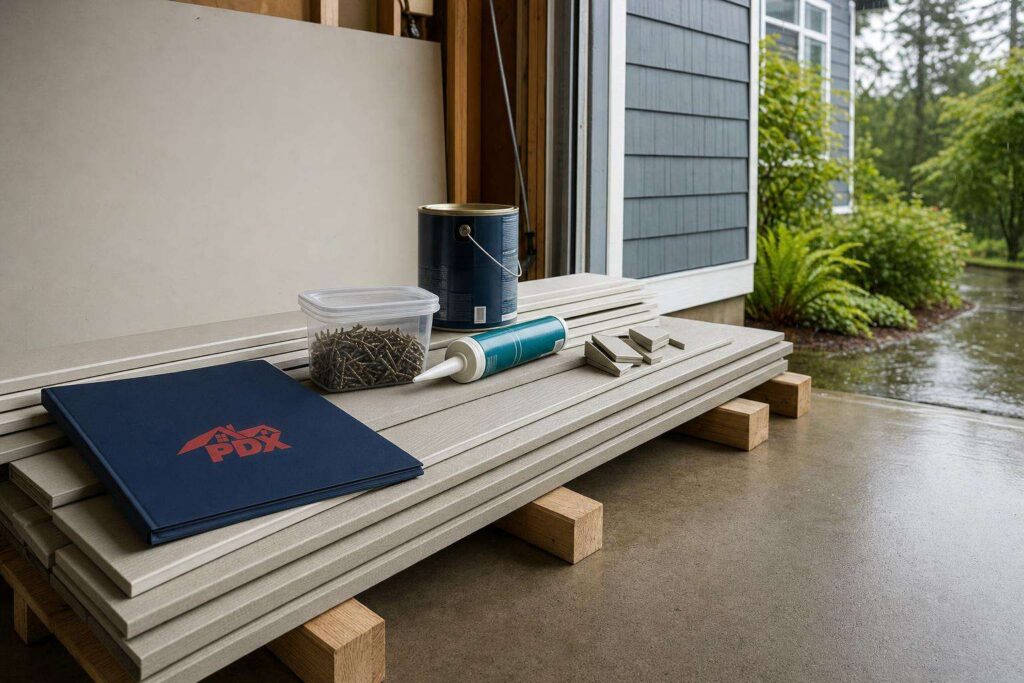
After a siding replacement or repair, it can be tempting to clear everything out and move on. But keeping a small, organized set of leftover materials can make future siding repair and maintenance much smoother.
Color batches, product profiles, textures, trim sizes, and accessory pieces can change over time. If a branch, moisture issue, or exterior upgrade affects one area of your home later, having matching materials on hand gives your contractor a better starting point.
For Portland Metro homeowners, this is especially helpful because Northwest weather can expose small exterior issues quickly. A little planning now can support cleaner home exterior upgrades later.
Siding Materials Worth Keeping
Extra Siding Boards or Panels
If your project includes fiber cement siding, engineered wood, vinyl, or another siding material, save a few clean, undamaged pieces if storage space allows. These can help with color matching, profile matching, and small-area replacement planning.
- Keep pieces with the same texture and exposure as your installed siding.
- Label them with the project date and installation area.
- Store them flat or supported according to the material type.
Trim, Corners, and Accessory Pieces
Trim can be just as important as the siding itself. Corners, starter strips, channels, fascia-related trim, and specialty profiles may be harder to match later than standard boards.
- Save short lengths of trim that are still straight and usable.
- Keep inside and outside corner pieces if your system uses them.
- Protect finished surfaces from scratches during storage.
Paint, Stain, or Coating Information
If your siding was painted or finished as part of the project, keep the paint can label, color name, sheen, product line, and any formula information. Even if you do not keep the container long term, a clear photo of the label is useful.
Paint and coatings have shelf-life limitations, so follow the manufacturer’s storage guidance. For future color matching, the label details can still help a professional start in the right place.
Sealants, Caulking, and Product Labels
Exterior sealants are selected for movement, weather exposure, and compatibility with the siding system. Keep the product name and color information for the caulking or sealant used on your home.
If you save unopened tubes, store them within the manufacturer’s recommended temperature range and check expiration dates before use.
Fasteners, Flashing, and Small Components
Leftover fasteners, flashing pieces, mounting blocks, and vent blocks can be helpful when planning future siding repair or exterior improvements. These items are small, easy to label, and often specific to the installation system.
Do not use leftover components without confirming they are appropriate for the repair area. A licensed roofing company or siding contractor can verify compatibility before work begins.
Project Information to Save With the Materials
Physical materials are helpful, but project documentation may be even more valuable. Keep a simple exterior project folder, either printed or digital, with the information a contractor may need later.
- Siding manufacturer and product name
- Profile, exposure, texture, and color details
- Paint or finish formula and sheen
- Trim sizes and accessory product names
- Installation date and contractor contact information
- Warranty paperwork and maintenance instructions
- Photos of completed elevations of your home
This information can help PDX Roofing and Siding evaluate future siding repair, siding replacement, roof repair, or related home exterior upgrades more efficiently.
How to Store Siding Materials in Portland’s Climate
Portland’s damp seasons make proper storage important. Materials should be kept dry, supported, and easy to identify.
- Store siding boards or panels off the floor and away from direct moisture.
- Keep materials covered but ventilated when possible.
- Avoid placing heavy objects on boards, trim, or finished pieces.
- Label bundles clearly with the project date and material type.
- Keep fasteners and small parts in sealed containers.
- Store paint and sealants according to product instructions.
If you are not sure whether a saved material is still suitable, have it inspected before it is used. Exterior repairs should protect the home, not create future water-entry concerns.
What About Roofing Materials?
If your siding project is part of a larger exterior improvement, it may also be wise to save select roofing materials. For example, leftover asphalt shingle roofing pieces, matching ridge cap information, flashing details, and product labels can be useful for future roof repair planning.
As a Portland roofing contractor, PDX Roofing and Siding often looks at the full exterior system, including siding, flashing, roofing materials, and drainage details. Roof installation, siding replacement, and repair work all perform best when the materials are compatible and installed with the home’s weather exposure in mind.
When to Call a Professional
Saved materials can make future repairs easier to plan, but they do not replace a professional assessment. Contact an experienced contractor if you notice:
- Cracked, loose, swollen, or missing siding sections
- Soft trim or signs of moisture behind siding
- Gaps around windows, doors, or penetrations
- Loose flashing or areas where siding meets the roofline
- Storm damage affecting siding or roof components
If the issue involves active leaking or storm-related damage, ask about emergency roof repair or urgent exterior evaluation. Prompt attention can help limit additional damage.
Plan Ahead With PDX Roofing and Siding
Keeping the right siding project materials is a simple way to prepare for future maintenance. If you are planning siding replacement, roof installation, roof repair, or other home exterior upgrades in Portland, OR, PDX Roofing and Siding can help you understand what to save and how to protect your investment.
Services and offers are subject to availability and approval. For practical next steps, Call roof installation now and talk with the team about timing, scope, and the right path for your situation.