


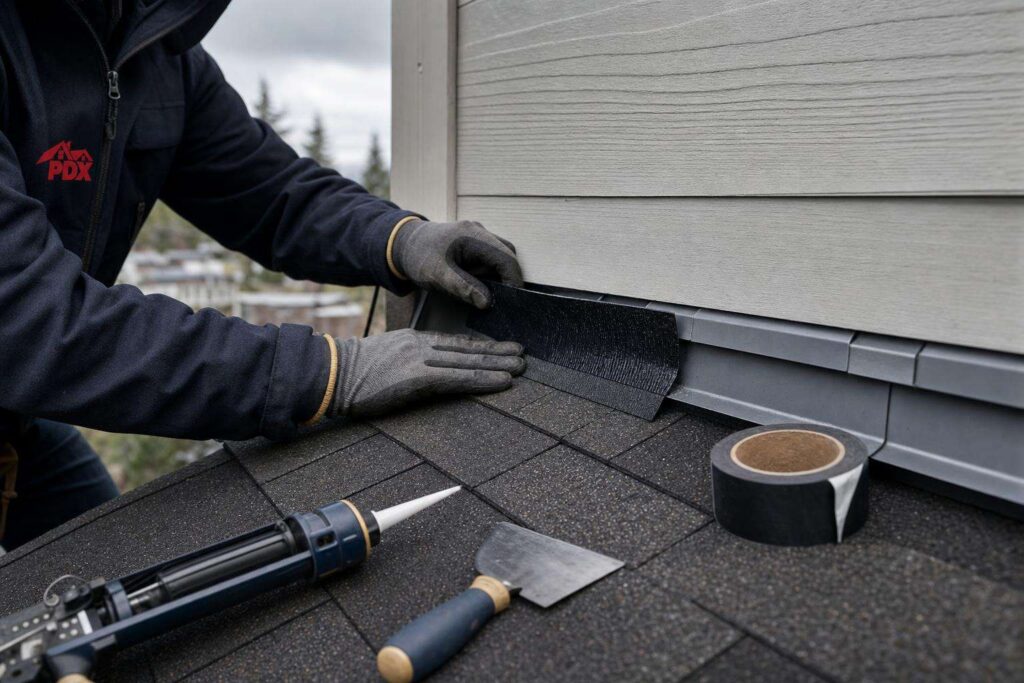
Targeted Roof Repairs Start With the Right Material
Portland weather can expose small weaknesses around vents, flashing, roof edges, and seams. When water finds a path in, the repair method matters. Roof sealants, mastics, and flashing tape can all play a role in targeted roof repair, but they are not interchangeable.
As a Portland roofing contractor, Pdx roofing and siding helps homeowners understand when these materials are appropriate, when a larger repair is needed, and when aging roofing materials should be evaluated for replacement.
What Roof Sealants Are Designed to Do
Roof sealants are flexible materials used to help seal small gaps, joints, fastener heads, and transitions. They are often applied around penetrations such as plumbing vents, skylight edges, and metal flashing details.
Where sealants may be useful
- Small gaps around roof penetrations
- Exposed fastener heads on certain roofing components
- Minor cracks in compatible flashing details
- Edges where water-shedding components meet
Why compatibility matters
Not every sealant works with every roof system. Asphalt shingle roofing, metal flashing, membrane details, and other roofing materials may require different products. Using the wrong product can reduce adhesion, trap moisture, or fail earlier than expected.
How Roofing Mastics Are Different
Mastics are thicker than many sealants and are commonly used to reinforce or waterproof targeted areas. They may be applied with fabric reinforcement in some repair situations, depending on the roof type and condition.
Common mastic repair areas
- Low-slope roof seams and transitions
- Flashing corners and curb details
- Small areas where surface reinforcement is needed
- Selected maintenance repairs on compatible roof systems
Mastic is not a replacement for damaged shingles, deteriorated decking, or poorly installed flashing. If water has already moved beneath the roof surface, a more complete roof repair may be required.
When Flashing Tape Makes Sense
Flashing tape is a self-adhering membrane used to help protect vulnerable transitions. It is often used during roof installation, siding replacement, window work, and home exterior upgrades where proper water management is essential.
Where flashing tape is commonly used
- Roof-to-wall transitions
- Window and door openings during siding work
- Kick-out flashing details
- Selected underlayment and flashing assemblies
Flashing tape performs best when installed over a clean, dry, compatible surface and integrated correctly with the surrounding system. It should not be treated as a cover-up for active leaks without first identifying the source of the water intrusion.
Why Targeted Repairs Still Need Careful Inspection
A small stain inside the home does not always mean the leak source is directly above it. Water can travel along rafters, underlayment, siding, or flashing before appearing indoors. That is why targeted repairs should begin with a careful inspection.
A professional inspection may review
- Shingle condition and roof age
- Pipe boots, vents, skylights, and chimneys
- Step flashing, counterflashing, and roof-to-wall details
- Gutters, drainage paths, and debris buildup
- Adjacent siding, including fiber cement siding transitions
For active leaks, storm damage, or sudden water entry, emergency roof repair may be needed to limit additional interior damage while a longer-term repair plan is developed.
Repair, Maintenance, or Replacement?
Sealants, mastics, and flashing tape are valuable tools, but they cannot correct every roof issue. If shingles are brittle, flashing is corroded, decking is soft, or leaks are recurring, roof installation or replacement may be the better long-term approach.
Targeted repair may be appropriate when
- The surrounding roof is in serviceable condition
- The leak source is clearly identified
- The repair area is limited and accessible
- The selected product is compatible with the roof system
Replacement may be worth discussing when
- Leaks return after prior repairs
- There are widespread shingle failures
- Flashing details were installed incorrectly
- Roofing materials are near the end of their expected service life
- Exterior work, such as siding replacement, is already planned
Portland Homes Need Water-Shedding Details That Work Together
In the Portland Metro area, roof and siding systems need to manage moisture as a complete exterior envelope. A licensed roofing company can evaluate how roof flashing, siding, trim, gutters, and drainage details interact before recommending the right repair.
Pdx roofing and siding works with homeowners on roof repair, roof installation, siding repair, siding replacement, and related home exterior upgrades across Portland and surrounding OR communities.
Talk With Pdx roofing and siding About the Right Repair
If you are seeing signs of a roof leak or are unsure whether sealant, mastic, flashing tape, or a larger repair is needed, Pdx roofing and siding can help assess the issue and recommend a practical next step.
Services and offers are subject to availability and approval. For practical next steps, Book roof installation service and talk with the team about timing, scope, and the right path for your situation.