
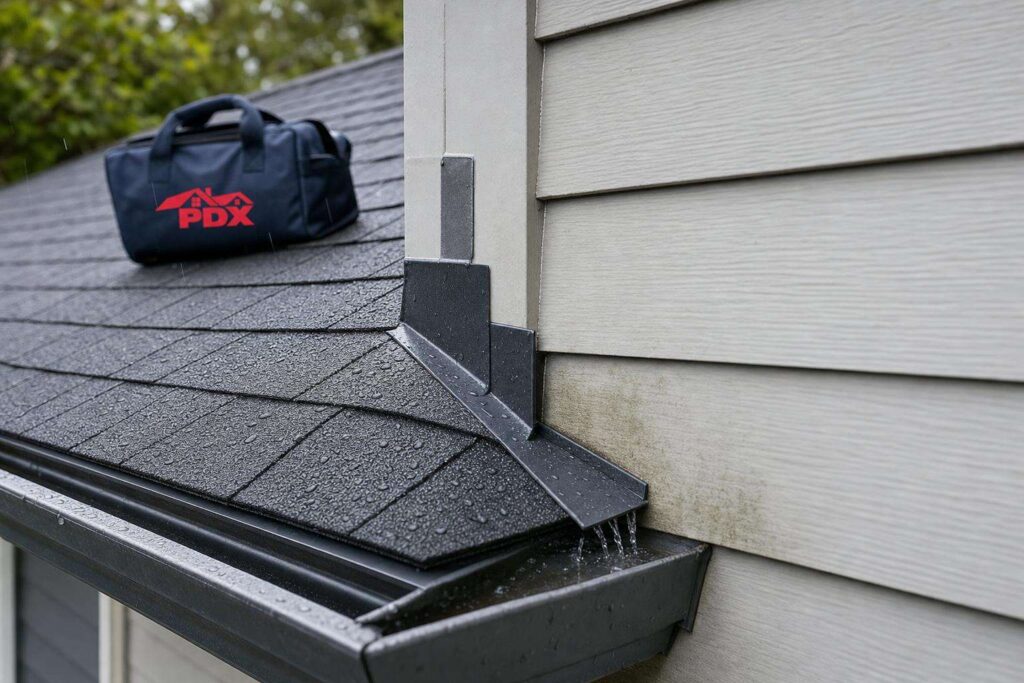
Why Kick-Out Flashing Matters for Portland Homes
Kick-out flashing is the small angled piece of metal installed where a roof edge meets a vertical wall. Its job is simple but important: push roof runoff into the gutter instead of letting water run behind the siding.
In the Portland Metro area, steady rain makes this detail especially important. When kick-out flashing is missing, damaged, or poorly placed, water can soak siding, trim, sheathing, and wall cavities over time. That can lead to staining, swelling, paint failure, and hidden exterior damage.
As a Portland roofing contractor, PDX Roofing and Siding often evaluates kick-out flashing during roof repair, roof installation, siding repair, and siding replacement planning because roof runoff and siding performance are closely connected.
What Kick-Out Flashing Is Designed to Do
Kick-out flashing works with step flashing, gutters, roofing materials, and siding details to control water at roof-to-wall transitions. It is commonly found where:
- A lower roofline ends against a sidewall
- A gutter begins at the bottom of a roof-to-wall intersection
- Asphalt shingle roofing meets siding, trim, or stucco
- Water needs to be directed away from fiber cement siding, wood siding, or other cladding
Without a proper kick-out, runoff can bypass the gutter and travel behind the siding. This is why a small flashing detail can have a major impact on long-term home exterior upgrades.
Kick-Out Flashing Checks Homeowners Should Know
You do not need to climb on the roof to notice many warning signs. From the ground, a few visual checks can help you decide when to call a licensed roofing company for a closer inspection.
Look for Water Stains Below Roof-to-Wall Areas
Dark streaks, peeling paint, swollen trim, or discoloration below the end of a roofline may point to water missing the gutter. These marks often appear near the bottom of siding where the roof edge meets the wall.
Check Whether Runoff Reaches the Gutter
During safe, normal rainfall observation from the ground, look for water spilling down the wall instead of entering the gutter. If water appears to be running behind the gutter or along the siding, the flashing and gutter layout may need review.
Watch for Siding Damage Near Roof Edges
Siding that is soft, warped, cracked, loose, or repeatedly damp near a roof intersection may be receiving concentrated runoff. Fiber cement siding, wood siding, and trim boards can all be affected when water management details are not working correctly.
Inspect Gutter Alignment From the Ground
A kick-out flashing detail works best when the gutter is positioned to receive the diverted water. If the gutter has pulled away, is set too low, or ends short of the flashing area, runoff may still reach the wall.
Notice Gaps, Sealant Failure, or Missing Metal
Visible gaps at the roof-to-wall junction, deteriorated sealant, or an obvious absence of angled flashing may signal a problem. Sealant alone should not be relied on as the main water-control strategy at these transitions.
Common Problems Caused by Missing or Poorly Installed Kick-Out Flashing
When roof runoff is not directed correctly, water may affect more than the visible siding. Potential issues include:
- Premature siding wear near roof intersections
- Damaged trim, fascia, or corner boards
- Moisture intrusion behind siding
- Staining or deterioration near gutters
- Repeated roof repair needs at the same wall connection
- More complex siding replacement if damage spreads
Early evaluation is the best way to understand whether the concern is limited to flashing, involves the gutter system, or requires siding repair as well.
How Kick-Out Flashing Fits Into Roof and Siding Work
Kick-out flashing should be considered during both roofing and siding projects. During roof installation, it helps complete the water-shedding system at vulnerable transitions. During siding replacement, it helps protect the new exterior from runoff that may have caused previous damage.
For asphalt shingle roofing, the detail should coordinate with step flashing and the starter area near the gutter. For fiber cement siding or other cladding, proper clearance and water diversion are also important so siding materials are not constantly exposed to concentrated moisture.
If you are planning home exterior upgrades in Portland, it is worth having the roof-to-wall flashing reviewed before new siding or roofing materials are installed.
When to Call PDX Roofing and Siding
Call for a professional inspection if you notice staining, siding damage, gutter overflow at a roof-to-wall area, or signs of active leakage. You should also schedule a review after storm damage, during emergency roof repair needs, or before starting roof installation or siding replacement work.
PDX Roofing and Siding can assess the roof, flashing, gutter interface, and siding condition so you can make informed decisions about the right repair path for your Portland Metro home.
Protect Your Siding Before Runoff Becomes a Bigger Issue
Kick-out flashing is a small component, but it plays a serious role in protecting your siding from roof runoff. If something looks off near a roof-to-wall transition, a knowledgeable inspection can help identify the source and prevent unnecessary exterior damage.
For honest guidance from PDX Roofing and Siding, schedule a roofing or siding evaluation today. Services and offers are subject to availability and approval. For practical next steps, Book roof installation service and talk with the team about timing, scope, and the right path for your situation.