
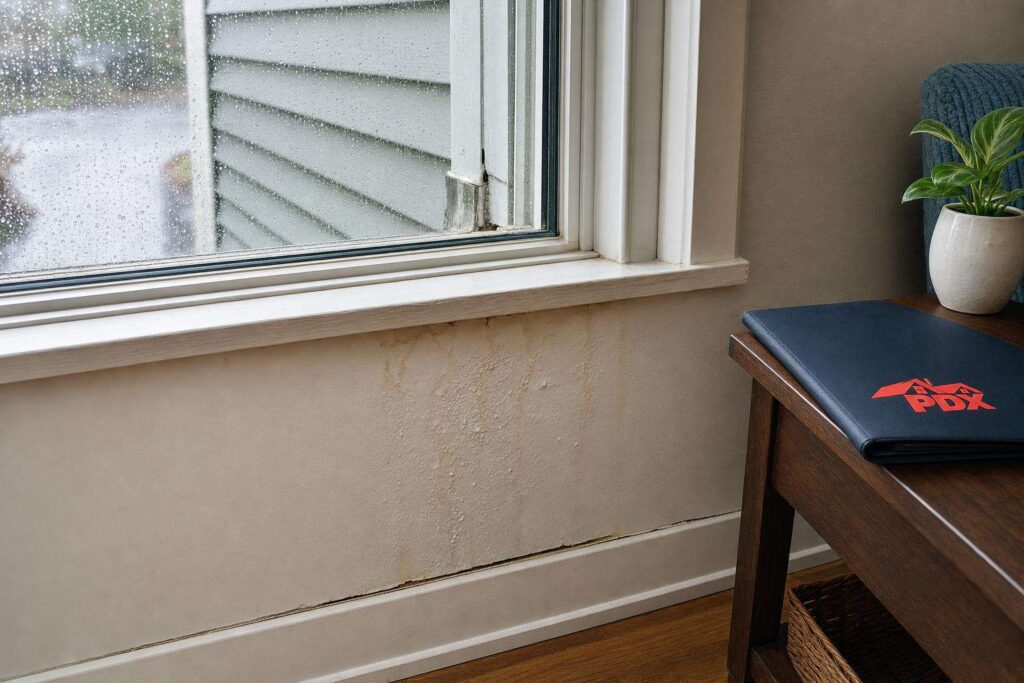
Interior Wall Stains May Be an Exterior Warning Sign
When a stain appears on an interior wall, it is easy to assume the problem is plumbing, condensation, or a roof leak. Those are possible causes, but in many Portland homes, stained drywall can also be linked to hidden siding leaks.
Water can enter behind damaged siding, failed trim joints, worn sealant, or poorly flashed wall penetrations. Once inside the wall assembly, moisture may travel before it becomes visible indoors. By the time you see staining, bubbling paint, or soft drywall, the exterior issue may have been active for some time.
Pdx Roofing and Siding helps homeowners in Portland, OR, and the Portland Metro identify exterior moisture concerns and plan the right siding repair, siding replacement, roof repair, or home exterior upgrades when needed.
Common Interior Signs of Hidden Siding Leaks
Interior stains are not always dramatic. Some start as faint discoloration and become more noticeable after repeated rain. Watch for these warning signs:
- Yellow, brown, or gray stains on walls near exterior-facing rooms
- Bubbling, peeling, or blistering paint
- Soft or swollen drywall
- Musty odors near walls, corners, or window areas
- Staining beneath windows or around door openings
- Baseboard swelling or separation from the wall
- Recurring damp spots after wind-driven rain
If the stain appears only after storms, or if it is located along an exterior wall, siding and flashing should be part of the inspection.
How Water Gets Behind Siding
Siding is designed to protect your home, but it works as a system with trim, flashing, weather barriers, windows, doors, and roofing transitions. A weakness in one area can allow moisture to reach hidden wall cavities.
Damaged or Loose Siding Panels
Cracked, warped, or loose siding can allow rain to get behind the exterior surface. This is especially concerning on walls exposed to strong wind and consistent Northwest rain.
Failed Caulking Around Trim and Penetrations
Gaps around window trim, door trim, vents, pipes, and exterior fixtures can become entry points. Sealant does not last forever, and movement in the home exterior can open small gaps over time.
Improper or Worn Flashing
Flashing helps direct water away from vulnerable transitions. Missing, damaged, or incorrectly installed flashing near windows, roof-to-wall intersections, deck connections, or siding transitions may send water behind the siding instead of away from the home.
Aging or Saturated Siding Materials
Older siding materials can absorb moisture or deteriorate, especially if paint, finish, or protective coatings have broken down. For some homes, fiber cement siding may be a strong siding replacement option when installed with proper flashing and moisture management.
Why Portland Homes Are Vulnerable
Portland’s long wet season, shaded lots, moss-prone areas, and wind-driven rain can be tough on siding and roofing materials. Homes with mature trees, limited sunlight, or older exterior assemblies may hold moisture longer after storms.
That does not mean every wall stain is a major problem, but it does mean stains should be evaluated carefully. A licensed roofing company that also understands siding systems can help determine whether the source is siding, roofing, windows, or another exterior detail.
When a Wall Stain Could Be Related to the Roof
Some interior stains on exterior walls are caused by roofing issues rather than siding alone. Roof-to-wall intersections, step flashing, gutters, and roof edges can all influence where water travels.
Potential roof-related contributors include:
- Damaged flashing where the roof meets a wall
- Clogged or overflowing gutters sending water down siding
- Worn asphalt shingle roofing near wall transitions
- Storm damage requiring roof repair
- Active leaks that may require emergency roof repair evaluation
A Portland roofing contractor can inspect these areas along with the siding to avoid treating only the visible symptom.
What to Do When You Notice Interior Wall Stains
If you see staining, avoid ignoring it or simply covering it with paint before the source is identified. Moisture can continue to damage materials behind the wall if the exterior entry point remains open.
- Document the stain: Take clear photos and note when it appears or changes.
- Check exterior conditions: Look for nearby siding cracks, gaps, missing trim sealant, or gutter overflow.
- Watch storm patterns: Stains that worsen after rain may indicate an exterior leak path.
- Limit further interior damage: Move furniture away from the affected wall and avoid trapping moisture behind coverings.
- Schedule an exterior inspection: Have siding, roof edges, flashing, and penetrations evaluated together.
Repair or Replacement: How the Right Path Is Chosen
The right solution depends on the cause, age of the materials, extent of moisture intrusion, and condition of the surrounding wall system.
When Siding Repair May Be Appropriate
Siding repair may be considered when damage is localized, the surrounding materials are sound, and the leak source can be corrected without replacing large sections. This may include addressing isolated cracked panels, trim gaps, or flashing concerns.
When Siding Replacement May Be the Better Option
Siding replacement may be recommended when the siding is widely deteriorated, moisture has affected multiple areas, or the exterior system no longer provides reliable protection. Replacement can also be part of broader home exterior upgrades, especially when paired with improved flashing and modern materials such as fiber cement siding.
When Roofing Work Is Also Needed
If the stain is connected to a roof-to-wall issue, roof repair may be part of the solution. In some cases, older roofs may require roof installation planning or replacement with suitable roofing materials such as asphalt shingle roofing, depending on the condition of the existing system.
How Pdx Roofing and Siding Approaches Hidden Leak Concerns
Pdx Roofing and Siding takes a practical, inspection-based approach. Instead of guessing from the interior stain alone, the team looks at how water could be entering and traveling through the exterior assembly.
Inspection areas may include:
- Siding condition and attachment
- Window and door trim details
- Flashing at roof-to-wall connections
- Gutters and drainage paths
- Visible cracks, gaps, and deteriorated sealant
- Signs of moisture movement on exterior walls
This helps homeowners make informed decisions about siding repair, siding replacement, roof repair, or roof installation when appropriate.
CTA
If interior wall stains are raising concerns about hidden siding leaks, contact Pdx Roofing and Siding for honest guidance and exterior inspection support in Portland and the Portland Metro. For practical next steps, Call roof installation now and talk with the team about timing, scope, and the right path for your situation.