

Why Roof Access Policies Matter for Portland Property Managers
For property managers, roof access is more than a maintenance issue. It affects tenant safety, vendor coordination, building protection, and long-term repair costs. Without a clear policy, well-meaning service providers, tenants, or staff may step on vulnerable areas, drag equipment across roofing materials, block drainage paths, or damage siding and flashing near roof edges.
In Portland and the broader Portland Metro area, roofs often deal with wet conditions, debris buildup, moss growth, and seasonal maintenance needs. A written access policy helps everyone understand when roof access is allowed, who may go up, how work should be coordinated, and what steps help prevent avoidable service damage.
Common Ways Service Visits Can Damage a Roof
Roof damage is not always caused by storms or aging materials. It can also happen during routine service calls when access is not planned carefully. Common issues include:
- Foot traffic on sensitive areas: Walking on brittle shingles, wet surfaces, or roof edges can increase wear.
- Improper ladder placement: Ladders can damage gutters, fascia, siding, and roof edges when placed without protection.
- Dragged tools or equipment: HVAC tools, cables, satellite equipment, and maintenance materials can scrape or puncture roofing materials.
- Blocked drainage: Debris left near scuppers, gutters, or drains can create water issues.
- Uncoordinated vendor activity: Multiple vendors accessing the same roof without communication can lead to accidental damage or missed accountability.
What to Include in a Strong Roof Access Policy
A good policy should be simple enough for tenants and vendors to follow, while detailed enough to protect the property. Property managers can tailor the policy to the building type, roof system, tenant needs, and maintenance schedule.
Authorized Access Only
Clearly state that only approved personnel and scheduled vendors may access the roof. This helps limit unnecessary foot traffic and reduces the chance of damage from people unfamiliar with the roof system.
- Identify who can approve roof access.
- Require vendors to check in before going onto the roof.
- Keep a roof access log with date, company, purpose, and contact information.
- Document any pre-existing roof concerns before work begins.
Tenant Communication Rules
Tenants should know that roof access is restricted for safety and building protection. If tenants need cable, internet, HVAC, satellite, or other services involving the roof, they should notify property management before scheduling work.
Tenant-facing language should be direct and practical. For example: roof access must be approved in advance, vendors may not install or move equipment without written permission, and any roof-related service request must be coordinated through management.
Approved Ladder and Access Points
Designate approved roof access points so vendors do not choose unsafe or damaging entry locations. Marking access routes can help prevent contact with fragile surfaces, gutters, siding, and roof edges.
- Use designated ladders, hatches, or access doors when available.
- Avoid placing ladders directly against gutters or vulnerable siding.
- Require protective measures where ladders contact the building.
- Keep access areas clear of tenant storage, landscaping obstacles, and loose debris.
Weather and Surface Condition Restrictions
Portland weather can make roof surfaces slick. A roof access policy should allow management to postpone non-urgent service when conditions may increase the risk of property damage or unsafe work.
- Limit non-urgent access during heavy rain, ice, high winds, or poor visibility.
- Require extra caution around moss, wet leaves, and debris.
- Confirm whether emergency roof repair is needed before allowing urgent access.
- Document weather conditions when access is approved.
Tool, Material, and Equipment Handling
Vendors should understand that roof surfaces are not general staging areas. Tools and materials should be carried, secured, and placed carefully to avoid scraping, puncturing, or stressing the roof system.
- Require protective pads under equipment when appropriate.
- Do not allow tools, panels, or materials to be dragged across roofing materials.
- Secure lightweight materials so they do not blow into gutters, siding, skylights, or rooftop units.
- Require vendors to remove all packaging, fasteners, and debris after work.
Create a Roof Access Checklist for Vendors
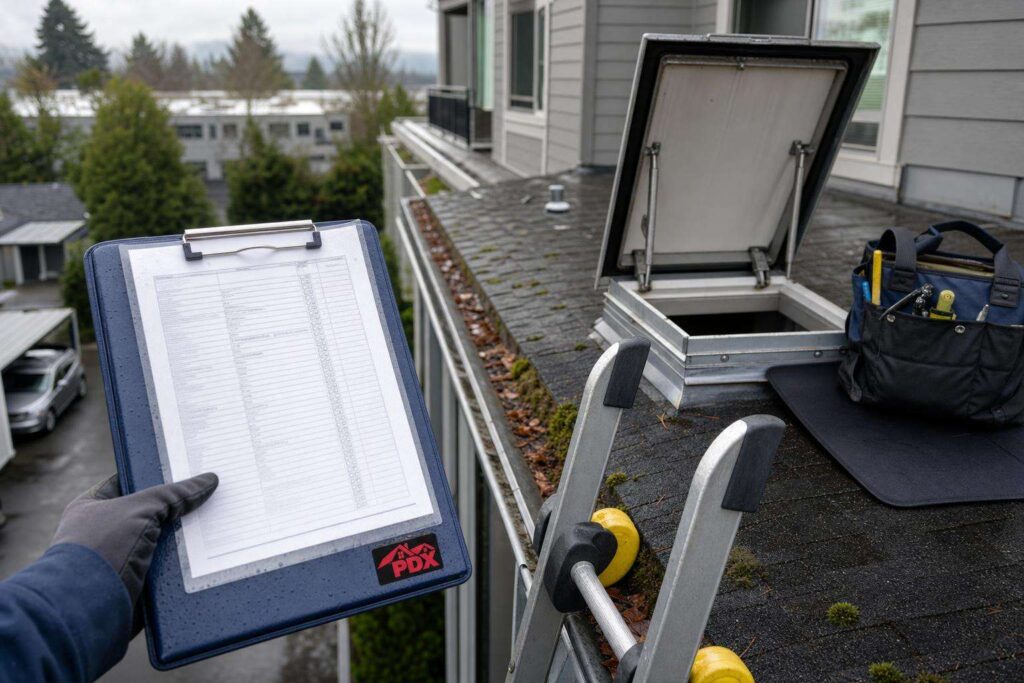
A checklist helps vendors understand expectations before they arrive. It also gives property managers a consistent process for inspections, roof repair visits, roof installation planning, HVAC work, and other service needs.
Your checklist may include:
- Vendor name, technician name, and contact details.
- Reason for access and expected work area.
- Approved access point and route.
- Required protection for ladders, tools, and materials.
- Photos before and after work, when appropriate.
- Confirmation that drains, gutters, and pathways were left clear.
- Instructions for reporting discovered roof, siding, or flashing concerns.
Protect Siding, Gutters, and Building Exteriors Too
Roof access policies should not focus on the roof alone. Ladders, lift equipment, and rooftop service work can also affect siding, trim, gutters, fascia, and exterior fixtures. This is especially important for properties considering siding replacement, fiber cement siding work, or broader home exterior upgrades.
Ask vendors to avoid leaning equipment against finished siding when possible, use approved contact points, and report any accidental damage immediately. Early documentation can make repair coordination easier and reduce disputes between tenants, vendors, and management.
Coordinate Roof Access With Preventive Maintenance
A roof access policy works best when paired with regular maintenance. Scheduled inspections can help identify worn flashing, loose shingles, clogged drainage areas, damaged siding transitions, and concerns with asphalt shingle roofing before they create larger service problems.
Property managers should consider involving a Portland roofing contractor when planning recurring roof maintenance, reviewing roof access concerns, or evaluating repair needs after vendor activity. A licensed roofing company can help assess existing roofing materials and recommend appropriate next steps based on the property’s condition.
When to Call a Roofing and Siding Professional
Bring in a qualified roofing and siding contractor when you notice active leaks, missing or damaged shingles, soft spots, damaged flashing, recurring gutter overflow, siding damage near rooflines, or tenant reports of moisture intrusion. For urgent issues, emergency roof repair may be needed to help protect the building while a full assessment is completed.
PDX Roofing and Siding works with property owners and managers in Portland, OR, and the Portland Metro area on roof repair, roof installation, siding replacement, and exterior maintenance needs. Clear access policies combined with professional inspections can help reduce avoidable damage and keep service visits better organized.
Plan Roof Access Before Problems Start
A clear roof access policy gives tenants, staff, and vendors the same expectations before anyone steps onto the roof. It protects roofing materials, siding, drainage systems, and exterior finishes while giving property managers a better record of who accessed the roof and why.
For help evaluating roof or siding concerns at a managed property, contact PDX Roofing and Siding to discuss the right next step for your building.
Services and offers are subject to availability and approval. For practical next steps, Book roof installation service and talk with the team about timing, scope, and the right path for your situation.