

Why Siding Profile Matters as Much as Siding Material
When planning a siding replacement, many homeowners focus first on material: fiber cement siding, engineered wood, cedar, or other exterior cladding options. Material matters, especially in the Portland Metro climate, but the siding profile is just as important.
The profile refers to the shape, exposure, width, texture, and installation pattern of the siding. A well-matched profile can preserve a home’s architectural character, improve curb appeal, and make home exterior upgrades feel intentional rather than pieced together.
At PDX Roofing and Siding, we help homeowners evaluate siding options with the same practical eye we bring to roof installation, roof repair, and exterior weather protection. The goal is simple: choose a siding profile that looks right, performs well, and fits the home.
Start With the Home’s Architectural Style
Different home styles tend to look best with different siding profiles. You do not always need to copy the original siding exactly, but the replacement should respect the proportions and design language of the home.
Craftsman and Bungalow Homes
Craftsman homes are common throughout Portland and often look best with siding profiles that emphasize depth and detail. Good options may include:
- Horizontal lap siding with a moderate exposure
- Shingle-style siding in gables or accent areas
- Fiber cement siding with a woodgrain or smooth finish, depending on the home’s trim style
- Defined trim around windows, doors, and porch columns
For these homes, overly wide or flat siding can sometimes make the exterior feel less detailed. A balanced lap profile usually supports the original character better.
Mid-Century and Ranch Homes
Ranch and mid-century homes often have long, horizontal lines. Siding profiles that reinforce that shape can work well, including:
- Wider horizontal lap siding
- Smooth panel siding for selected modern accents
- Board-and-batten used carefully on feature walls or gables
- Low-contrast trim for a cleaner, more streamlined look
If the home also needs asphalt shingle roofing replacement or roof repair, it is smart to coordinate roof color and siding profile at the same time. Roofing materials and siding should support the same overall design direction.
Farmhouse and Cottage-Style Homes
Farmhouse and cottage designs can handle more texture and variation. Common profile choices include:
- Traditional lap siding
- Board-and-batten siding for vertical emphasis
- Shingle siding in dormers or gable ends
- Contrasting trim to highlight architectural details
The key is restraint. Mixing profiles can add charm, but too many competing patterns may make the home feel busy.
Contemporary Homes
Modern and contemporary homes often benefit from clean lines and simplified details. Profile options may include:
- Smooth lap siding with consistent exposure
- Vertical panel siding
- Mixed horizontal and vertical profiles for contrast
- Minimal trim details with precise transitions
For contemporary homes, the quality of installation is especially noticeable. Uneven transitions, mismatched seams, or poorly planned trim can stand out quickly.
Match the Siding Profile to the Home’s Proportions
Beyond architectural style, the size and shape of the home should guide the profile selection. A profile that looks great on a two-story home may not work as well on a compact bungalow.
Consider Siding Exposure
Exposure is the visible height of each siding board after installation. Narrower exposures can feel more traditional and detailed, while wider exposures often feel cleaner and more modern.
- Narrower exposure: Often suits older homes, cottages, and homes with detailed trim.
- Moderate exposure: A flexible option for many Portland homes.
- Wider exposure: Often works well for ranch, mid-century, and modern styles.
Use Vertical Profiles With Purpose
Board-and-batten and other vertical siding profiles can make a home look taller and more distinctive. They are often effective on gables, entry areas, dormers, and accent walls. On some homes, full vertical siding can work beautifully; on others, it may overpower the original design.
Balance Texture and Trim
Heavy woodgrain textures can create warmth, while smooth siding can feel crisp and updated. The right choice depends on the home’s trim, windows, roofline, and surrounding neighborhood context.
Think About Portland Weather and Long-Term Performance
In Portland, siding has to do more than look good. Rain, seasonal moisture, wind, shade, and organic debris can all affect exterior materials. A licensed roofing company or siding contractor should evaluate how siding connects with roof edges, flashing, gutters, windows, and wall penetrations.
For many homeowners, fiber cement siding is a strong option because it offers a range of profiles and finishes while supporting durable exterior performance when installed correctly. The best product still depends on the home, budget, maintenance expectations, and design goals.
If your home also has roof issues, address them before or alongside siding work. Water intrusion from failing flashing, worn asphalt shingle roofing, or neglected roof repair can damage siding and wall assemblies over time. In urgent situations, emergency roof repair may be needed before moving forward with broader exterior updates.
Coordinate Siding With Roofing, Gutters, and Exterior Details
Siding replacement rarely exists in isolation. The best results happen when the full exterior is considered together.
Roof Color and Siding Profile
A darker roof can visually anchor the home, while lighter siding may make architectural details stand out. If you are planning roof installation in the near future, consider selecting roofing materials and siding colors together.
Window and Door Trim
Trim can make or break a siding project. Wider trim often suits traditional homes, while slimmer trim may work better on modern designs. The trim depth should also be compatible with the siding profile.
Transitions Between Profiles
If you use more than one siding profile, transitions should be planned carefully. Common transition areas include:
- Gable ends
- Second-story sections
- Entry features
- Garage walls
- Porch areas
Clean transitions help the finished exterior look designed, not patched together.
When Matching the Existing Siding Is the Right Choice
Sometimes the best siding replacement approach is to match the existing profile as closely as possible. This is often true when:
- Only one elevation or damaged area is being replaced
- The home has strong historic or neighborhood character
- The existing profile fits the architecture well
- Major exterior changes are not part of the project scope
However, exact matches are not always available, especially on older homes. In those cases, a knowledgeable siding contractor can help find the closest practical match or recommend a planned update that feels consistent.
When to Update the Profile Instead
Changing the siding profile can be a smart move when the existing siding does not fit the home, has been altered over time, or no longer supports the homeowner’s goals. A profile update may make sense if:
- The current siding makes the home look flat or dated
- Previous repairs created mismatched sections
- You are completing broader home exterior upgrades
- The trim, windows, or roofing are also being updated
- You want a more traditional, modern, or Northwest-inspired look
A thoughtful update can improve curb appeal while still respecting the home’s structure and style.
Work With an Exterior Contractor Who Understands the Whole Home
Choosing a siding profile is both a design decision and a building performance decision. The right contractor should understand moisture management, flashing, roof-to-wall connections, trim details, and the visual proportions of Portland homes.
As a Portland roofing contractor that also handles siding installation and repair, PDX Roofing and Siding can help you look at the full exterior system, not just one surface. Whether you are planning siding replacement, roof repair, roof installation, or coordinated exterior improvements, honest guidance at the start can prevent costly mismatches later.
Plan Your Siding Replacement With Confidence
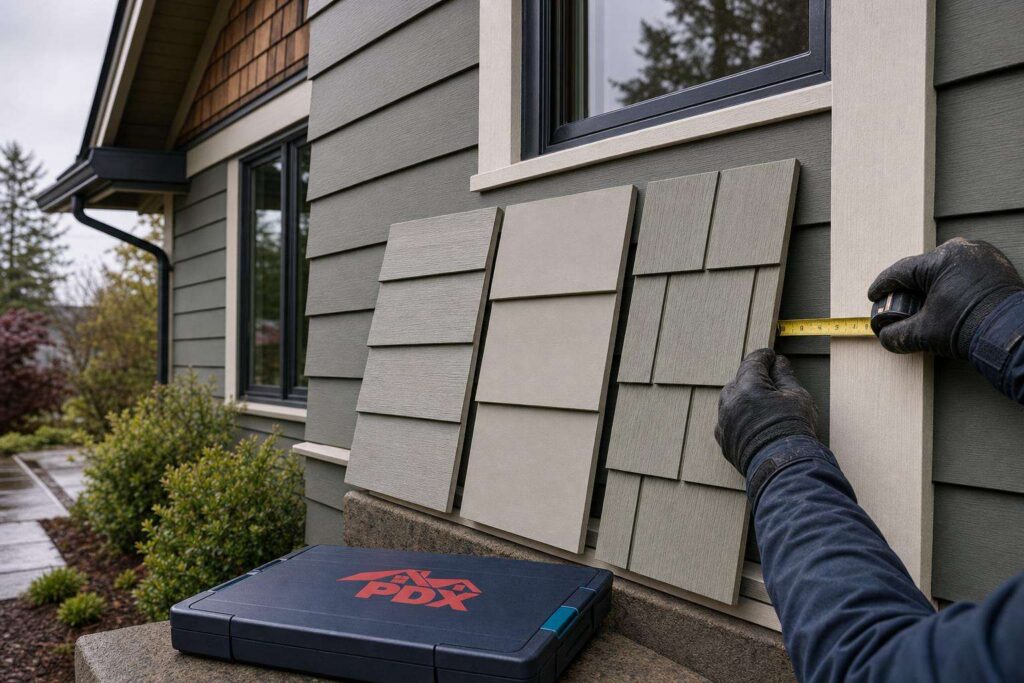
The best replacement siding profile is the one that fits your home’s architecture, supports long-term performance, and works with your roofing, trim, and exterior details. Before choosing a profile, compare samples on the home, review trim conditions, and think about how the final exterior will look from the street.
For help evaluating siding profiles, fiber cement siding options, roofing materials, and related home exterior upgrades in Portland, OR, contact PDX Roofing and Siding.
Services and offers are subject to availability and approval. For practical next steps, Get roof installation help and talk with the team about timing, scope, and the right path for your situation.