


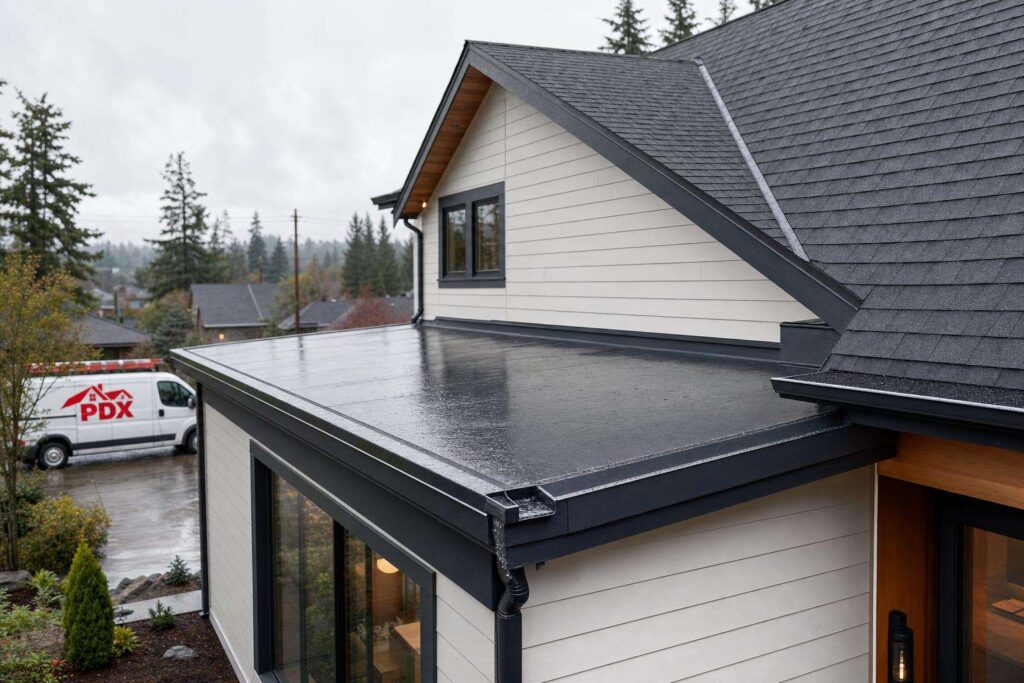
Low-Slope Roofing Needs a Different Plan in Portland
Low-slope roofing is common on additions, porches, garages, multifamily buildings, and modern home designs throughout the Portland Metro area. While it may look simple from the ground, a low-slope roof requires careful planning because water does not shed as quickly as it does on a steeper roof.
For Portland homeowners, that matters. Long wet seasons, tree debris, moss pressure, and shaded roof areas can all affect performance. A knowledgeable Portland roofing contractor will look beyond the surface and evaluate pitch, drainage, transitions, and roofing materials before recommending a roof installation or roof repair plan.
Pitch Determines What Roofing System Makes Sense
Roof pitch is the angle of the roof. On a steep-slope roof, water moves off the surface quickly. On a low-slope roof, water moves more slowly, which changes the way the roof must be built and sealed.
This is why low-slope areas often need a different roofing system than standard asphalt shingle roofing. Shingles are designed to shed water, not hold back standing or slow-moving water. If the pitch is too low for shingles, the roof may need a membrane-based system or another low-slope-appropriate material.
Why pitch matters during inspection
- Material compatibility: Not every product is approved for every slope.
- Water movement: Lower pitch means more attention to seams, edges, and penetrations.
- Transition points: Areas where a low-slope roof meets a steeper roof need proper detailing.
- Long-term maintenance: Lower pitch can allow more debris to collect, especially near trees.
Drainage Is Just as Important as the Roof Surface
On low-slope roofing, drainage is a core part of the system. Even quality materials can struggle if water has nowhere to go. Gutters, scuppers, internal drains, crickets, and slope design all play a role depending on the structure.
During a professional evaluation, a licensed roofing company should look for signs that water is collecting or moving in the wrong direction. These may include stained fascia, soft roof decking, interior ceiling marks, clogged drains, or repeated leaks near edges and penetrations.
Common drainage concerns in Portland
- Leaves, needles, and organic debris slowing water flow
- Flat-looking areas that allow ponding after rain
- Improperly sloped gutters or undersized drainage paths
- Roof penetrations that interrupt water movement
- Old repairs that do not match the current roof system
If you are dealing with an active leak, emergency roof repair may be needed to limit damage while a longer-term solution is reviewed. The right repair should address the source of the problem, not only the visible symptom.
Materials Change the Installation Details
Low-slope roofing materials are selected based on roof pitch, building use, drainage, budget, appearance goals, and existing construction. A roof that works well on one home may not be the right fit for another, even in the same neighborhood.
Membrane roofing systems
Many low-slope roofs use membrane systems because they are designed to create a more continuous water-resistant surface. These systems require careful installation around seams, walls, vents, skylights, and edges.
Asphalt shingle roofing on adjacent slopes
Some homes have both low-slope and steep-slope areas. In those cases, asphalt shingle roofing may still be appropriate on the steeper sections, while the low-slope sections need a different material. The transition between the two systems is especially important.
Metal and specialty details
Metal flashing, coping, edge details, and wall transitions can determine how well the system handles Portland weather. These details should be planned as part of the full roof installation, not treated as an afterthought.
Low-Slope Roofing Often Connects to Siding Performance
Roofing and siding work together to protect the building envelope. On low-slope roofs, water can be driven against walls, parapets, and siding transitions during storms. If these areas are not detailed correctly, moisture can affect trim, sheathing, and wall assemblies.
That is why home exterior upgrades may include both roofing and siding work. If siding near a roofline is damaged, swollen, or repeatedly exposed to runoff, siding replacement may be part of the best long-term plan. Durable options such as fiber cement siding are often considered for Portland homes because they can pair well with a properly detailed exterior system.
Repair or Replacement: What Should Homeowners Consider?
Not every low-slope roof issue requires full replacement. In some cases, targeted roof repair may be appropriate. In others, repeated leaks, poor drainage, outdated materials, or incorrect slope-to-material matching may point toward a more complete roof installation plan.
Factors that influence the recommendation
- The current roof material and whether it fits the slope
- The age and condition of the roof system
- Evidence of trapped moisture or decking damage
- Drainage performance during normal rain
- Condition of flashing, wall transitions, and penetrations
- Whether previous repairs are compatible with the existing system
A professional assessment should explain the tradeoffs clearly so you can make a confident decision for your property.
Why Work With PDX Roofing and Siding
PDX Roofing and Siding helps Portland and Portland Metro property owners plan roof repair, roof installation, siding replacement, and exterior improvements with practical guidance. As a licensed roofing company, the team focuses on matching the roof system to the structure, slope, drainage needs, and local weather conditions.
Low-slope roofing is not the place for guesswork. The right plan starts with understanding how water moves across the roof and how each component protects the home.
Plan Your Low-Slope Roofing Project
If your low-slope roof is leaking, aging, holding water, or tied into siding that needs attention, PDX Roofing and Siding can help you review the next step. Services and offers are subject to availability and approval. For practical next steps, Call roof installation now and talk with the team about timing, scope, and the right path for your situation.