


Key Takeaways
|
How Do You Know If You Need a Roof Replacement?
You may need a roof replacement if your roof is more than 20 years old, has recurring leaks, missing or curling shingles, sagging sections, visible daylight in the attic, extensive moss growth, or requires frequent repairs.
Many roofing problems begin as minor issues but can quickly escalate into structural damage when left untreated. A professional roof inspection is the best way to determine whether repair or replacement is the right solution.
Why Portland’s Climate Accelerates Roof Aging
Portland averages roughly 36 inches of rain a year, spread across nine or more wet months. That persistent moisture, combined with mild temperatures that encourage moss and lichen growth, creates conditions that age roofing materials faster than in drier climates. Add in wind events off the Columbia Gorge and occasional ice in the Tualatin Valley, and it’s easy to see why local roofs often need attention sooner than manufacturer estimates suggest.
This is also why a roof that “looks fine” from the street can still be failing underneath. Moss holds water against shingles, fasteners corrode in persistent damp, and underlayment can degrade years before a leak becomes visible inside the home.
Benefits of Roof Replacement
A new roof offers several advantages beyond leak prevention.
Improved Protection – Modern roofing systems provide stronger protection against moisture and weather.
Better Energy Efficiency – New materials often improve thermal performance.
Increased Home Value – A new roof is viewed as a valuable investment by buyers.
Reduced Maintenance Costs – Replacement eliminates many recurring repair expenses associated with aging roofs.
Roof Lifespan by Material: What to Expect in the Pacific Northwest
Roofing Material | Typical Lifespan (National Average) | Typical Lifespan in Portland Climate | Common Portland-Specific Issue |
3-Tab Asphalt Shingles | 20–25 years | 15–20 years | Moss growth, granule loss |
Architectural (Dimensional) Shingles | 25–30 years | 20–25 years | Algae streaking, curling |
Wood Shake | 25–30 years | 15–20 years | Moisture rot, moss penetration |
Metal Roofing | 40–70 years | 35–60 years | Fastener corrosion over time |
Tile (Concrete/Clay) | 50+ years | 40–50 years | Cracking from freeze-thaw cycles |
Flat/Membrane (TPO, EPDM) | 20–30 years | 15–25 years | Ponding water, seam failure |
Estimates based on regional industry data and field observations across Beaverton, Hillsboro, Tigard, and the Portland metro area. Actual lifespan varies by installation quality, ventilation, and maintenance history.
What This Means for Portland Homeowners?
Portland’s annual rainfall, persistent moisture, and moss-friendly environment place additional stress on roofing systems. Homeowners who schedule routine inspections often identify issues earlier and avoid costly structural repairs.
Top 10 Signs You Need Roof Replacement
1. Your Roof Is Nearing the End of Its Lifespan
Most asphalt shingle roofs last between 20 and 30 years. If your roof is approaching this age range, replacement may be more practical than continued repairs.
Typical Roof Lifespans
Roofing Material | Average Lifespan |
Asphalt Shingles | 20–30 Years |
Architectural Shingles | 25–35 Years |
Metal Roofing | 40–70 Years |
Cedar Shake | 20–40 Years |
Tile Roofing | 50+ Years |
2. Missing, Curling, or Cracked Shingles
Damaged shingles reduce your roof’s ability to shed water effectively.
Common signs include:
Missing shingles
Curled edges
Cracked surfaces
Bald spots
Wind damage
Extensive shingle deterioration often indicates the need for roof replacement in Portland.
3. Recurring Roof Leaks
A single isolated leak may be repairable.
However, recurring leaks often indicate:
Widespread roof deterioration
Flashing failure
Underlayment issues
Aging roofing materials
If leaks continue despite repairs, replacement should be considered.
4. Sagging Roof Sections
A sagging roof is one of the most serious warning signs.
Potential causes include:
Structural damage
Decking deterioration
Water saturation
Long-term moisture intrusion
This issue requires immediate professional evaluation.
5. Granules in Gutters
As asphalt shingles age, protective granules begin to wear away.
Signs include:
Excessive granules in gutters
Bare shingle patches
Reduced UV protection
Significant granule loss usually indicates advanced roof aging.
6. Moss, Algae, and Organic Growth
Portland’s climate creates ideal conditions for moss growth.
While moss may appear harmless, it can:
Trap moisture
Lift shingles
Accelerate deterioration
Increase leak risk
Extensive moss growth often shortens roof lifespan significantly.
7. Daylight Visible Through the Attic
If sunlight is visible through your attic, moisture can likely enter as well.
Look for:
Visible gaps
Damaged decking
Roof penetration issues
This is a strong indicator that professional inspection is necessary.
8. Rising Energy Bills
An aging roof may compromise your home’s insulation performance.
Potential consequences include:
Heat loss during winter
Heat gain during summer
Increased HVAC usage
A replacement roof can often improve overall energy efficiency.
9. Frequent Roof Repairs
If you are repeatedly scheduling roof repair in Portland, replacement may provide better long-term value.
Repeated repairs often indicate:
System-wide aging
Hidden moisture damage
Material deterioration
At some point, continual repairs become more expensive than replacing the roof.
10. Storm and Wind Damage
Strong storms can accelerate roofing deterioration.
Common storm-related damage includes:
Missing shingles
Flashing damage
Fallen tree limbs
Water intrusion
In severe situations, homeowners may first require emergency roof repair in Portland before determining whether a full replacement is necessary.
Roof Repair vs Roof Replacement
One of the most common homeowner questions is whether repair or replacement is the better option.
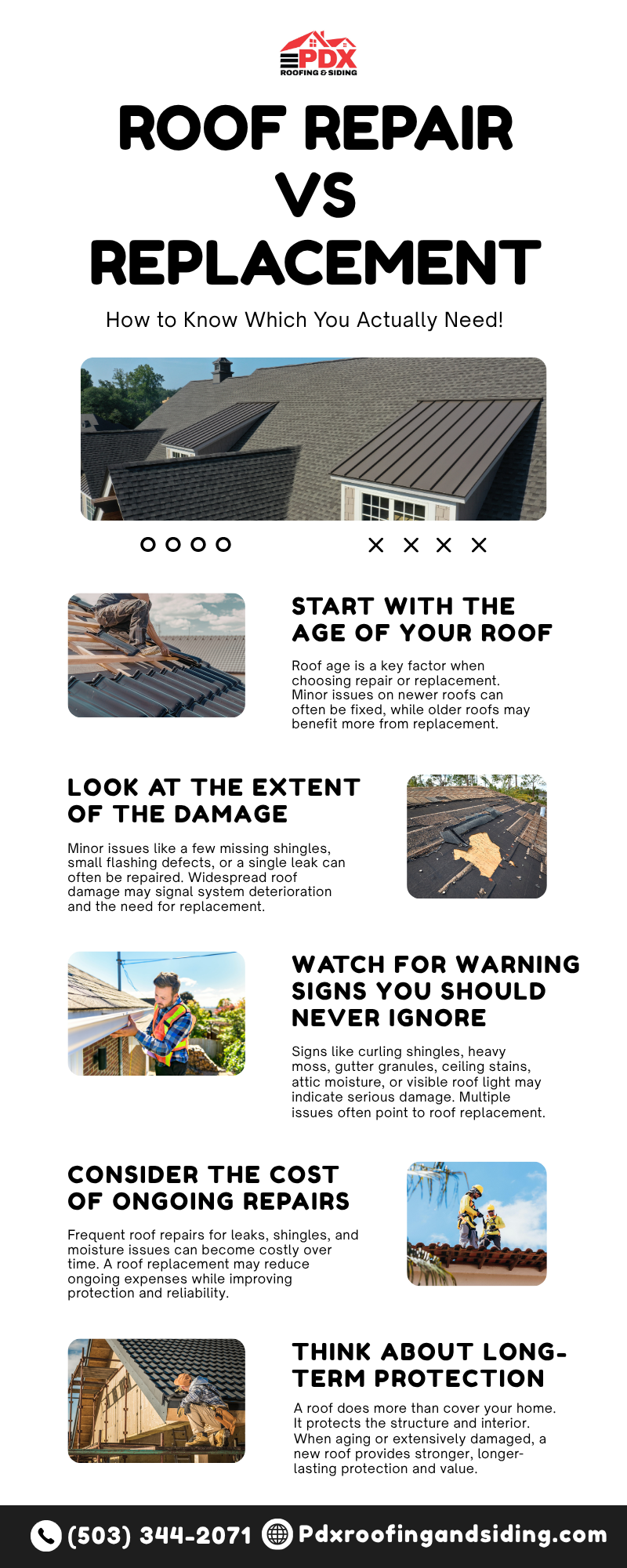
Roof Repair May Be Appropriate When
Damage is localized
Roofing materials are relatively new
Leaks are isolated
Structural components remain intact
Roof Replacement May Be Appropriate When
Roof age exceeds 20–30 years
Multiple leaks exist
Widespread damage is present
Frequent repairs are needed
Structural concerns are discovered
A professional inspection can help determine the most cost-effective solution.
Roof Replacement Cost vs Waiting Too Long
One of the biggest mistakes homeowners make is postponing necessary roof work.
Issue | Early Action Cost | Delayed Action Cost |
Minor Leak | Low | Moderate |
Flashing Repair | Low | Moderate |
Moss Removal | Low | Moderate |
Roof Replacement | Planned Investment | Emergency Replacement + Interior Damage |
Water Damage Restoration | Often Avoidable | Potentially Significant |
Key Takeaway
Addressing roofing problems early is almost always less expensive than repairing water damage, mold growth, insulation loss, or structural deterioration later.
Expert Insight From PDX Roofing and Siding
What Do Roofing Professionals Look For During an Inspection?
Professional roofing contractors evaluate much more than visible shingles.
Inspection areas include:
Shingle condition
Flashing performance
Roof decking
Ventilation systems
Moisture intrusion
Structural movement
Attic conditions
Moss and algae growth
At PDX Roofing and Siding, inspections focus on identifying both visible and hidden roofing issues that commonly affect homes throughout Portland, Beaverton, Hillsboro, Tigard, and surrounding communities.
Final Thoughts
Recognizing the signs you need a roof replacement can save you from costly structural repairs, water damage, and emergency roofing situations. Warning signs such as missing shingles, recurring leaks, sagging sections, excessive moss growth, granule loss, and increasing repair frequency should never be ignored.
Because Portland’s climate places unique demands on roofing systems, regular inspections are essential for protecting your investment. By addressing roofing issues early and consulting experienced professionals, homeowners can improve safety, maintain property value, and extend the life of their homes.
If you’ve noticed any of the warning signs discussed in this guide, scheduling a professional roof inspection is the best next step.