


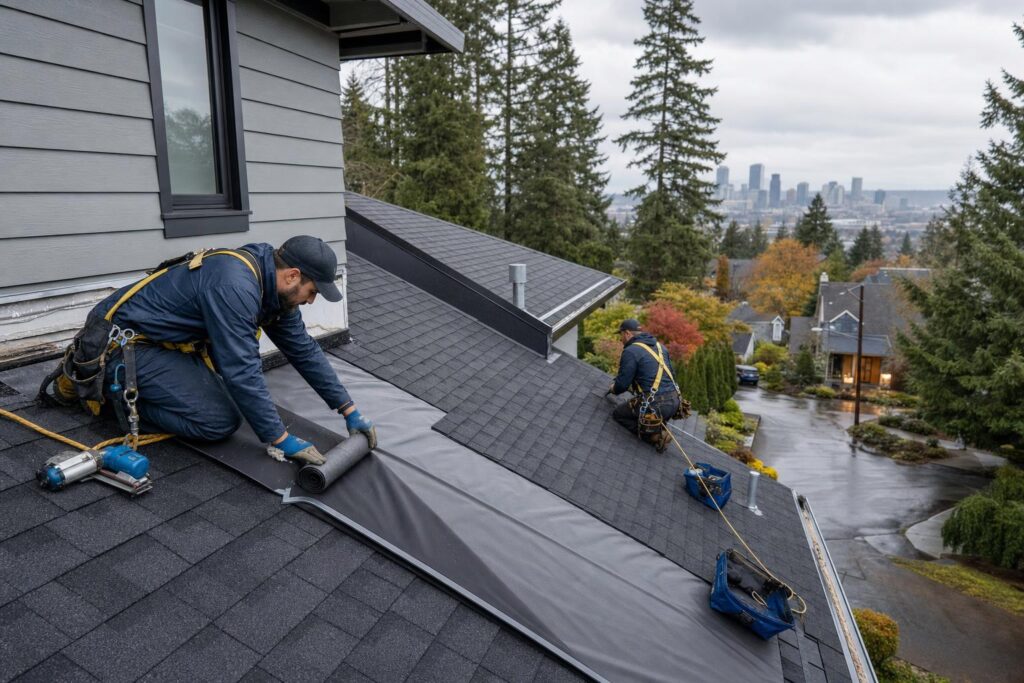
Why Underlayment Deserves More Attention in Portland
When homeowners think about a roof, they usually picture the visible surface: shingles, flashing, vents, and ridge caps. But one of the most important layers is the roof underlayment installed beneath the primary roofing material.
In Portland and across the Portland Metro, roof systems deal with long wet seasons, gusty storms, shaded roof planes, and moisture that can move sideways under wind pressure. That is why underlayment choice matters. It helps provide a secondary layer of protection between your roof covering and the roof deck.
For any roof installation, roof repair, or roof replacement, a knowledgeable Portland roofing contractor should evaluate which underlayment fits the roof design, slope, roofing materials, and local exposure conditions.
What Roof Underlayment Actually Does
Roof underlayment is installed over the roof deck before asphalt shingle roofing or other roof coverings are applied. Its job is not to replace the exterior roofing material, but to support the entire roof system when moisture gets past the first line of defense.
Underlayment helps with:
- Moisture shedding: It helps direct incidental water away from the roof deck.
- Wind-driven rain protection: It provides backup protection when rain is pushed beneath shingles or at vulnerable transitions.
- Roof deck protection during installation: It can help protect sheathing before the final roofing material is fully installed.
- Performance at valleys, eaves, and penetrations: These areas often need additional attention because they see more water flow and roof movement.
- Code and manufacturer requirements: Proper underlayment selection and installation help support a compliant, manufacturer-aligned roof system.
Why Portland Rain Changes the Conversation
Portland roofs rarely face moisture as a single event. Instead, they often deal with repeated wetting, drying, moss-prone shaded areas, debris accumulation, and storms that push rain at angles. That combination makes roof assembly details especially important.
A licensed roofing company will look beyond the shingle color and ask practical questions: Is the roof slope low or steep? Are there valleys that collect water? Are trees dropping needles or leaves? Is there existing roof deck staining? Are there areas that have needed roof repair before?
The answers can influence whether standard synthetic underlayment, self-adhered membrane, or added moisture protection at specific areas is appropriate.
Common Types of Roof Underlayment
There are several underlayment options used in modern roofing. The right choice depends on the roof system, manufacturer specifications, budget, and exposure conditions.
Asphalt-Saturated Felt
Traditional felt underlayment has been used for many years. It can still be suitable for some applications, but it may not offer the same tear resistance, walkability, or moisture performance as many modern synthetic products.
Synthetic Underlayment
Synthetic underlayment is commonly used with asphalt shingle roofing. It is generally lighter, more tear-resistant, and easier to handle than traditional felt. For many Portland roof installation projects, it offers a strong balance of performance and practicality.
Self-Adhered Waterproofing Membrane
Self-adhered membrane is often used in high-risk areas such as eaves, valleys, roof-to-wall transitions, skylights, chimneys, and other penetrations. It seals directly to the roof deck and can provide added protection where wind-driven moisture is more likely to become a problem.
Where Underlayment Choice Matters Most
Not every part of a roof has the same moisture risk. A reliable Portland roofing contractor should pay close attention to the roof’s vulnerable zones.
Valleys
Roof valleys handle concentrated water flow. If the underlayment and flashing details are not correct, water can find its way beneath the roof covering.
Eaves and Rake Edges
Edges are exposed to wind, gutter overflow, and moisture movement. In Portland storms, wind can push rain into places that look protected during calm weather.
Skylights, Chimneys, and Vents
Any roof penetration requires careful integration of flashing and underlayment. These details are often where leaks begin when materials are poorly selected or installed.
Low-Slope Roof Sections
Lower-slope areas shed water more slowly. They may require different roofing materials or additional underlayment protection depending on the roof assembly and manufacturer requirements.
Underlayment and Asphalt Shingle Roofing
Asphalt shingle roofing remains a popular choice for many Portland homes, but shingles perform best as part of a complete roof system. That system includes proper ventilation, decking, flashing, starter courses, drip edge, fasteners, and underlayment.
If one layer is treated as an afterthought, the whole system can be affected. For example, an upgraded shingle installed over poorly chosen or poorly detailed underlayment may still leave the home exposed at valleys, penetrations, or wind-facing roof planes.
That is why roof installation should include a full conversation about the materials beneath the shingles, not just the products visible from the curb.
Signs Your Existing Underlayment May Be Part of the Problem
Underlayment is hidden, so it is not always easy to inspect without removing roofing material. However, certain roof issues may suggest that the roof system needs professional evaluation.
Watch for these warning signs:
- Interior ceiling stains after wind-heavy rain
- Recurring leaks around skylights, vents, or chimneys
- Water intrusion that appears only during certain storm directions
- Soft or stained roof decking found during roof repair
- Shingles that are lifted, missing, or poorly sealed
- Repeated issues in valleys or along roof edges
If water is actively entering the home, emergency roof repair may be needed to stabilize the situation before a larger repair or replacement plan is developed.
How Underlayment Connects to Siding and the Whole Exterior
Moisture protection does not stop at the roof edge. Roof-to-wall intersections, dormers, sidewalls, and transitions between roofing and siding can be major water-management areas.
If your home also needs siding replacement, siding repair, or broader home exterior upgrades, it is smart to look at the roof and siding together. Details such as step flashing, housewrap, trim clearances, and fiber cement siding installation can all affect how water drains away from the structure.
A coordinated plan can help reduce gaps between trades and improve the overall exterior system.
Questions to Ask Before Choosing Underlayment
Before approving a roof installation or replacement proposal, ask your roofing contractor how the underlayment will be selected and installed.
Helpful questions include:
- Which underlayment type is recommended for my roof, and why?
- Will self-adhered membrane be used at valleys, eaves, penetrations, or roof-to-wall areas?
- Does the underlayment meet the roofing material manufacturer’s requirements?
- How will the crew handle flashing integration with underlayment?
- Will existing roof deck damage be addressed before new materials are installed?
- How will ventilation, attic moisture, and roof assembly performance be evaluated?
Choose a Roof System Built for Portland Conditions
Underlayment is not the most visible part of your roof, but it plays a major role in protecting your home from Portland rain and wind-driven moisture. The right material, placed in the right locations, helps the roof system perform as intended.
PDX Roofing and Siding provides roof installation, roof repair, siding replacement, and exterior guidance for homeowners in Portland, OR and the Portland Metro. If you want honest recommendations from a licensed roofing company, our team can help you evaluate the best path forward.
Talk With PDX Roofing and Siding
Planning a roof replacement, dealing with a leak, or comparing roofing materials? Contact PDX Roofing and Siding for clear guidance based on your home’s condition and Portland’s wet climate.
Services and offers are subject to availability and approval. For practical next steps, Get roof installation help and talk with the team about timing, scope, and the right path for your situation.