


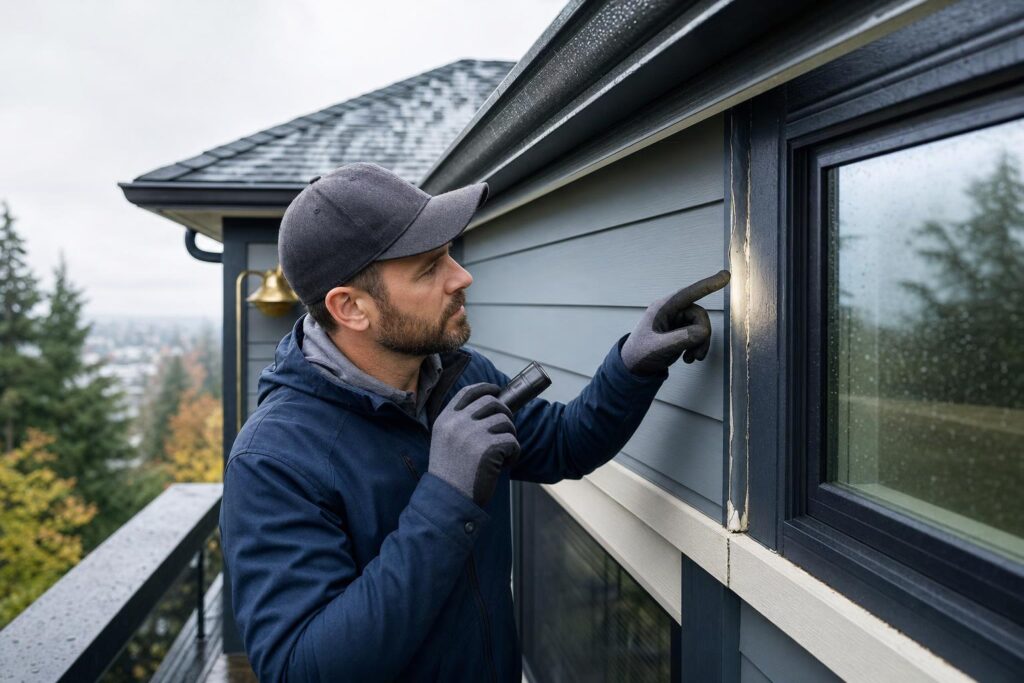
Why Trim and Caulking Are Often the First Exterior Components to Fail
On many Portland homes, siding panels may still look solid while the trim boards, seams, and caulk joints are already showing wear. That is because trim and caulking sit at the most vulnerable points of the exterior: corners, windows, doors, roof-to-wall transitions, and siding joints.
These areas are designed to help manage water, movement, and transitions between materials. When they begin to crack, separate, swell, or soften, moisture can get behind the siding system and create larger issues over time.
At Pdx roofing and siding, we often evaluate these details during siding repair, siding replacement, roof repair, and broader home exterior upgrades throughout Portland and the Portland Metro area.
Portland Weather Puts Constant Stress on Exterior Seams
Portland’s climate is a major reason trim and caulking fail before larger siding sections. Exterior seams are repeatedly exposed to moisture, drying cycles, shade, wind-driven rain, and seasonal temperature changes.
Moisture Finds the Weak Points First
Rain does not need a large opening to cause problems. Small cracks in caulking, gaps around trim, or exposed cut edges can allow water to reach areas that are harder to dry out. Over time, this can lead to swelling, staining, paint failure, or soft trim.
Expansion and Contraction Break Down Sealant
Siding, trim, windows, doors, and roofing materials do not all expand and contract at the same rate. As materials move, caulk joints are stretched and compressed. If the original sealant was poorly applied, too thin, or no longer flexible, it can split away from the surface.
Shade and Tree Cover Can Slow Drying
Many Northwest homes have shaded elevations, overhanging trees, or narrow side yards. These conditions can keep trim and caulking damp longer, especially on north-facing walls or areas with limited airflow.
Common Reasons Siding Trim Fails Early
Trim is not just decorative. It helps protect transitions and edges where siding is cut, joined, or framed around openings. When trim fails, it can expose the wall assembly to moisture.
- Improper clearance: Trim installed too close to roofs, decks, patios, or soil can absorb moisture more easily.
- Unsealed cut ends: Exposed trim ends can draw in moisture if they were not properly sealed during installation.
- Paint breakdown: Peeling or cracked paint allows water to reach the trim surface.
- Window and door movement: Openings are high-stress areas where trim joints often separate first.
- Roofline splashback: Trim near roof-to-wall areas, gutters, and lower wall sections may see more water exposure.
Why Caulking Fails Before Siding Panels
Caulking is intended to seal specific gaps, but it is not meant to compensate for poor installation, missing flashing, or ongoing water intrusion. When caulk is asked to do too much, it usually fails early.
The Joint May Be Too Wide or Too Narrow
Caulk performs best when the joint is correctly sized and prepared. If a gap is too wide, too shallow, or uneven, the sealant may not bond properly or may tear as the home moves.
The Surface May Not Have Been Prepared Correctly
Dirt, old sealant, moisture, loose paint, or dust can prevent adhesion. A clean, dry, stable surface is important for a lasting seal.
The Wrong Sealant May Have Been Used
Different siding materials and trim applications call for compatible sealants. Fiber cement siding, wood trim, metal flashing, and painted surfaces each have specific requirements. A licensed roofing company or siding professional can help identify where sealant is appropriate and where flashing or replacement is the better answer.
Warning Signs Portland Homeowners Should Not Ignore
Small trim and caulk problems are often easier to address before they spread. During a visual walkaround, look for signs such as:
- Cracked, split, or missing caulking around windows, doors, corners, and trim boards
- Trim that looks swollen, soft, warped, or pulling away from the wall
- Peeling paint near seams or lower wall sections
- Dark staining below windows, at corners, or under roof edges
- Gaps between siding and trim
- Recurring moisture marks inside near exterior walls or windows
If you notice water entering your home during a storm, contact a qualified contractor promptly. Pdx roofing and siding can evaluate related exterior issues, including roof repair needs and emergency roof repair situations when availability allows.
How Roofing Details Can Affect Siding Trim
Siding trim failure is not always caused by the siding alone. Roof edges, gutters, flashing, and drainage patterns can all influence how much water hits the wall.
Roof-to-Wall Transitions
Where a roof meets a sidewall, proper flashing is essential. If flashing is missing, damaged, or poorly integrated, water may run behind trim or siding. This is especially important on homes with asphalt shingle roofing and complex rooflines.
Gutters and Downspouts
Overflowing gutters or downspouts that discharge too close to the structure can keep trim wet. Even well-built siding systems can suffer when water is repeatedly directed at the same area.
Coordinating Roof and Siding Work
When planning roof installation, siding replacement, or larger home exterior upgrades, it is smart to look at the entire exterior system rather than each component separately. A Portland roofing contractor with siding experience can help identify how the roof, flashing, trim, and wall cladding work together.
Repair or Replacement: How to Decide
The right solution depends on the condition of the trim, the siding material, the amount of moisture exposure, and whether the underlying wall has been affected.
- Targeted siding repair may be appropriate when damage is limited to a few trim boards or caulk joints and the surrounding materials are sound.
- Trim replacement may be needed when boards are soft, swollen, split, or no longer holding paint properly.
- Siding replacement may be recommended when moisture damage is widespread, panels are failing, or the existing system was installed without proper clearances or flashing.
- Roof or flashing repair may be necessary if water is entering from above or collecting at roof-to-wall transitions.
For homes with fiber cement siding, proper clearances, flashing details, and compatible sealants are especially important. The goal is not simply to cover a crack, but to correct the condition that caused the failure.
How PDX Roofing and Siding Helps Protect Portland Homes
PDX Roofing and Siding provides roof installation and replacement, roof repair and maintenance, siding installation and replacement, and siding repair and maintenance for Portland, OR and the Portland Metro area. Our team focuses on honest guidance, appropriate materials, and clean exterior detailing that fits Northwest conditions.
Whether you are comparing roofing materials, addressing trim deterioration, planning siding replacement, or looking for a licensed roofing company to inspect storm-related exterior concerns, we can help you understand your options clearly.
Schedule an Exterior Evaluation
If your siding trim is separating, caulking is cracking, or moisture is showing up around windows, doors, or rooflines, it is worth having the exterior reviewed before the problem grows. Contact PDX Roofing and Siding to discuss your roof, siding, and trim concerns.
Services and offers are subject to availability and approval. For practical next steps, Call roof installation now and talk with the team about timing, scope, and the right path for your situation.