


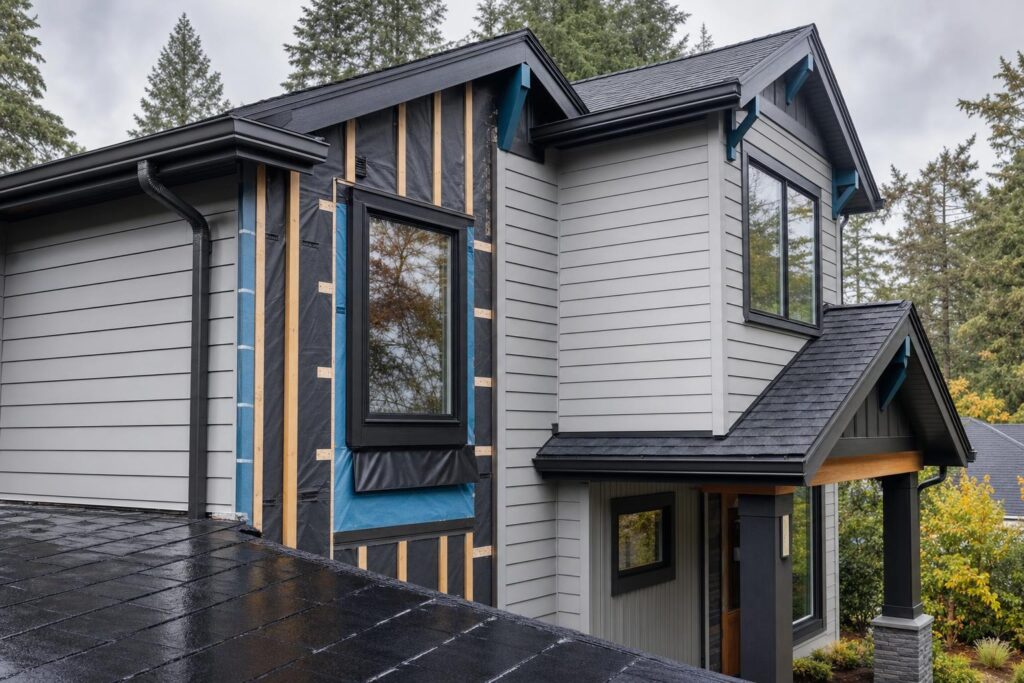
Why Rainscreen Systems Matter Behind Portland Siding Installations
In Portland, siding has to do more than look good. It needs to help protect the wall assembly from persistent rain, damp air, and seasonal moisture. That is where a rainscreen system can make a meaningful difference.
A rainscreen is a small drainage and ventilation space installed behind the exterior siding. It helps water that gets behind the siding drain away and allows the wall to dry more effectively. For many Portland Metro homes, especially during a siding replacement, this detail can support a longer-lasting exterior.
What Is a Rainscreen System?
A rainscreen system is not the siding itself. It is the space and supporting components installed behind the siding layer. While the exact assembly can vary based on the home, siding product, and project scope, a rainscreen often includes:
- A weather-resistive barrier over the wall sheathing
- Vertical furring strips or a drainage mat to create an air gap
- Flashing details at openings, transitions, and penetrations
- Ventilation paths that help the wall assembly dry
- Properly installed siding, such as fiber cement siding or other approved materials
The goal is simple: manage water before it becomes a bigger problem inside the wall.
Why Portland Homes Need Strong Moisture Management
Portland and the surrounding Oregon climate can be hard on home exteriors. Rain, wind-driven moisture, shaded lots, and limited drying time can all contribute to siding wear. Even high-quality siding materials need the right installation details behind them.
Without a proper drainage plane, water that gets behind siding may remain trapped longer than it should. Over time, that can contribute to staining, swelling, paint failure, or hidden damage depending on the materials and conditions involved.
A rainscreen system gives moisture a planned path to escape. That is especially important for home exterior upgrades where the goal is not just curb appeal, but better long-term performance.
How Rainscreens Help Protect Siding Performance
They Help Water Drain Away
No siding system should be treated as completely waterproof. Wind-driven rain can enter around seams, trim, fasteners, or transitions. A rainscreen helps direct that moisture down and out instead of allowing it to sit against the wall.
They Support Better Drying
The air gap behind the siding helps promote drying. In Portland’s damp climate, drying potential matters. When wall assemblies can dry more effectively, the exterior system is better positioned to perform as intended.
They Can Help Siding Materials Last Longer
Moisture trapped behind siding can stress coatings, caulking, trim, and the siding material itself. A properly designed rainscreen can reduce that stress by improving drainage and ventilation behind the cladding.
They Improve the Quality of a Siding Replacement
If your home is already being opened up for siding replacement, it is a smart time to evaluate the wall assembly. PDX Roofing and Siding can review siding conditions, flashing details, and related exterior components so the installation is planned with moisture management in mind.
When Should You Consider a Rainscreen?
A rainscreen may be worth discussing if your Portland home has:
- Older siding with recurring paint or moisture issues
- Fiber cement siding being installed as part of a siding replacement
- Walls exposed to wind-driven rain
- Shaded elevations that dry slowly
- Previous signs of rot, staining, or soft trim
- A major home exterior upgrade already planned
The best approach depends on the home, the siding product, and applicable installation requirements. A licensed roofing company or siding contractor familiar with Portland conditions can help you make a practical decision.
Rainscreens and Roofing Details Work Together
Siding and roofing are separate systems, but they meet at important transition points. Roof edges, wall-to-roof intersections, gutters, kick-out flashing, and penetrations all affect how water moves across the exterior.
That is why working with a Portland roofing contractor that understands both roofing and siding can be helpful. Whether you need roof repair, emergency roof repair, roof installation, asphalt shingle roofing, or siding replacement, the details should work together to move water away from the structure.
Good exterior planning looks at the full envelope, including roofing materials, siding materials, flashing, ventilation, and drainage.
What to Ask Before Your Portland Siding Installation
Before moving forward with a siding project, ask your contractor questions such as:
- Will this siding product benefit from or require a rainscreen?
- How will water drain behind the siding?
- What flashing details will be used around windows, doors, and roof intersections?
- How will the wall assembly be allowed to dry?
- Are the installation methods aligned with the siding manufacturer’s requirements?
- Will any damaged sheathing or trim be addressed before new siding is installed?
Clear answers help you understand what is being installed behind the finished surface, not just what the exterior will look like when the project is complete.
Talk With PDX Roofing and Siding
If you are planning siding installation, siding repair, roof repair, or a full exterior upgrade in Portland or the Portland Metro area, PDX Roofing and Siding can help you evaluate the right approach for your home.
Services and offers are subject to availability and approval.
Frequently Asked Questions
Is a rainscreen required for every Portland siding project?
Not always. Requirements can depend on the siding material, wall assembly, local conditions, and manufacturer instructions. However, in Portland’s wet climate, it is often worth discussing during siding replacement or major exterior work.
Can a rainscreen be added behind fiber cement siding?
In many cases, yes. Fiber cement siding is commonly paired with moisture management details, but the assembly should be planned according to product requirements and the condition of the existing wall.
Does a rainscreen replace flashing?
No. A rainscreen does not replace proper flashing. Flashing, weather barriers, drainage space, and siding all work together to manage water.
Should roofing issues be addressed before siding replacement?
Sometimes. If roof leaks, damaged flashing, or gutter problems are sending water into wall areas, those issues should be evaluated before or during siding work. Coordinating roof repair and siding replacement can help prevent repeated exterior problems. For practical next steps, Get roof installation help and talk with the team about timing, scope, and the right path for your situation.