


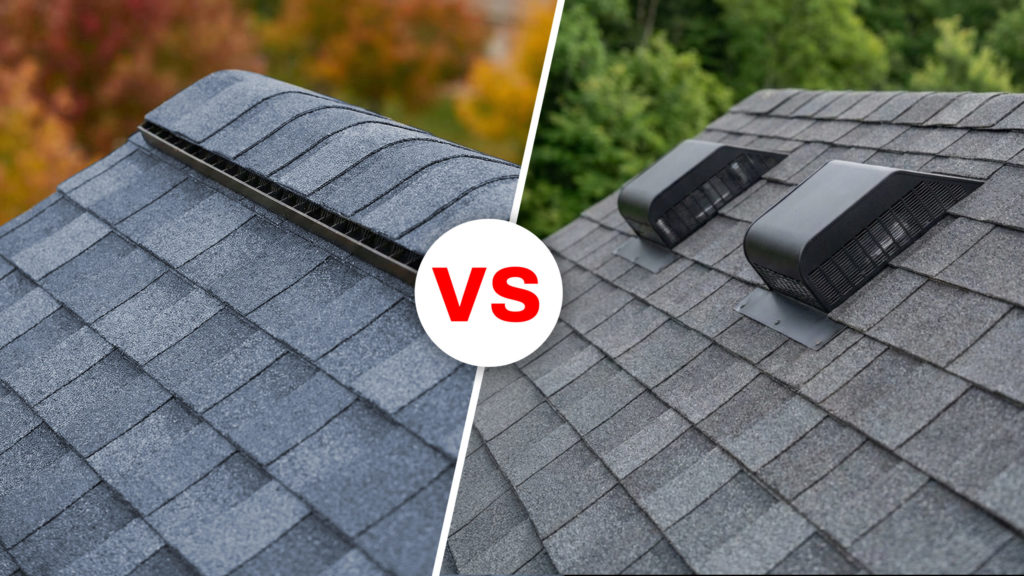
Proper attic ventilation is essential during wet winter weather. With constant moisture in the air and cooler temperatures setting in, your ventilation system plays a major role in preventing condensation, mold and premature shingle wear. Homeowners often ask whether ridge vents or traditional roof vents offer better performance in our climate.
At PDX Roofing and Siding, we evaluate your attic, roof design and insulation to recommend the most effective solution for winter protection.
How Ridge Vents Work in Portland’s Winter
Ridge vents run along the peak of the roof and release warm, humid air evenly across the entire attic. This design promotes consistent airflow, which is especially helpful during long stretches of rainfall. In neighborhoods like Beaverton, Hillsboro and Gresham where homes often deal with moisture from nearby trees, ridge vents help reduce attic humidity that can lead to mold or wood rot.
How Roof Vents Perform in Wet Conditions
Traditional roof vents rely on multiple openings placed on various slopes of the roof. They can work well on simple roof designs, but their performance depends on proper placement and the strength of winter winds. During December storms, moisture laden air may not escape as efficiently, which increases the risk of condensation in the attic.
Which Option Is Better for Portland Homes
Most homes in the Portland metro benefit from ridge vents because they provide continuous ventilation and reduce the chances of cold spots where moisture collects. However, some low slope roofs and older structures may require a combination of vent styles to achieve the right balance of intake and exhaust.
If you want to improve your roof’s performance this season, we can help you choose the right system for long lasting results.
Schedule your fast free roofing estimate with PDX Roofing and Siding today.