
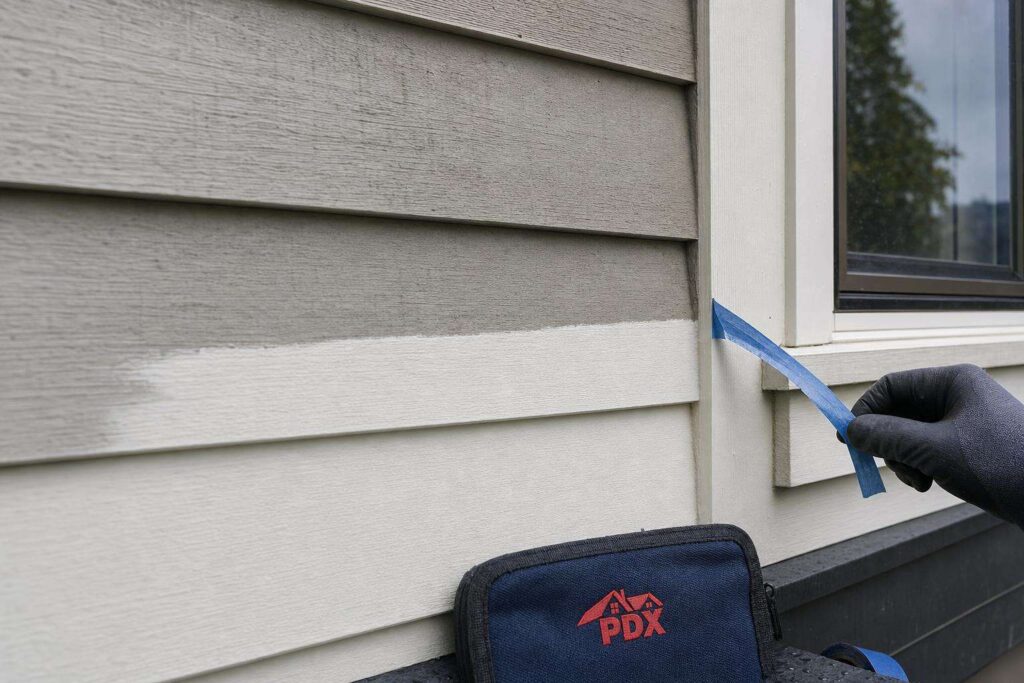
Why Paint Break Lines Matter in Siding Repairs
When siding is repaired, the replacement board or panel is only part of the job. The paint transition is what most people notice first. A smart paint break line gives the eye a natural stopping point, helping the repair blend into the home instead of looking like an obvious patch.
For Portland homes, this matters even more because exterior surfaces deal with rain, shade, tree cover, and seasonal moisture. Even when the same paint color is used, older paint can weather differently than newly applied paint. Planning the break line before work begins helps keep siding repair and maintenance visually clean.
What Is a Paint Break Line?
A paint break line is the point where new paint stops and existing paint begins. The cleanest break lines usually happen at natural architectural transitions rather than in the middle of a flat wall.
Good paint break lines are often placed at:
- Inside or outside corners
- Trim boards
- Window and door casing
- Horizontal band boards
- Changes in siding direction or profile
- Downspouts or other vertical features, when appropriate
The goal is not to hide the repair through guesswork. The goal is to make the finished siding look intentional and balanced.
Best Places to Stop Paint on a Siding Repair
Inside and Outside Corners
Corners are often the cleanest place to stop a paint section because the wall plane changes direction. This naturally reduces the way light hits the two surfaces, making slight color or sheen differences less noticeable.
Trim Around Windows and Doors
Window and door trim can create a defined frame for paint work. If siding damage is close to an opening, stopping at the surrounding trim can help the repaired area feel integrated with the existing exterior.
Horizontal Trim and Belly Bands
Some homes have horizontal trim boards or belly bands that divide upper and lower wall sections. These are useful break points because they already separate the elevation visually.
Full Wall Sections
In some cases, the cleanest result comes from painting a full wall section rather than only the repaired boards. This is especially helpful when the existing paint has faded, the siding has a strong texture, or the repair sits in a highly visible area.
How Siding Material Affects the Paint Plan
Different siding materials respond differently to repair and repainting. Fiber cement siding, wood siding, and engineered products each have their own surface texture, joint pattern, and paint behavior. A careful plan considers both the replacement material and the existing finish.
With fiber cement siding, for example, matching the exposure, profile, caulk lines, and paint sheen is important. If the board replacement is done well but the paint stops in the wrong place, the repair can still stand out.
For larger siding replacement projects, paint break lines may be planned around entire elevations so the home exterior upgrades look cohesive from the street and from neighboring angles.
Common Mistakes That Make Siding Repairs Stand Out
A siding repair can look uneven when the paint plan is treated as an afterthought. Common issues include:
- Stopping paint in the middle of a wall with no natural visual break
- Using a sheen that does not match the surrounding siding
- Replacing boards without matching profile, reveal, or texture
- Painting only the damaged area when the existing finish has visible weathering
- Ignoring nearby trim, flashing, or roofline details that affect water movement
A knowledgeable siding contractor will look at the full wall, not just the damaged piece of siding.
Connecting Siding Repairs With Roof and Exterior Details
Siding damage can sometimes be connected to water movement from the roof, gutters, flashing, or trim transitions. That is why it helps to work with a team that understands both siding and roofing systems.
As a Portland roofing contractor and siding specialist, PDX Roofing and Siding can evaluate whether the visible siding issue is isolated or related to a larger exterior concern. In some situations, roof repair, emergency roof repair, gutter correction, or flashing improvements may need to be discussed before siding repair is finished.
If roof installation is part of a broader exterior project, the team can also review roofing materials such as asphalt shingle roofing and coordinate those choices with siding color, trim color, and overall curb appeal.
What a Clean Siding Repair Plan Should Include
Before siding work begins, a practical repair plan should answer several questions:
- Where will the paint stop and why?
- Will the repair require spot painting, a partial wall section, or a full elevation?
- Does the replacement siding match the existing profile and exposure?
- Are trim, caulk, flashing, or roofline details contributing to the damage?
- Will the repair support future maintenance and home exterior upgrades?
Clear planning helps homeowners understand what the finished project should look like and reduces surprises once the new siding and paint are in place.
When Siding Replacement May Be the Better Option
Repair is often appropriate when damage is limited and the surrounding siding is still performing well. However, siding replacement may make more sense if there are widespread cracks, swelling, repeated moisture problems, or multiple elevations with aging materials.
A licensed roofing company that also handles siding can help Portland Metro homeowners compare repair, maintenance, and replacement options without overselling the scope. The right recommendation should be based on the condition of the exterior, the location of the damage, and the homeowner’s long-term goals.
Talk With PDX Roofing and Siding
Clean siding repairs depend on good craftsmanship and smart visual planning. PDX Roofing and Siding helps homeowners in Portland, OR, and the Portland Metro area evaluate siding repair, siding replacement, roof repair, and roof installation needs with direct, honest guidance.
Services and offers are subject to availability and approval. For practical next steps, Get roof installation help and talk with the team about timing, scope, and the right path for your situation.