


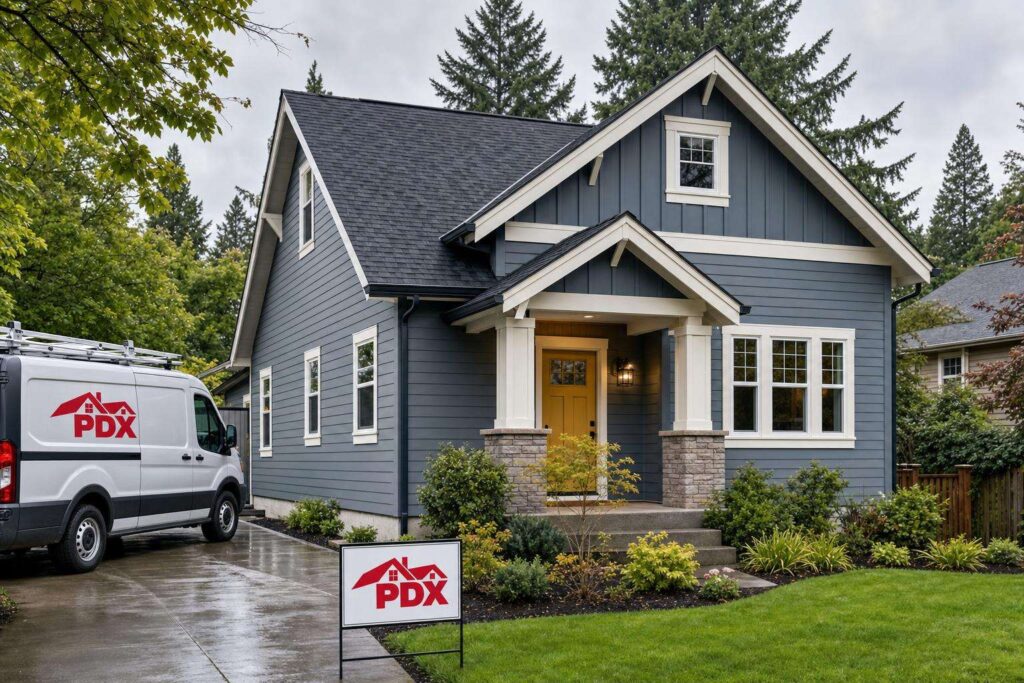
Why Material and Design Choices Matter in Siding Replacement
Siding replacement is one of the most visible home exterior upgrades you can make, but the best results come from looking beyond color alone. Your siding material, trim package, profile, flashing details, and roof-to-wall transitions all affect how the finished exterior performs and looks over time.
For homes in Portland and the Portland Metro area, siding should be selected with wet weather, seasonal temperature changes, architectural style, and long-term maintenance in mind. A knowledgeable contractor can help you compare options honestly and avoid mismatched materials or design choices that do not fit the home.
Key Siding Materials to Consider
Fiber Cement Siding
Fiber cement siding is a popular option for many Northwest homes because it offers a clean appearance, strong design flexibility, and a range of profiles. It can work well on traditional, craftsman, and modern homes when installed with proper clearances, flashing, and trim details.
- Available in lap siding, shingles, panels, and board-and-batten styles
- Can support a wide range of color palettes
- Pairs well with many roofing materials, including asphalt shingle roofing
- Requires correct installation practices to manage moisture and movement
Engineered Wood Siding
Engineered wood siding can provide a warm, wood-like appearance with consistent profiles and design options. It is often chosen for homeowners who want texture and character while still considering durability and maintenance expectations.
- Offers a natural-looking grain pattern
- Works well with accent walls, gables, and mixed-material designs
- Needs proper sealing, flashing, and manufacturer-approved installation
Natural Wood Siding
Natural wood siding can create a distinctive look, especially on classic Portland homes. However, it typically requires more ongoing care than some other siding materials. If you love the appearance of cedar or other wood options, make sure the maintenance plan fits your expectations.
- Provides authentic texture and character
- Can be stained or painted depending on the desired look
- Requires regular attention to coatings, joints, and weather-exposed areas
Panel and Composite Options
Panel-style siding and composite products can be a good fit for modern designs, additions, and accent sections. These options often depend heavily on layout, trim, fastener details, and the overall design of the home exterior.
- Creates a clean, contemporary appearance
- Can be combined with lap siding or board-and-batten accents
- Requires careful planning around seams, openings, and transitions
Design Choices That Shape the Final Look
Siding Profile and Exposure
The siding profile determines the visual rhythm of your exterior. A narrow lap exposure can feel more traditional, while wider boards may create a cleaner modern look. Board-and-batten can add vertical interest, especially on gables, entries, and accent walls.
- Lap siding: versatile and suitable for many home styles
- Board-and-batten: adds height and a craftsman or farmhouse feel
- Shingle-style siding: works well for gables and character details
- Panel siding: supports modern, streamlined designs
Color Selection
Color affects curb appeal, resale presentation, and how architectural details stand out. In Portland, many homeowners choose exterior colors that complement natural surroundings, roof color, masonry, windows, and landscaping.
- Coordinate siding color with the roof, gutters, trim, and entry door
- Use accent colors carefully so the home feels balanced
- Consider how shade, tree cover, and natural light affect the final appearance
Trim, Corners, and Window Details
Trim is not just decorative. It helps define the edges of the siding system and can strongly affect the finished style. Window trim, corner boards, belly bands, fascia, and soffit details should be planned before installation begins.
- Thicker trim can create a more substantial craftsman look
- Simpler trim can support a cleaner modern design
- Consistent trim sizing helps the exterior feel intentional
- Proper flashing around trim and openings is essential
Weather Protection Details Are Part of the Design
Good siding replacement is not only about the visible finish. Behind the siding, the water-resistive barrier, flashing, clearances, and ventilation details help protect the wall assembly. These components are especially important in the Portland Metro climate.
- Kick-out flashing where rooflines meet walls
- Proper clearance from roofs, decks, patios, and soil
- Careful sealing and flashing around windows and doors
- Compatible transitions between siding, roofing, gutters, and trim
If your project also involves roof repair, roof installation, or changes to gutters and fascia, it is helpful to work with a team that understands the full exterior system. A licensed roofing company can help evaluate how siding work connects to the roofline, especially around dormers, chimneys, valleys, and wall intersections.
How Roofing Choices Can Affect Siding Replacement
Siding and roofing are separate systems, but they meet in several important places. Roofing materials, roof overhangs, gutter placement, and flashing details can all influence how siding replacement should be planned.
- Asphalt shingle roofing should integrate correctly with wall flashing
- Gutters and downspouts should direct water away from siding surfaces
- Fascia and soffit repairs may be best addressed before new siding is installed
- Areas with prior leaks may need inspection before covering walls with new materials
If you are already speaking with a Portland roofing contractor about roof installation, roof repair, or emergency roof repair, it may be a good time to discuss whether siding repairs or replacement should be coordinated as part of the same exterior plan.
Choosing the Right Combination for Your Home
The right siding replacement plan should match your home’s architecture, your maintenance preferences, and the condition of the existing exterior. Before selecting materials, consider the following questions:
- Does the siding style match the age and design of the home?
- Will the color work with the roof, windows, masonry, and landscaping?
- Are there signs of water damage that should be addressed first?
- Do roofline, gutter, or trim details need attention during the project?
- Is the selected material appropriate for the installation location and exposure?
Work With PDX Roofing and Siding on Your Exterior Upgrade
PDX Roofing and Siding helps Portland and Portland Metro homeowners plan siding replacement, siding repair, roof repair, roof installation, and related home exterior upgrades with practical guidance and careful attention to the full exterior system.
Services and offers are subject to availability and approval. For practical next steps, Get roof installation help and talk with the team about timing, scope, and the right path for your situation.