


Introduction: The Truth About Roofing Timelines in Portland
If you’re a Portland homeowner watching dark clouds roll in, one question tends to take over everything else. How long will my roof actually be exposed to the weather?
It’s a fair concern, and easily the one we hear most often. A quick search might say a roof replacement takes one to three days, but that answer skips over the realities of building in the Pacific Northwest. In Portland, roofing is as much about timing, permits, and weather windows as it is about the work itself. When rain is always a possibility, every day on the calendar matters.
That’s exactly why this guide exists. Instead of vague estimates, this article walks you through the real roofing timeline in Portland, Oregon, from the first inspection to the final cleanup. Along the way, we break the process into clear phases and explain what happens at each step.
You’ll also learn what can slow things down or speed them up. Weather patterns, permitting timelines, material availability, roof complexity, and inspections all play a role in how long your project takes. By the end, you’ll have a realistic picture of what to expect and how to plan your roof installation with far more confidence, even when the forecast looks uncertain.
The Short Answer on Roofing Timelines in Portland
The installation phase is the part people picture. This is when the crew is on your roof removing old materials and installing the new system. For a typical Portland home around 2,500 square feet, this part of the job usually takes two to four days, assuming normal weather and no major structural surprises.
The full project timeline is a bigger picture. From the day you sign a contract to the day the last nail is cleaned up, most roofing projects in Portland stretch across three to six weeks. That time accounts for permits, inspections, material scheduling, and weather windows. Some of it happens quietly in the background, but it all determines when the work actually starts.
Understanding this difference helps set realistic expectations. Your roof is not left open for weeks, but the planning behind a smooth, dry installation takes time.
Phase 1: The Invisible Work Before Installation (2–5 Weeks)
This phase happens entirely behind the scenes, but it determines how smoothly your roof installation goes once work begins. In Portland, this planning stage often takes longer than the physical install itself.
Site Inspection and Local Planning
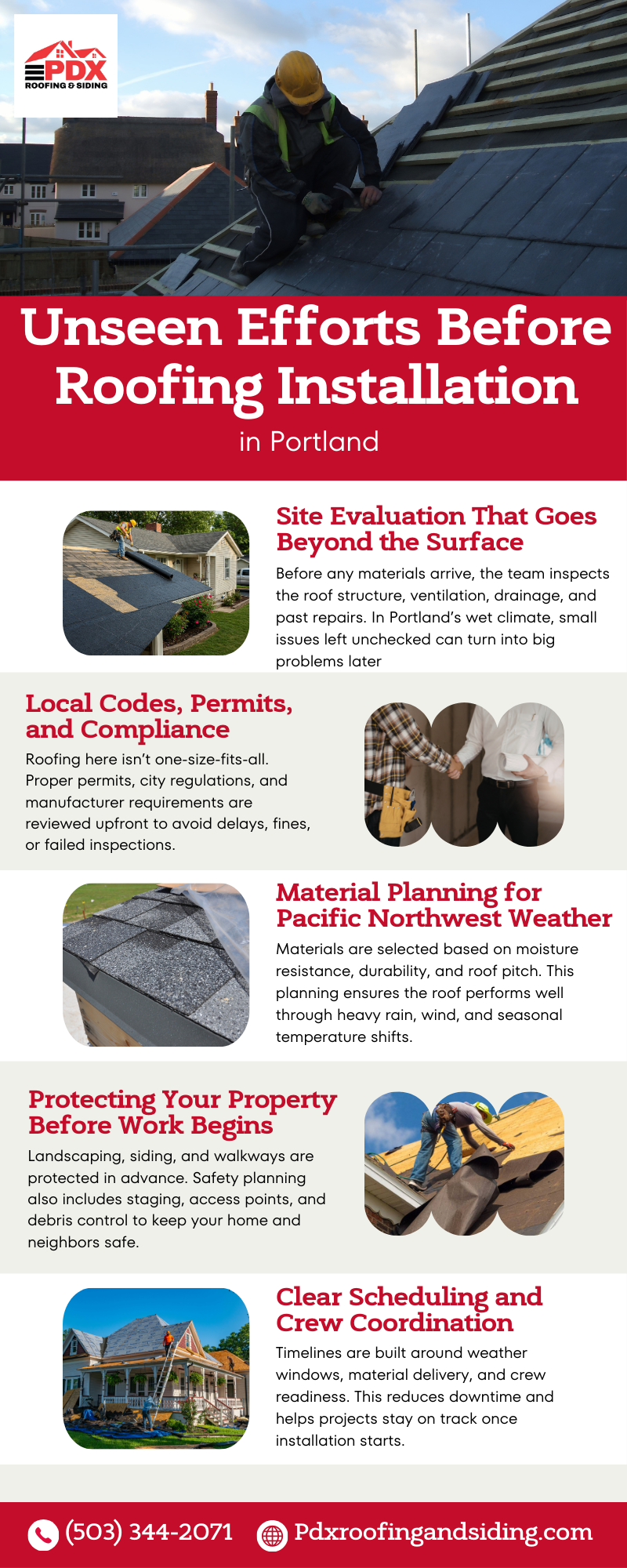
- Contractors assess more than shingles. They look for moisture exposure, moss buildup, ventilation gaps, and roof pitch.
- Most projects are planned as a full tear-off to avoid trapping moisture and accelerating rot.
- The roof deck is inspected so any weak or damaged areas can be addressed early.
Material Planning for Portland Conditions
- Synthetic underlayment is typically specified because it performs better in damp air than traditional felt.
- Ice and water protection is planned for eaves and valleys to guard against wind-driven rain and ice buildup.
- Material choices are finalized based on durability rather than appearance alone.
Permits and Scheduling
- Roofing permits are submitted during this phase and usually take one to three weeks to approve. (More on this later)
Why This Phase Matters
- Proper planning keeps installation time short.
- It reduces the risk of weather exposure once the roof is opened.
- A strong Phase 1 sets up a faster, safer installation with fewer surprises.
More On Pre-Construction Timeline for Roofing Installation Projects in Portland
Before a single shingle is removed, every roofing project in Portland passes through a pre-construction phase that often takes longer than the actual install. This stage is mostly administrative, but it plays a major role in when your project really starts.
How The Pre-Construction Effect Roofing Timelines?
In Portland, roofing work cannot begin until permits are approved. While the installation itself may take just a few days, the approval process can stretch into weeks. For homeowners, this gap often feels confusing because nothing appears to be happening on site, even though the project is technically underway.
Residential Permit Timelines
For most single-family homes, roofing permits move at a moderate pace. On average, residential permits take about two to three weeks from submission to approval. Simple roof replacements with no structural changes can clear faster, sometimes within a week.
Delays usually happen when the city requests clarification. This can include ventilation details, decking specifications, or changes like skylights. Each request pauses the clock until the contractor responds, which can quietly add days or weeks.
When a Home Is Treated as Commercial
Some buildings fall into a gray area. Converted homes used as offices or mixed-use properties are often reviewed under commercial rules. Even when the work itself is identical to a residential reroof, this classification adds extra review steps.
As a result, permit approval can take closer to four weeks. After approval, contractors still need time to align crew schedules, which can push the actual start date out another one to two weeks.
Inspections and Short Delays During the Job
Once work begins, inspections become the next timeline factor. Certain steps, such as replacing roof decking, require city sign-off before the project can continue. If inspectors are not immediately available, work may pause for a day or two.
In wet weather, these pauses often require temporary coverings to protect the home, adding time and labor behind the scenes.
What Homeowners Should Expect
From permit submission to the first workday, the pre-construction phase can range from one to six weeks. Understanding this upfront helps set realistic expectations and prevents frustration before installation even begins.
By this stage, permits are approved, materials are ready, and your roofing contractor in Portland has a clear plan based on the inspection findings. Once weather and crew schedules align, the project moves from preparation to action. This is when Phase 2, the installation, begins.
Phase 2: The Installation Phase (Production Time: 2–5 Days)
Once the crew arrives, the focus shifts from planning to execution. This is the phase homeowners notice most, and it moves quickly when weather and site conditions cooperate. For a typical Portland home, the installation phase usually spans two to five days.
Day 1: Site Protection and Tear-Off
- Crews begin by setting up safety barriers and protecting landscaping with tarps and plywood.
- In dense Portland neighborhoods, this step helps prevent debris from affecting nearby homes.
- The existing roof is fully removed down to the wood deck.
- Tear-off generates a large amount of debris, often filling a 20 to 30 yard dumpster by the end of the day.
Day 1–2: Deck Inspection and Dry Rot Repairs
- With the deck exposed, contractors inspect for dry rot and moisture damage.
- In Portland, rot is commonly found near eaves, valleys, and areas with long-term water exposure.
- Minor repairs can be completed quickly, sometimes within an hour.
- Larger issues, such as damaged decking or structural framing, can add one to two days to the schedule.
Day 2–3: Waterproofing and Shingle Installation
- A moisture-resistant synthetic underlayment and ice and water protection are installed as soon as possible.
- Once this layer is in place, the home is protected from rain even before shingles go on.
- Shingles or roofing panels are installed from the bottom up.
- Experienced crews can typically install 15 to 20 roofing squares per day.
Ventilation Upgrades
- Intake and exhaust ventilation is adjusted or upgraded during installation.
- Proper airflow reduces condensation and helps prevent mold during Portland’s wet winters.
Day 4 and Beyond: Finishing Work
- Flashing, ridge caps, and final details are completed.
- If new gutters are included, they are usually installed after roofing, adding about one extra day.
- The site is cleaned thoroughly, including a magnetic sweep for nails.
When Phase 2 is done well, the roof is exposed for the shortest time possible while ensuring long-term protection.
Factors That Can Change Your Roofing Timeline
Even with good planning, roofing timelines are not one-size-fits-all. A few key variables can shorten the schedule or quietly stretch it out. Understanding these ahead of time helps avoid frustration once work is underway.
A. Seasonality in Portland
The time of year plays a major role.
- Summer (late June to September) is the fastest window. Warm, dry conditions allow materials to seal immediately, which keeps installation moving. The trade-off is availability. Contractors are often booked six to ten weeks out.
- Winter (December to February) requires a different approach. Crews watch weather closely and only remove as much roofing as they can seal the same day. This phased method keeps homes protected but can extend a three-day install into five or six days due to rain pauses.
Table 1: Seasonal Impact on Roofing Installation Timelines in Portland
Season | Typical Conditions | How It Affects Roofing Work | Timeline & Cost Impact |
| Summer (Late June – September) | Warm, dry, stable | Shingles seal immediately and adhesives perform consistently | Fastest installs, shortest timelines, but longest booking lead times and highest pricing |
| Fall (October – November) | Cooler with increasing rain | Crews must work carefully and tarp more frequently | Slightly longer installs, higher risk of weather pauses |
| Winter (December – February) | Cold, wet, unpredictable | Tear-off must be phased; shingles may not seal until spring | Installs can stretch from days to weeks due to pauses; effective costs rise due to labor inefficiency |
| Spring (March – June) | Ongoing rain with brief dry windows | Winter damage surfaces, increasing repair demand | Scheduling is volatile; full replacements often delayed by showers |
A.1. Weather and Material Limits
- Roofing cannot continue over a wet wood deck. Installing underlayment on damp plywood traps moisture and leads to rot later.
- If rain hits during tear-off, crews may pause until the deck dries completely, even if that takes an extra day.
- Temperature also matters. Many adhesives, sealants, and waterproofing layers require minimum temperatures, often around 40°F, to perform correctly.
- When it’s too cold, work may pause or require extra protection, which affects timelines.
B. Material Complexity
Not all materials install at the same speed.
- Asphalt shingles are the quickest option and often wrap up in two to three days.
- Metal roofing takes longer due to precise cutting and fastening, usually four to seven days.
- Cedar shake is the most time-intensive. Each piece is placed carefully, often stretching the install to five to ten days.
C. Townhomes and Semi-Commercial Properties
Shared buildings add another layer.
- HOA approvals for colors or materials can take 30 to 60 days before work even begins.
- Crews may need to phase work to keep parking areas and fire exits accessible, which increases the number of on-site days compared to a single-family home.
These factors do not mean delays are guaranteed. They explain why timelines vary and why experienced planning matters just as much as skilled installation. Moreover, Timeline pauses are not setbacks. They are safeguards. Waiting for the right conditions protects your roof’s lifespan and prevents problems that only show up years later.
Roofing Timeline Summary: The Big Picture for Portland Homeowners
At the end of the day, roofing timelines in Portland are shaped by two things. How long crews work on your roof and everything that happens around that work. Installation itself is usually measured in days. Planning, approvals, and weather often stretch the overall schedule into weeks.
Estimated Roofing Installation Time (Crew on Site)
| Roof Type / Material | Standard Home (≈2,500 sq. ft.) | Complex or Steep Home |
| Asphalt Shingles | 2–3 days | 3–5 days |
| Metal (Standing Seam) | 4–6 days | 7–10 days |
| Cedar Shakes | 5–7 days | 8–12 days |
| Tile or Slate | 6–9 days | 10–14 days |
Add 1–2 days if significant dry rot is discovered during tear-off.
Factors That Commonly Extend Roofing Timelines
Factor | Why It Adds Time | Typical Impact |
| Rain or Winter Weather | Phased tear-off and drying time required | +2 to 5 days |
| Historic District Rules | City review of approved materials | +4 to 8 weeks |
| HOA Approval | Board and committee review cycles | +30 to 60 days |
| Structural Dry Rot | Framing or deck repairs needed | +1 to 3 days |
| Steep Roof Pitch | Slower work pace and added safety setup | +1 to 2 days |
Best Practices to Follow Before and During Roof Installation
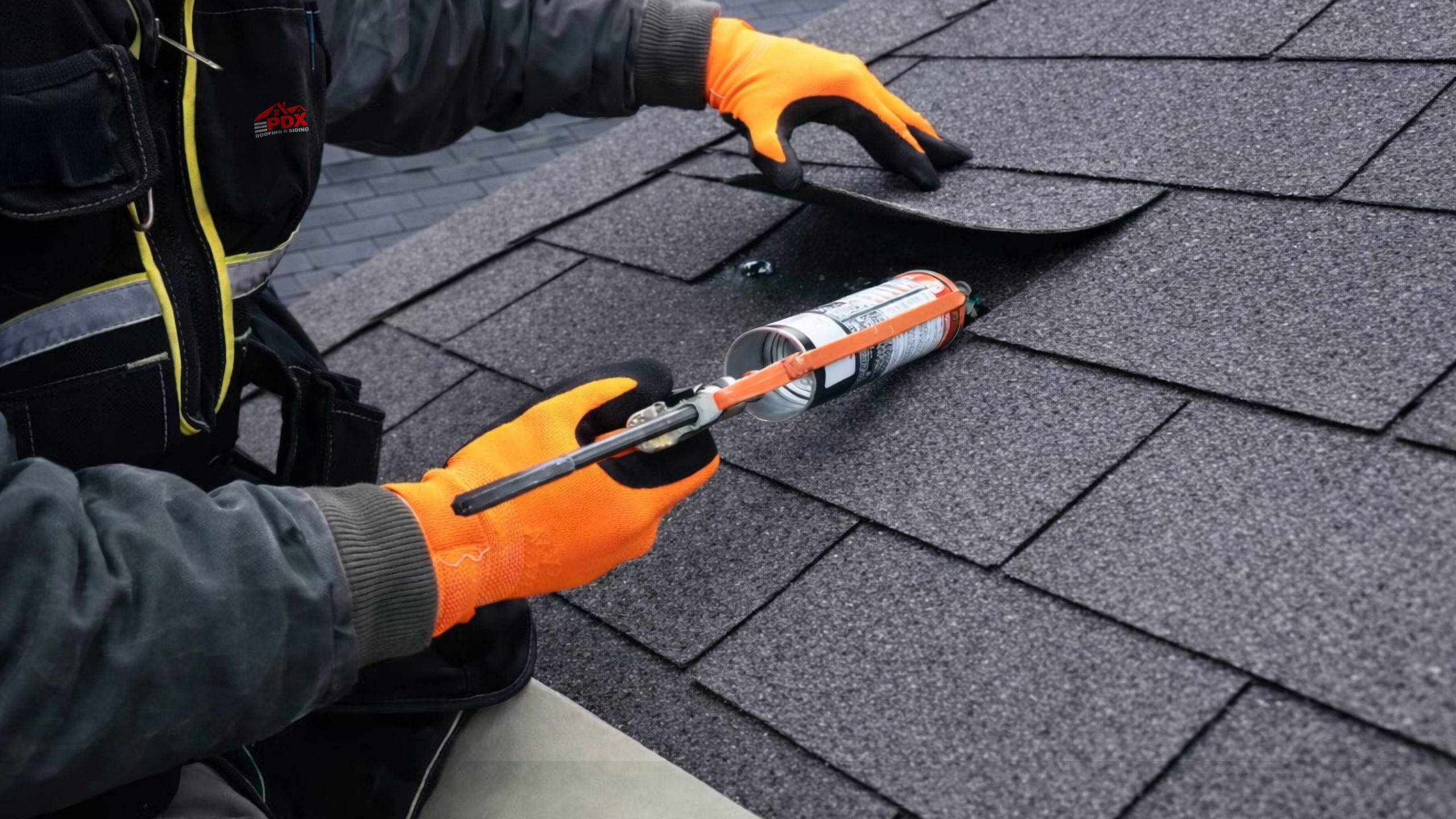
Understanding a few core best practices helps homeowners make better decisions and recognize quality work as it happens. These points apply to most residential roofing projects in Portland.
- Plan for a Full Tear-Off
A proper roof replacement should remove all existing roofing down to the wood deck. Overlaying new shingles on old ones traps moisture and shortens roof life, especially in Portland’s wet climate.
- Prioritize Site Protection Early
Before demolition starts, contractors should protect landscaping, walkways, and neighboring properties with tarps and plywood. This is a sign of a well-organized crew and reduces cleanup issues later.
- Expect a Full Deck Inspection
Once the roof is opened, the wood deck must be checked for dry rot or water damage. Roof repairs around eaves and valleys are common in Portland and should be addressed immediately rather than covered up.
- Insist on Proper Waterproofing Layers
Synthetic underlayment and ice-and-water protection at roof edges and valleys are essential here. These layers help prevent leaks caused by wind-driven rain and ice buildup.
- Confirm Flashing Is Replaced, Not Reused
New metal flashing should be installed around chimneys, vents, and roof edges. Reusing old flashing increases the risk of leaks at penetration points.
- Verify Ventilation Upgrades
Balanced intake and exhaust ventilation helps prevent attic moisture and mold growth during wet winters. Vent upgrades should be part of the roofing plan, not an afterthought.
- Ask About Installation Quality Checks
Proper nail placement and fastening methods matter. Small installation errors can cause big problems later, so quality control during shingle installation is critical.
Following these best practices helps ensure your new roof performs well long after roof installation is complete.
Conclusion
Roof replacement timelines in Portland are driven as much by planning and weather as by installation itself. While crews are typically on your roof for just a few days, permits, materials, and seasonal conditions often stretch the full project into several weeks. Knowing how these pieces fit together helps homeowners plan smarter and avoid unnecessary stress.