


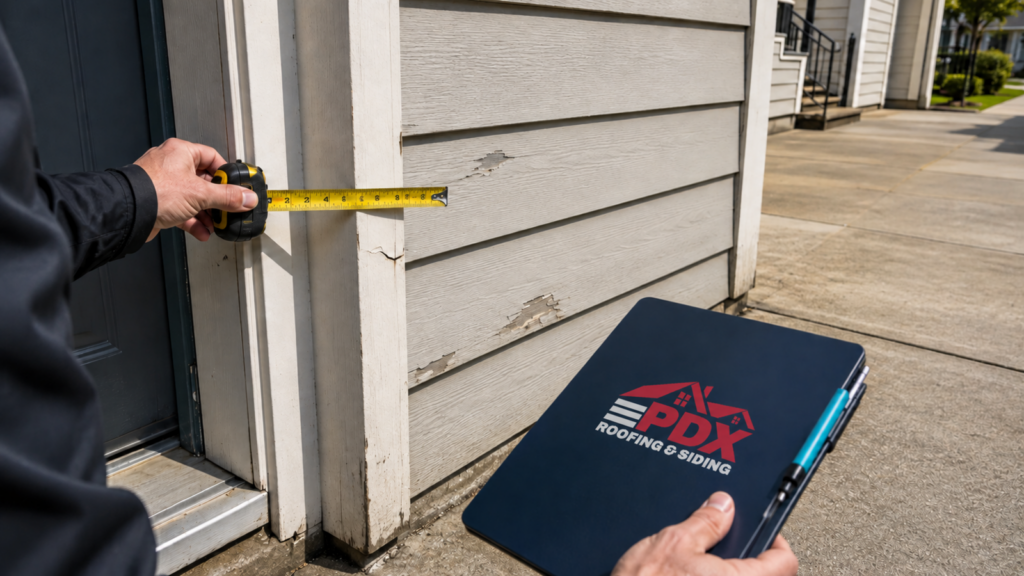
High-traffic properties take on a different kind of exterior wear. Apartment communities, townhome associations, mixed-use buildings, and rental portfolios often see siding damage where tenants, deliveries, landscaping crews, pets, bikes, and weather all meet the building envelope.
For Portland Metro property managers, tracking these patterns early can help prioritize siding repair, plan siding replacement, protect tenant comfort, and coordinate related exterior needs such as roof repair, roof installation, and home exterior upgrades.
Why High-Traffic Siding Damage Deserves a Tracking System
Siding issues are easier to manage when they are documented by location, frequency, and likely cause. A one-time scuff may not require the same response as repeated cracking near a busy entry or recurring moisture staining below a roofline.
A simple tracking process helps property managers:
- Identify recurring tenant-impact areas before damage spreads.
- Separate cosmetic wear from signs of moisture intrusion or material failure.
- Budget for phased siding repair or siding replacement.
- Coordinate exterior work with a licensed roofing company when roofline issues are involved.
- Communicate clearly with owners, tenants, and maintenance teams.
Entryways and Breezeways: Impact Marks, Cracks, and Loose Trim
Entries, breezeways, and shared corridors are some of the most active siding zones on multifamily and rental properties. These areas often show signs of repeated contact from moving carts, deliveries, strollers, bicycles, and maintenance equipment.
Patterns to document
- Cracked panels or boards near door frames and corners.
- Loose trim around entry doors, unit numbers, lighting, and mail areas.
- Chipped edges where siding meets tight walkways.
- Repeated scuffing at shoulder, handlebar, or cart height.
Why it matters
These areas may seem minor at first, but repeated impact can open small gaps that allow water to reach the wall assembly. In Portland’s wet seasons, even small openings deserve attention.
Parking Areas and Drive Lanes: Dents, Scrapes, and Splashback
Siding near parking stalls, carports, drive lanes, and waste areas is exposed to vehicle doors, bumpers, carts, and road spray. These zones should be inspected regularly, especially where siding sits close to pavement.
Patterns to document
- Dents or gouges from vehicle contact or equipment.
- Broken lower siding courses near parking barriers or curbs.
- Dirt and moisture splashback along the bottom edge of the wall.
- Soft or swollen material where siding stays damp.
Management tip
Track damage by building side and stall number when possible. This makes it easier to see whether the issue is isolated or tied to traffic flow, drainage, or layout.
Ground-Level Siding: Moisture, Soil Contact, and Landscaping Wear
Ground-level siding often reveals how well the property is handling drainage and landscaping. Siding should not be treated as a soil-retaining surface, and repeated contact with wet mulch, shrubs, irrigation spray, or pooled water can accelerate deterioration.
Patterns to document
- Dark staining along lower siding sections.
- Swelling, warping, or delamination near grade.
- Peeling finish where plants or irrigation repeatedly contact the wall.
- Gaps at lower trim that may allow pests or moisture to enter.
Material note
Fiber cement siding is a common choice for many exterior projects because of its durability and appearance, but it still needs proper clearances, flashing, fastening, and maintenance. If ground-level damage keeps returning, the issue may involve drainage, grading, or installation details rather than the siding material alone.
Balconies, Decks, and Stair Towers: Movement and Water Exposure
Balcony and stair tower areas combine foot traffic, railing penetrations, water exposure, and structural movement. These areas should be high on every property manager’s siding inspection list.
Patterns to document
- Cracks near railing connections or stair attachments.
- Open joints where siding meets decking or trim.
- Staining below balcony edges or exterior landings.
- Soft trim around doors leading to decks or balconies.
Why it matters
These areas can be more complex than standard wall surfaces because water management depends on flashing, sealant condition, slope, and proper transitions between materials. If damage is recurring, a professional assessment is the safest way to define the repair scope.
Roofline and Gutter Transitions: Where Siding and Roofing Problems Overlap
Some siding damage starts above the wall. Overflowing gutters, roof-to-wall flashing concerns, worn sealant, or roof edge issues can show up as siding stains, peeling finish, or deterioration near upper walls.
This is where working with a Portland roofing contractor that also understands siding can help. A siding issue near the roofline may need coordination with roof repair, emergency roof repair, asphalt shingle roofing evaluation, or other roofing materials review.
Patterns to document
- Staining below gutters or at downspout connections.
- Peeling paint or finish near eaves and rake boards.
- Moisture marks under roof-to-wall intersections.
- Repeated repairs in the same upper-wall location.
Management tip
When tracking these issues, note whether staining appears after heavy rain, wind-driven rain, ice, or gutter overflow. That information can help the inspection team narrow the likely source.
Tenant-Caused and Use-Related Damage: Track Without Guessing
Property managers should avoid assuming the cause of damage without documentation. Instead, record what is visible and where it is located. Photos, dates, unit numbers, and nearby conditions are often more useful than assigning blame too early.
Patterns to document
- Pet scratching near patios, gates, or lower trim.
- Grill heat discoloration near decks or balconies.
- Storage-related scuffs from bikes, bins, and outdoor furniture.
- Fastener holes from tenant-installed items.
Communication tip
When tenant use may be contributing to damage, clear exterior-use guidelines can help reduce repeat issues. Pair communication with repairs that address both appearance and weather protection.
How to Build a Practical Siding Damage Log
A consistent log can make exterior maintenance more predictable. It does not need to be complicated, but it should be specific.
Include these fields
- Building and unit location: Include elevation, floor, and nearby landmarks.
- Damage type: Crack, dent, stain, swelling, loose trim, open joint, or missing piece.
- Material: Note whether the area appears to be fiber cement siding, wood, vinyl, metal, or another material.
- Possible exposure: Foot traffic, parking, landscaping, roofline, balcony, or drainage.
- Photos: Capture close-up and wider context images.
- Urgency: Cosmetic, monitor, repair soon, or needs professional review.
When Siding Replacement Should Be Considered
Targeted siding repair can make sense when damage is isolated and the surrounding wall assembly is sound. Siding replacement may be more appropriate when the same areas repeatedly fail, multiple elevations show deterioration, or older materials are no longer performing well.
For larger Portland Metro properties, phased siding replacement can often be planned alongside other home exterior upgrades, including roof installation or roof repair work. Coordinating scopes may reduce disruption for tenants and help property managers present clearer capital improvement plans.
Work With PDX Roofing and Siding
PDX Roofing and Siding helps property managers evaluate siding damage patterns, plan practical repairs, and coordinate exterior improvements with a direct, knowledgeable approach. If your property also needs support from a licensed roofing company for roof repair, roof installation, or related exterior concerns, our team can help you understand the next step.
Services and offers are subject to availability and approval. For practical next steps, Get roof installation help and talk with the team about timing, scope, and the right path for your situation.