


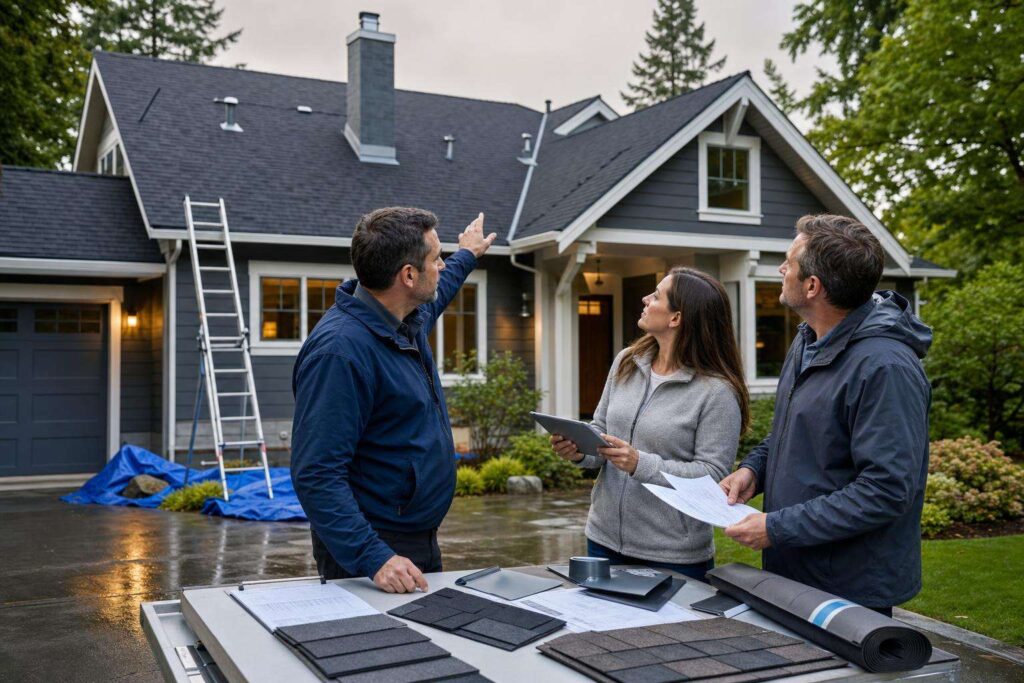
Why Roofing Estimates Can Look Different
When you request bids from more than one Portland roofing contractor, the final numbers may not line up neatly. That does not always mean one estimate is better than another. It often means the scope is different.
A thorough estimate should help you understand what is included, what is excluded, and what may change once the roof is opened up. For Portland and Portland Metro homes, it is especially important to review details related to moisture, ventilation, flashing, decking, and connections to siding or other exterior features.
Use the checklist below to compare roofing estimates with confidence and avoid overlooking critical scope details.
Start With the Basic Project Scope
Before comparing price, make sure each estimate is describing the same type of project.
- Project type: Is it a full roof installation, roof replacement, targeted roof repair, or maintenance work?
- Roof areas included: Are all slopes, additions, garages, porches, and low-slope areas included?
- Tear-off details: Does the estimate include removal of existing layers, or is it based on installing over an existing roof?
- Disposal and cleanup: Are debris removal, magnetic nail cleanup, and site protection addressed?
- Access needs: Does the contractor note driveway access, landscaping protection, or staging requirements?
If one proposal includes a complete tear-off and another does not, you are not comparing the same roofing project.
Compare Roofing Materials Line by Line
Roofing materials are a major part of any estimate. In Portland, asphalt shingle roofing is common, but the details still matter.
Look for Specific Product Information
- Shingle type, color, and manufacturer line
- Underlayment type
- Ice and water protection where applicable
- Starter shingles and ridge caps
- Flashing materials
- Pipe boots, vents, and other roof penetrations
An estimate that only says “new roof” leaves too much room for confusion. A clearer bid lists the materials being used and where they will be installed.
Ask About Material Compatibility
Roofing materials should work together as a system. Underlayment, flashing, ventilation, and shingles all affect long-term performance. If you are also planning siding replacement or other home exterior upgrades, ask how the roofing and siding details will connect.
Review Decking and Hidden Damage Allowances
Roof decking condition is not always fully visible until old materials are removed. A complete estimate should explain how damaged decking will be handled.
- Does the bid include replacement of any decking?
- If additional decking is needed, how is it priced?
- Will the contractor document the condition before replacing materials?
- Are fascia, rafter tails, or other structural concerns excluded or included?
This is one area where estimates can vary significantly. A lower initial number may not include repairs that another contractor has already anticipated.
Check Flashing, Valleys, Chimneys, and Penetrations
Many roof leaks begin around transitions rather than in the middle of a roof field. When comparing estimates, pay close attention to how each contractor addresses vulnerable areas.
Critical Details to Confirm
- Chimney flashing and counterflashing
- Wall-to-roof flashing
- Skylight flashing
- Valley treatment
- Pipe boots and vent penetrations
- Kick-out flashing near siding
For Portland homes with fiber cement siding, wood siding, or older exterior assemblies, roof-to-wall details are especially important. Poorly described flashing scope can lead to future moisture problems.
Do Not Skip Ventilation
Ventilation affects roof performance and indoor comfort. A reliable roofing estimate should identify whether intake and exhaust ventilation are being evaluated.
- Are existing vents being reused or replaced?
- Will ridge ventilation, box vents, or other exhaust options be used?
- Is intake ventilation considered?
- Are bathroom or kitchen exhaust vents properly routed?
If ventilation is not mentioned, ask for clarification before approving the work.
Compare Roof Repair and Emergency Scope Separately
If your project includes roof repair or emergency roof repair, the estimate should clearly separate temporary protection from permanent repair work.
- What area is being repaired?
- What caused the issue, if known?
- Are matching materials available?
- Is interior damage excluded from the roofing scope?
- Will the repair tie into existing shingles, flashing, or siding?
Emergency service may help limit active water intrusion, but it is still important to understand what the long-term repair includes.
Confirm Siding and Exterior Tie-Ins
Roofing work often intersects with siding, trim, gutters, fascia, and exterior penetrations. If your home needs siding repair, siding replacement, or fiber cement siding work, make sure those items are clearly addressed.
Exterior Details Worth Asking About
- Will siding need to be removed to install proper flashing?
- Are damaged trim boards included?
- Will gutters be removed, protected, or replaced by others?
- Are roof-to-wall intersections detailed?
- Are painting, caulking, or finish work included or excluded?
These details are easy to miss, but they can affect both the appearance and performance of your home exterior upgrades.
Verify Contractor Credentials and Project Process
A licensed roofing company should be willing to explain its process clearly. Before choosing a contractor, compare more than materials and price.
- Licensing and insurance information
- Written scope of work
- Project timeline expectations
- Payment schedule
- Permit responsibilities, if applicable
- Workmanship and manufacturer warranty details
- Point of contact during the project
If something is unclear, ask for it in writing. A good estimate should reduce uncertainty, not create more questions.
Watch for Vague Exclusions
Exclusions are normal, but they should be specific. Phrases such as “repairs not included” can be too broad unless the contractor explains what that means.
Common Exclusions to Clarify
- Decking replacement beyond a stated amount
- Structural repairs
- Gutter replacement
- Siding removal or replacement
- Skylight replacement
- Interior drywall or paint repair
- Electrical, solar, or satellite equipment handling
Clear exclusions help you plan accurately and compare estimates fairly.
Use a Scope-First Comparison Method
Instead of choosing based only on the bottom-line number, compare each estimate in this order:
- Scope: What work is actually included?
- Materials: Which products and components are specified?
- Details: How are flashing, ventilation, decking, and tie-ins handled?
- Process: Who manages permits, cleanup, communication, and scheduling?
- Protection: What warranties, documentation, and contractor credentials are provided?
- Price: Does the cost make sense for the stated scope?
This approach helps you identify whether you are looking at comparable roofing estimates or very different project plans.
Questions to Ask Before Signing
Before approving a Portland roofing estimate, ask the contractor to walk through the proposal with you.
- What parts of the roof are included?
- What conditions could change the final cost?
- How will damaged decking be priced and approved?
- What flashing will be replaced?
- How will the roof connect to existing siding?
- Who handles cleanup and final inspection?
- What warranty information will I receive?
A knowledgeable contractor should be able to answer these questions directly and document important details.
Get a Clear Roofing Estimate From PDX Roofing and Siding
PDX Roofing and Siding helps Portland and Portland Metro homeowners understand the details behind roof installation, roof repair, siding replacement, and exterior improvement projects. If you want an estimate that explains the scope clearly, our team can walk you through the options and help you compare the right details.
Services and offers are subject to availability and approval. For practical next steps, Get roof installation help and talk with the team about timing, scope, and the right path for your situation.