


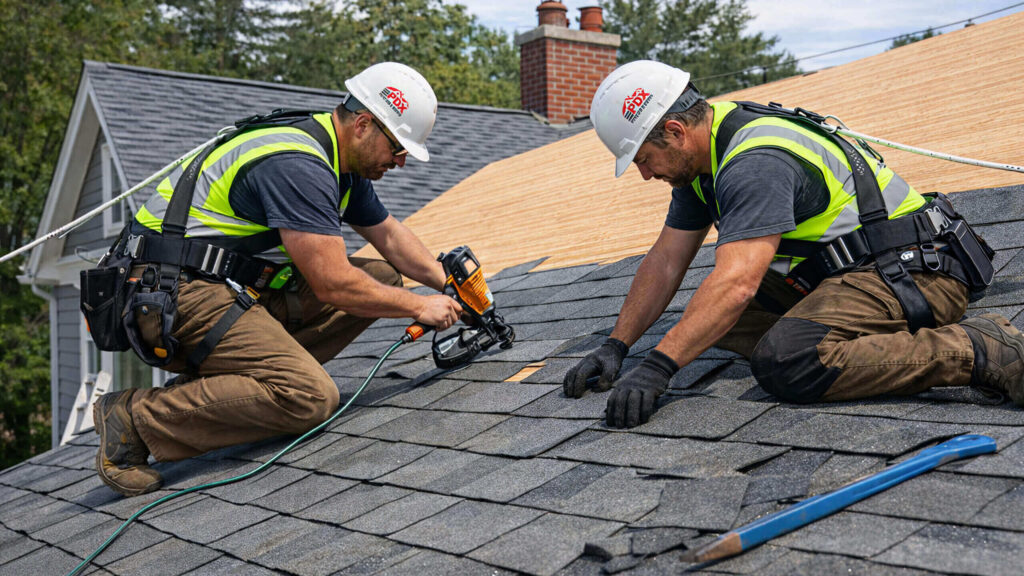
A roof replacement in Portland is all about timing. Pick the right window and your project runs smoothly. Pick the wrong one and you risk delays, higher costs, and moisture damage.
This guide breaks down exactly when to replace your roof in the Portland area. You’ll see what each season offers, where the risks sit, and how to plan your project so it holds up through the Pacific Northwest climate.
Why Timing Matters in Portland and Oregon
Portland’s weather follows a clear pattern. You get a dry summer window, then a long stretch of rain that defines the rest of the year.
Most contractors treat mid-May through early October as the safest working period. Outside this window, the risk profile changes fast. Even a short rain event during installation can expose your roof deck to moisture.
Local code and standard practice often require a full tear-off before installation. That means the plywood sheathing is exposed during the process. If rain hits at that stage, moisture levels in the wood can rise beyond safe limits. Once that happens, you are not just dealing with delays. You are dealing with structural risk, potential rot, and failed inspections.
Material performance also depends on timing. Roofing systems rely on proper sealing and bonding. If conditions are too cold or damp, shingles may not seal correctly. That affects wind resistance and long-term durability.
“In the Portland climate, timing affects more than scheduling. It directly impacts how materials bond and how long the roof lasts. Installing within the right window ensures proper sealing before the wet season begins.” — Portland Roofing Expert, PDX Roofing
Key Fact: Portland’s rainfall increases sharply from summer to late fall, with July averaging around 0.5 inches and November close to 9 inches. (Source: NOAA / Portland Bureau of Environmental Services)
Timing here is a technical decision. It impacts installation quality, compliance, and how your roof performs over the next decade.
The Best Time to Replace a Roof in Portland
Fall Sweet Spot: September to October
This is the window most professionals prioritize.
You still get the dry stability of summer, but temperatures settle into a more controlled range. Daytime highs typically sit between 65°F and 76°F, which makes it easier for crews to work efficiently and safely.
These conditions also support proper shingle activation. Asphalt shingles rely on solar heat to activate sealant strips. Surface temperatures need to climb high enough for that bonding process to happen. Early fall still delivers enough sun exposure for a strong seal before the heavy rain cycle begins.
Another advantage is system readiness. Completing your roof in this window gives you time to check gutters, drainage, and downspouts before rainfall intensifies. Portland’s precipitation can jump sharply heading into November, so having a fully sealed and tested system in place matters.
The only constraint is scheduling. As contractors move to wrap up projects before winter, availability tightens. Planning ahead becomes important if you want to secure this slot.
Summer Peak: June to August
Summer brings the most stable working conditions.
Daylight stretches close to 16 hours in late June, which allows crews to complete complex tear-offs and dry-ins within a single day. That reduces the time your home is exposed during installation.
Dry weather is consistent, so delays are minimal. This makes summer ideal for larger or more complex roofing systems where timing and coordination matter.
There are performance considerations. When temperatures push above 90°F, asphalt shingles soften. That makes them more vulnerable to scuffing or surface damage during installation. Experienced crews adjust their workflow to minimize this risk, but it is still a factor.
Demand is another variable. Summer is peak season, so labor costs rise and lead times extend. Homeowners who wait too long to book often face scheduling gaps or premium pricing.
Key Fact: Construction material costs, including asphalt roofing products, have increased by over 30% since 2020. (Source: U.S. Bureau of Labor Statistics Producer Price Index)
If you want summer installation, the strategy is simple. Plan early and lock in your contractor before peak demand hits.
Spring Transition: March to May
Spring is where opportunity meets uncertainty.
Rainfall remains frequent, often stretching across 12 to 15 days per month in early spring. That creates a narrow working window for roofing projects. Contractors need to align the schedule with clear weather gaps, which can shift quickly.
There is a strategic upside. Winter leaves behind damage that is easier to address in spring. Moss growth is a major issue in the Portland region. It traps moisture against shingles and creates long-term stress on the roofing system.
Replacing or repairing your roof in Portland in spring allows you to remove that buildup before summer heat accelerates material breakdown. It also positions your home to enter the dry season with a clean, stable structure.
Key Fact: Moss growth significantly shortens asphalt shingle roof lifespan in damp climates like Oregon’s by trapping moisture and lifting shingles, often requiring replacement 5-10 years earlier than untreated roofs. (Source: Oregon State University Extension Service Guide)
Spring works best for proactive homeowners who can stay flexible on timing and work closely with their contractor on scheduling.
Winter: November to February
Winter projects are typically driven by urgency.
Heavy rain, wind events, or existing roof failures may force immediate replacement. In these cases, contractors follow cold-weather installation protocols to manage risk.
Shingles become brittle at lower temperatures, especially below 40°F. Standard sealing does not activate in these conditions, so crews use manual sealing methods. This involves applying roofing cement under each tab to secure shingles until warmer weather allows full bonding.
Projects also require more protective measures. Tarping, staging, and moisture control become critical parts of the process.
There is one advantage. Demand drops during winter, so some contractors offer better pricing to keep crews active.
Execution is more complex, and timelines can extend due to weather interruptions. Winter works when timing cannot be delayed, but it is rarely the first choice for planned replacements.
Seasonal Comparison at a Glance
| Season | Best Use Case | Key Advantage | Main Challenge |
| Spring | Early repairs and moss removal | Address winter damage early | Unpredictable rain |
| Summer | Large or complex projects | Stable weather and long days | Higher costs and demand |
| Fall | Ideal overall timing | Best conditions for sealing | Shorter daylight window |
| Winter | Urgent replacements | Possible cost savings | Weather and material limitations |
The Local Factors That Shape Your Roofing Timeline
Planning a replacement in Hillsboro? Explore our Hillsboro roofing services before scheduling your project.
Rainfall in Portland shifts dramatically across the year. Summer months stay relatively dry, while late fall and winter bring sustained precipitation. That change makes timing the tear-off phase critical. Even a short exposure window during the rainy season can introduce moisture into the structure.

Material costs have also increased in recent years, especially for asphalt-based products and metal roofing. Planning ahead allows homeowners to manage pricing and avoid peak-season spikes.
Labor in Oregon reflects the complexity of the climate. Roofing crews here are trained to handle moisture-heavy environments, ventilation requirements, and biological growth like moss. That expertise plays a direct role in long-term performance.
Moss is one of the most underestimated risks in this region. It holds moisture against the roof surface and can reduce the functional lifespan of the system significantly if left untreated. Over time, it lifts shingles, allows water penetration, and accelerates decay in the underlying structure.
Local Rules to Know Before Starting Your Roofing Project in Portland
Before starting your project, check local requirements.
For many single-family homes, a permit is not required for a straightforward roof replacement in Portland. The situation changes if structural elements are involved. If a significant portion of the roof sheathing is replaced, a permit may be triggered.
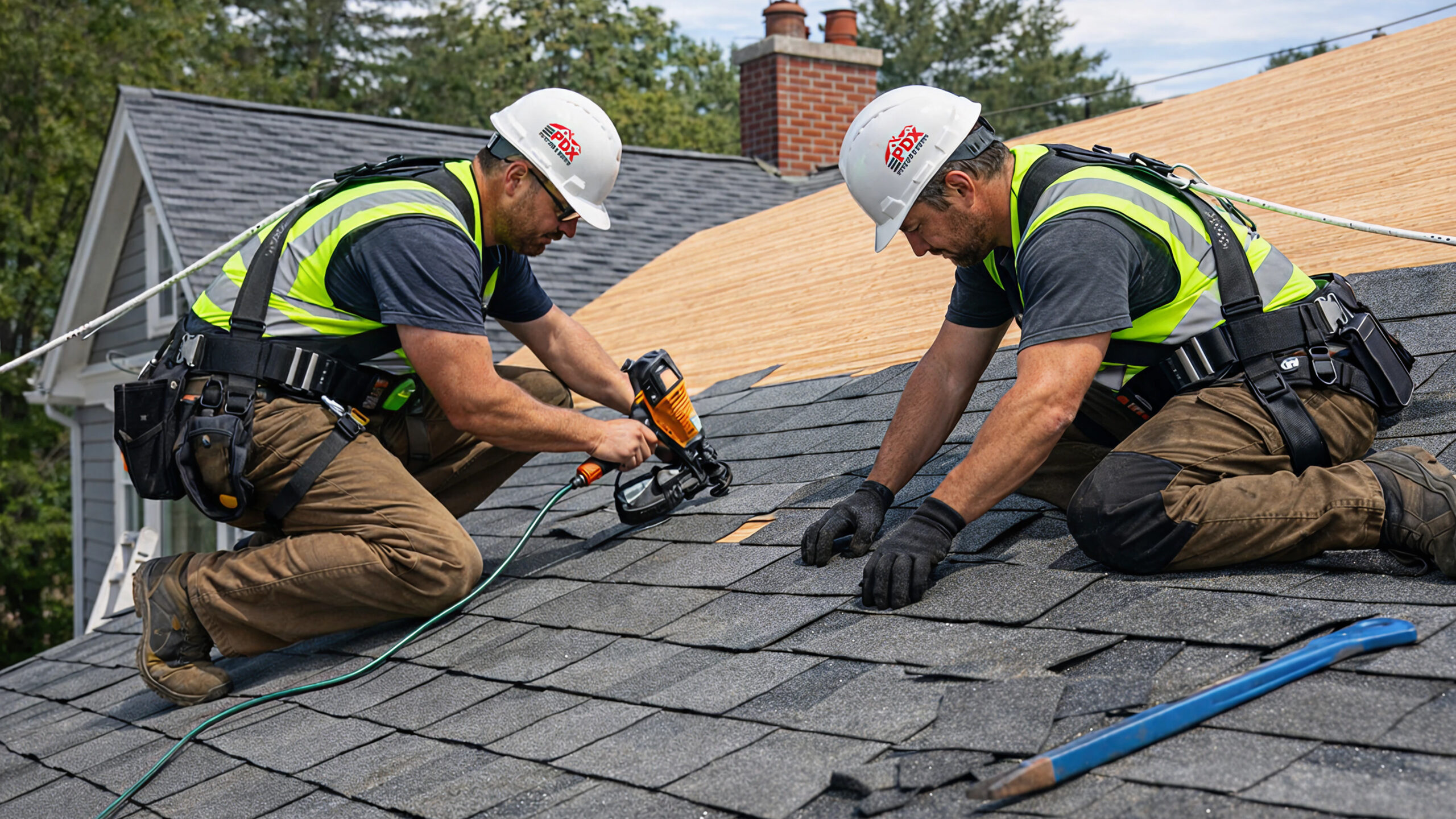
Certain property types follow stricter rules. Townhouses and homes in wildfire-prone zones often require permits regardless of project size. These areas may also mandate fire-rated roofing materials for added protection.
Ventilation is one of the most common failure points during inspection. The standard guideline requires a balanced system that allows proper intake and exhaust airflow. Without it, warm indoor air can condense under the roof deck during winter, leading to mold and long-term damage.
“Most inspection failures we see are tied to ventilation issues. A roof can look perfect on the outside but still fail if airflow is not balanced correctly.” — Oregon Roofing Expert, PDX Roofing
Inspection Checklist for Your Roofing Project
| Stage | Focus | What to Check |
| Tear-Off | Roof deck | Look for rot or damaged sheathing and confirm replacement scope |
| Underlayment | Water protection | Ensure proper installation of drip edge and moisture barriers |
| Final Walkthrough | Ventilation | Confirm balanced airflow and system performance |
Final Take
If you want the safest and most efficient outcome, aim for September to October.
That window gives you the right balance of dry weather, manageable temperatures, and proper material performance. It also positions your home to handle Portland’s heavy rainfall cycle without added risk.
Plan early, align your timing with local conditions, and work with a contractor who understands the region. That combination sets your project up for long-term success.