Why Warranty-Safe Roof Maintenance Matters for Rentals
Rental property managers have to balance tenant comfort, owner expectations, maintenance budgets, and warranty requirements. A roof issue can quickly become a tenant complaint, an interior damage concern, or a coverage dispute if the maintenance history is incomplete.
A warranty-safe protocol is not about overcomplicating roof care. It is about creating a repeatable process that shows the roof was inspected, maintained, and repaired by appropriate professionals using compatible roofing materials. For property managers in Portland and the Portland Metro area, that process is especially important because wet seasons, tree debris, moss growth, and wind events can accelerate roof wear.
Whether you manage single-family rentals, small multifamily buildings, or larger rental portfolios, working with a Portland roofing contractor helps keep maintenance aligned with local conditions and manufacturer expectations.
Start With the Warranty Documents
Before setting a maintenance schedule, collect the warranty information for each property. Roof warranties can vary by manufacturer, product, installer, and scope of coverage. Property managers should avoid assuming that every roof has the same requirements.
Keep These Records in the Property File
- Manufacturer warranty documents
- Contractor workmanship warranty, if available
- Roof installation contract and completion date
- Roofing materials used, including product names when available
- Ventilation details and any known roof modifications
- Past roof repair invoices and inspection notes
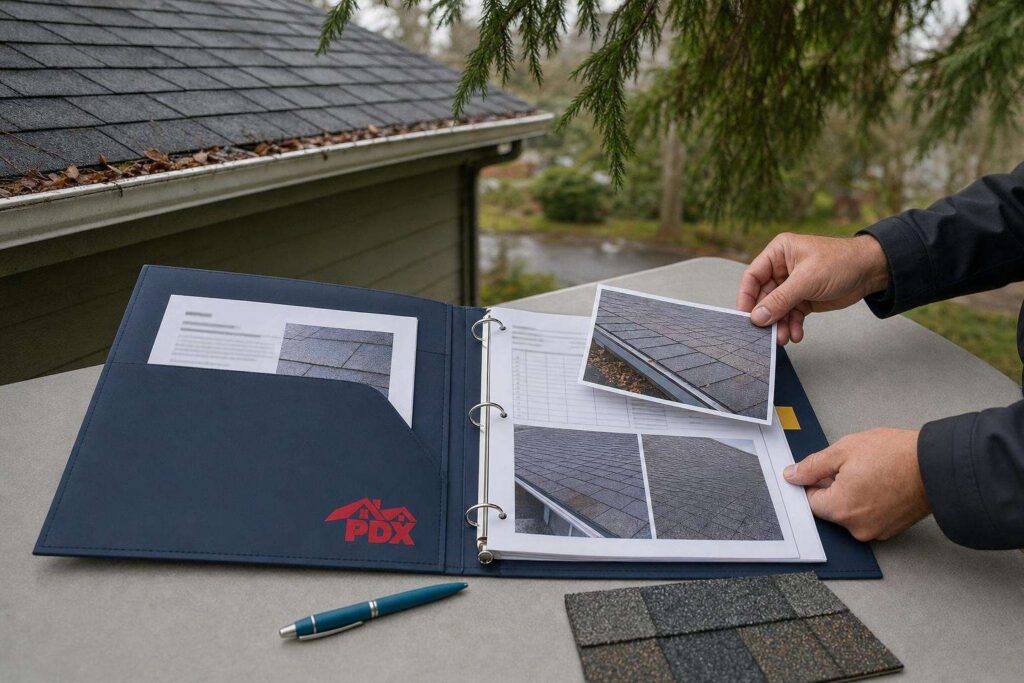
- Photos from installation, repairs, and inspections
If documents are missing, ask the owner, previous manager, or installing licensed roofing company for copies when possible. Even partial documentation is better than relying on memory.
Create a Seasonal Inspection Schedule
A structured inspection schedule helps catch small concerns before they become active leaks. It also creates a record that the property manager is taking reasonable steps to maintain the roof.
Recommended Inspection Timing
- Fall: Check roof surfaces, gutters, downspouts, flashing, and drainage before sustained rain arrives.
- Winter storm follow-up: Schedule a visual review after significant wind, fallen branches, or tenant-reported leaks.
- Spring: Look for winter damage, debris buildup, moss activity, and drainage issues.
- Before lease turnover: Inspect attic areas, ceilings, and upper walls for signs of moisture or staining.
Property managers do not need to diagnose every roofing issue themselves. The key is to document visible concerns and bring in a qualified professional when the condition involves shingles, flashing, roof penetrations, ventilation, or active water intrusion.
Document Everything Clearly
Documentation is one of the most important parts of warranty-safe roof maintenance. If a claim or dispute arises, clear records help show that roof care was consistent and responsible.
What to Include in Roof Maintenance Notes
- Date and time of inspection or tenant report
- Weather conditions, when relevant
- Location of concern, such as north slope, chimney flashing, or rear gutter line
- Photos from the ground or safe accessible areas
- Tenant communication notes
- Contractor recommendations
- Completed roof repair details
- Invoice copies and material information
A simple shared folder or property management system entry can be enough if it is consistent and easy to retrieve.
Use Qualified Contractors for Roof Work
Warranty terms may require repairs to be performed according to manufacturer guidelines and applicable building standards. For that reason, rental property managers should use a licensed roofing company for roof installation, roof repair, and maintenance involving roof components.
Unapproved alterations, incompatible sealants, improper fasteners, or poorly matched roofing materials can create future issues and may affect warranty coverage. When in doubt, ask the contractor to document the repair method and materials used.
When to Call a Roofing Professional
- Active leaks or ceiling stains reported by tenants
- Missing, lifted, cracked, or damaged shingles
- Flashing concerns around chimneys, skylights, vents, and walls
- Sagging roof areas or soft decking concerns
- Persistent moss or organic growth on asphalt shingle roofing
- Gutter overflow that may be affecting roof edges or fascia
- Any emergency roof repair need after wind, impact, or sudden water intrusion
Control Debris, Drainage, and Moss
Portland rental properties often face roof debris from trees, clogged gutters, and moss growth. These conditions can trap moisture and place stress on roofing systems. Property managers should build routine exterior maintenance into the property calendar.
Maintenance Tasks That Support Warranty-Safe Care
- Keep gutters and downspouts clear so water can drain correctly.
- Remove branches, leaves, and debris from roof surfaces using appropriate professional methods.
- Trim back overhanging limbs where allowed and practical.
- Address moss with roof-safe methods recommended by roofing professionals or product manufacturers.
- Confirm attic ventilation is not blocked by storage, insulation, or prior repairs.
- Check that bathroom, kitchen, and dryer exhausts are properly routed and not adding moisture into the attic.
Avoid abrasive cleaning methods or pressure washing on asphalt shingle roofing unless the manufacturer specifically allows it. Aggressive cleaning can damage shingles and may create warranty concerns.
Coordinate Tenant Reporting
Tenants are often the first to notice leaks, stains, musty odors, or dripping around vents. A good reporting process helps property managers respond quickly and document the issue accurately.
Ask Tenants to Report These Signs
- Ceiling stains or bubbling paint
- Water dripping during or after rain
- New musty odors in upper rooms or closets
- Visible daylight in attic spaces
- Loose gutters, fallen shingles, or roof debris on the ground
- Water around skylights, fireplaces, or exhaust fans
Tenant instructions should focus on reporting and safety. Tenants should not be asked to access roofs or perform roof maintenance.
Plan Repairs Without Delaying Critical Issues
Not every roof concern is an emergency, but active leaks and storm damage should be handled promptly. Delayed action can increase interior damage and complicate warranty or insurance discussions.
For non-urgent items, ask your roofing contractor to prioritize repairs and note whether the issue is maintenance-related, storm-related, installation-related, or age-related. That documentation can help owners make informed decisions about roof repair, roof installation, or replacement planning.
Do Not Overlook Siding and Exterior Transitions
Water intrusion is not always caused by the roof surface. Siding, wall flashing, windows, and roof-to-wall transitions can also allow moisture into a rental property. If a leak appears near an exterior wall, chimney, dormer, or upper window, the inspection should include both roofing and siding components.
For rental property portfolios, coordinated home exterior upgrades can reduce repeat service calls. This may include siding replacement, improved flashing details, or choosing durable options such as fiber cement siding where appropriate for the building.
Build a Roof Maintenance Protocol for Your Portfolio
A written protocol helps managers, maintenance coordinators, owners, and tenants stay aligned. It also reduces confusion when staff changes or properties are added to the portfolio.
Sample Protocol Checklist
- Store all warranty and installation documents by property address.
- Schedule roof and gutter reviews at least seasonally and after major weather events.
- Require photos and written notes for all roof-related concerns.
- Use qualified contractors for roofing work and request repair documentation.
- Track tenant reports and response timelines.
- Review attic and ceiling areas during turnovers when accessible.
- Escalate active leaks, storm damage, and safety concerns immediately.
- Review roof condition before approving exterior upgrades that affect penetrations, flashing, solar equipment, satellite equipment, or ventilation.
Partner With Pdx Roofing and Siding
Pdx Roofing and Siding helps property managers in Portland, OR, and the Portland Metro area protect rental properties with knowledgeable roof repair, maintenance, roof installation, and siding services. Our team provides honest guidance so you can make informed decisions for owners and tenants.
Services and offers are subject to availability and approval. For practical next steps, Get roof installation help and talk with the team about timing, scope, and the right path for your situation.