


Why Siding Drainage Matters Before Portland’s Rainy Season
Portland homes are built to handle wet weather, but siding still needs clear drainage paths to perform properly. When leaves, soil, mulch, caulk, or debris block the spaces designed to release water, moisture can linger behind siding, around trim, or near the foundation.
For homeowners in Portland, OR and the Portland Metro area, a simple exterior check before steady rain begins can help identify areas that need attention. If you notice soft trim, staining, swelling, gaps, or recurring leaks, it may be time to talk with a licensed roofing company or siding professional before small moisture concerns spread into larger home exterior upgrades.
Key Siding Drainage Paths to Keep Clear
Weep Gaps at the Bottom of Siding
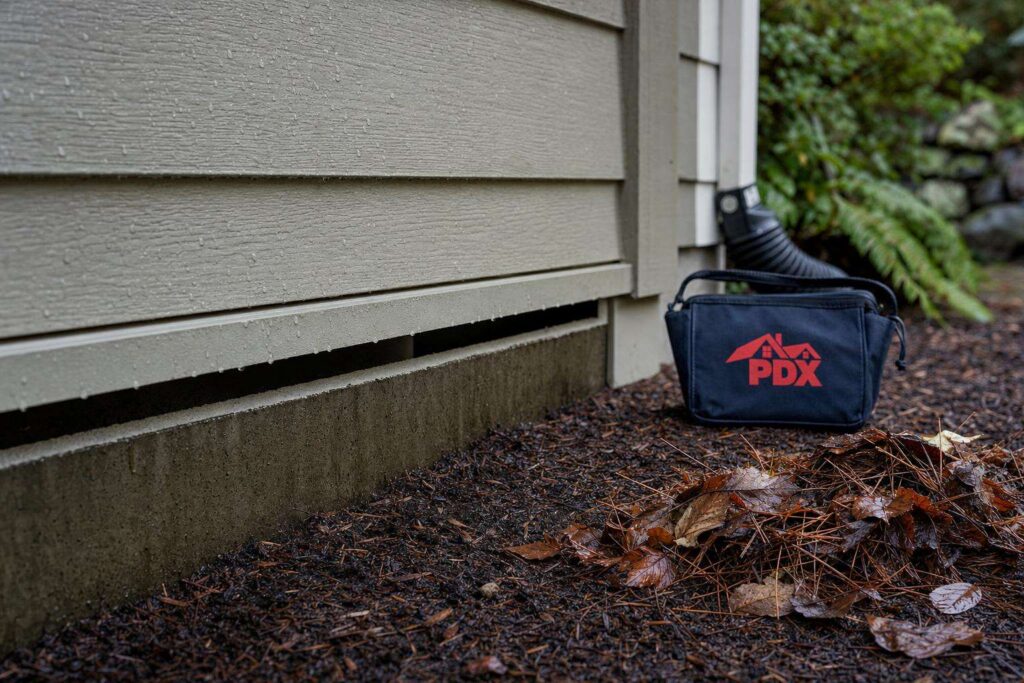
Many siding systems are designed with small openings or gaps at the lower edges so incidental moisture can drain out. These areas should not be sealed shut or packed with debris.
- Look along the bottom edges of siding panels and trim.
- Remove leaves, pine needles, dirt, and loose material that may trap moisture.
- Watch for caulk or paint buildup that appears to block designed drainage openings.
- If you are unsure whether a gap is intentional, ask a siding repair and maintenance professional before sealing it.
Clearance Between Siding and Soil or Mulch
Siding should not sit directly against soil, bark dust, or landscaping materials. When ground material touches siding, it can hold moisture against the wall and make it harder for the assembly to dry.
- Pull mulch, leaves, and soil away from the bottom edge of siding.
- Keep landscape beds from building up against walls over time.
- Check areas near downspouts, garden beds, and walkways where material may shift.
- Pay close attention to fiber cement siding, wood trim, and lower wall sections near patios or decks.
Gutter and Downspout Discharge Areas
Siding drainage problems often start above the siding. If gutters overflow or downspouts discharge too close to the wall, water can run over fascia, behind trim, or down the face of the siding.
- Check for leaves and debris in gutters before consistent rain arrives.
- Confirm downspouts direct water away from siding and the foundation.
- Look for staining below gutter seams or corners.
- If you see water entering near the roofline, contact a Portland roofing contractor for roof repair or gutter-related inspection guidance.
Window and Door Trim Edges
Windows and doors are common places for water to collect if drainage paths are blocked. Trim joints, sill areas, and flashing details should shed water outward rather than hold it against the wall.
- Look for debris on window sills and horizontal trim ledges.
- Watch for peeling paint, dark staining, or swollen trim.
- Check that caulk is not cracked, missing, or trapping water in the wrong places.
- Schedule siding repair and maintenance if trim looks soft, separated, or deteriorated.
Deck, Porch, and Patio Connections
Where siding meets decks, porch roofs, and patio surfaces, drainage details are especially important. Leaves and organic debris can collect in tight corners, keeping moisture against the wall during long rainy periods.
- Clear leaves from corners where decking meets siding.
- Check that patio surfaces do not slope water toward the home.
- Look under hose bibs, exterior outlets, and railing connections for staining.
- Have a professional inspect areas where siding, flashing, and roofing materials meet.
Warning Signs That Drainage May Already Be Restricted
Some signs of blocked siding drainage are visible from the ground. Others show up indoors as staining or musty odors. If you notice any of the following, it is wise to schedule a professional evaluation before rainy weather becomes persistent.
- Streaking or discoloration below windows, gutters, or trim joints
- Bulging, warped, cracked, or loose siding boards
- Soft or swollen trim near the base of walls
- Paint blistering or peeling in isolated wet areas
- Water stains on interior walls near exterior openings
- Recurring leaks during wind-driven rain
These symptoms do not always mean full siding replacement is needed. In some cases, targeted siding repair, flashing correction, or maintenance can help restore proper drainage. In other cases, older or damaged cladding may be a good candidate for siding replacement as part of broader home exterior upgrades.
How Roofing and Siding Work Together During Heavy Rain
Your roof, gutters, flashing, siding, and trim are connected parts of the same exterior protection system. A roof issue can send water into siding areas, while siding or trim problems can make a roof leak seem worse during storms.
For example, asphalt shingle roofing with damaged flashing near a wall can allow water to reach siding transitions. A clogged gutter can overflow onto wall cladding. A poorly draining siding assembly can hold water near the roof-to-wall connection. That is why it helps to work with a contractor who understands both roofing and siding systems.
Pdx roofing and siding provides roof installation, roof repair, siding installation, and siding repair services for Portland-area homes. If you need emergency roof repair during active weather or want to plan exterior maintenance before rainy season, a professional inspection can help identify the right next step.
When to Call Pdx roofing and siding
Call a professional if you see signs of active leaks, damaged flashing, deteriorated trim, failing siding, or water entering near windows, doors, decks, or rooflines. Professional evaluation is especially important before replacing caulk, changing drainage gaps, or covering moisture-damaged areas, because the visible issue may not be the source of the water.
Whether your home needs siding repair and maintenance, fiber cement siding evaluation, roof repair, asphalt shingle roofing service, or a larger roof installation or siding replacement plan, Pdx roofing and siding can help you make an informed decision.
Schedule Exterior Help Before the Rain Sets In
Before rainy season, make sure your siding drainage paths, gutters, trim edges, and roof-to-wall transitions are ready for Northwest weather. Pdx roofing and siding offers honest guidance for homeowners throughout Portland, OR and the Portland Metro area.
Services and offers are subject to availability and approval. For practical next steps, Get roof installation help and talk with the team about timing, scope, and the right path for your situation.