


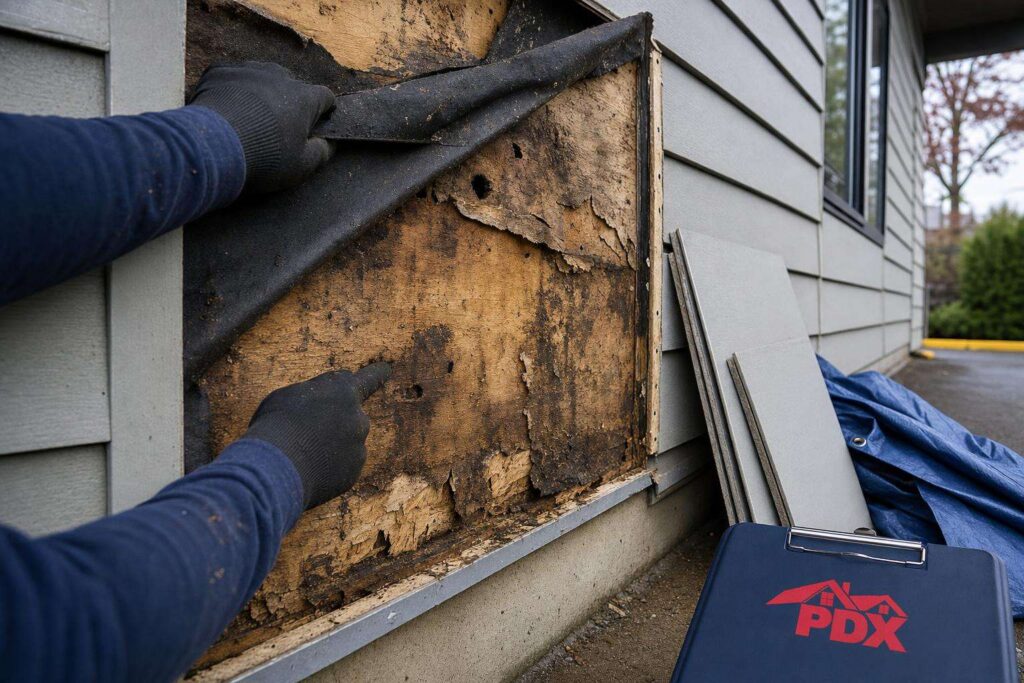
Why Commercial Siding Repairs Can Change Once Panels Come Off
On a commercial building, siding damage may look simple from the outside: cracked panels, loose trim, failed sealant, staining, or impact damage. But once siding is removed, the repair plan can change quickly if the sheathing behind it is soft, swollen, delaminated, mold-stained, or structurally weakened.
Sheathing is the layer beneath the siding that helps support the exterior wall assembly. It also gives fasteners a reliable base and works with weather barriers, flashing, and trim details to manage moisture. When this layer is compromised, replacing only the visible siding may not provide a durable result.
For property owners, facility managers, and tenant-occupied commercial spaces in Portland and the Portland Metro area, finding hidden sheathing damage is not just a construction detail. It can affect scheduling, access, tenant communication, and the total repair scope.
Common Signs That Point to Hidden Sheathing Damage
Not every siding problem means the sheathing is damaged, but certain exterior clues deserve closer inspection by a licensed roofing company or siding contractor familiar with Northwest weather conditions.
- Bulging or wavy siding: Movement can indicate moisture-swollen sheathing or failed fastening behind the panels.
- Persistent staining: Dark streaks, rust marks, or discoloration may point to water getting behind the exterior cladding.
- Soft areas around penetrations: Vents, signs, electrical boxes, hose bibs, and wall-mounted equipment can create leak points if flashing has failed.
- Recurring caulking failures: Sealant that keeps splitting may be reacting to movement caused by weakened backing materials.
- Interior moisture signs: Stains, musty odors, or wall finish damage inside the building may connect to exterior wall leaks.
- Damage near roof-to-wall transitions: Poor drainage, missing kick-out flashing, or worn roofing materials can push water into siding and sheathing assemblies.
How Hidden Sheathing Damage Changes the Repair Plan
When sheathing damage is discovered, the project often shifts from a surface-level siding repair to a more complete exterior wall repair. That does not mean every wall needs to be rebuilt, but it does mean the crew must address the damaged base before installing new siding.
The Scope May Expand Beyond the Visible Siding
A siding replacement plan may need to include selective sheathing removal, framing inspection, weather barrier replacement, flashing corrections, and trim adjustments. If damaged areas are limited, the work may remain targeted. If moisture has traveled, the contractor may recommend opening additional sections to confirm the extent of the problem.
The Timeline May Need Adjustment
Hidden damage can add time for assessment, material coordination, permitting review when applicable, and communication with building occupants. On commercial properties, the schedule may also need to account for entrances, parking areas, signage, tenant operations, or safety barriers.
The Budget Should Reflect the Actual Wall Condition
A responsible contractor should explain what changed, show documentation when possible, and separate the original siding scope from added sheathing or moisture-management work. This helps owners make informed decisions instead of approving vague change orders.
The Material Selection May Need Reconsideration
If the existing wall assembly failed because of moisture exposure, replacing it with the same details may repeat the issue. Depending on the building, fiber cement siding, improved flashing, rainscreen details, and compatible weather barriers may be part of a stronger siding replacement plan.
Why Moisture Management Matters in Portland Commercial Buildings
Portland properties deal with long wet seasons, wind-driven rain, and repeated freeze-thaw stress in some conditions. Commercial siding systems need more than attractive panels. They need a complete assembly that moves water away from vulnerable areas.
Important moisture-control details include:
- Correct flashing at windows, doors, rooflines, and wall penetrations
- Properly lapped weather-resistant barriers
- Drainage paths behind siding when required by the system
- Durable trim and joint details
- Compatible fasteners and installation methods
- Coordination between roofing, gutters, siding, and wall transitions
This is where working with a Portland roofing contractor that also understands siding can be valuable. Roof repair, emergency roof repair needs, gutter issues, and siding failures often overlap at roof-to-wall intersections.
What a Careful Inspection Should Include
Before finalizing a commercial siding repair plan, a contractor should evaluate more than the outer surface. A thorough inspection may include visual review, moisture concerns, siding attachment, sealant condition, trim performance, and roofline drainage details.
When access is available, the inspection may also involve removing limited siding sections to confirm whether the sheathing is sound. This helps avoid covering damaged materials with new cladding.
- Photo documentation: Clear images help owners understand what was found.
- Material identification: Existing siding, sheathing, fasteners, and barriers should be reviewed for compatibility.
- Leak path tracing: The source of moisture matters as much as the damaged area.
- Repair prioritization: Safety, water intrusion, and tenant disruption should guide the order of work.
Commercial Tenant Considerations During Siding Repairs
In tenant-occupied buildings, exterior repairs need planning that respects business operations. Even when the work is outside, tenants may be affected by noise, dust control, restricted walkways, blocked windows, or temporary access changes.
A practical repair plan should consider:
- Advance notice for tenants and property managers
- Safe pedestrian routing around work zones
- Protection for entries, windows, signage, and exterior equipment
- Clear working hours and communication expectations
- Weather protection if wall sections are opened during repair
When hidden sheathing damage is found, transparent communication becomes even more important because the visible project may no longer match the original repair assumptions.
How Roofing and Siding Details Work Together
Commercial wall damage is sometimes caused or worsened by roof-related issues. Worn asphalt shingle roofing on mixed-use properties, poor roof edge drainage, missing kick-out flashing, clogged gutters, or failed roof-to-wall transitions can send water into the siding assembly.
That is why home exterior upgrades and commercial exterior repairs should be viewed as connected systems. Roof installation, roof repair, siding repair, and siding replacement all depend on proper water control. Addressing siding without correcting the water source may leave the building vulnerable to repeated damage.
What Property Owners Should Ask Before Approving the Revised Plan
If hidden sheathing damage is discovered, ask clear questions before moving forward:
- Where exactly was the damaged sheathing found?
- Is the damage localized or does it appear to continue behind adjacent siding?
- What caused the moisture or deterioration?
- Does the repair include new flashing or weather barrier work?
- Will the proposed siding system be compatible with the existing wall assembly?
- How will tenants, entrances, and work zones be managed?
- Are roof, gutter, or drainage repairs also recommended?
A knowledgeable contractor should be able to explain the revised scope in plain language and provide a repair approach that addresses the cause, not only the surface damage.
Plan for the Wall You Have, Not the Wall You Expected
Hidden sheathing damage can be frustrating, but discovering it before new siding is installed is better than sealing a problem inside the wall. With the right inspection and repair plan, building owners can protect the structure, improve weather resistance, and make smarter long-term decisions about siding materials and exterior upgrades.
For commercial properties in Portland, OR, and the Portland Metro area, PDX Roofing and Siding provides honest guidance for roofing and siding projects, including siding repair, siding replacement, roof repair, and roof installation coordination when exterior systems overlap.
Talk With PDX Roofing and Siding
If your commercial siding project reveals hidden sheathing damage, PDX Roofing and Siding can help you review the repair scope and plan the next step with confidence. Get roof installation help
Services and offers are subject to availability and approval.