


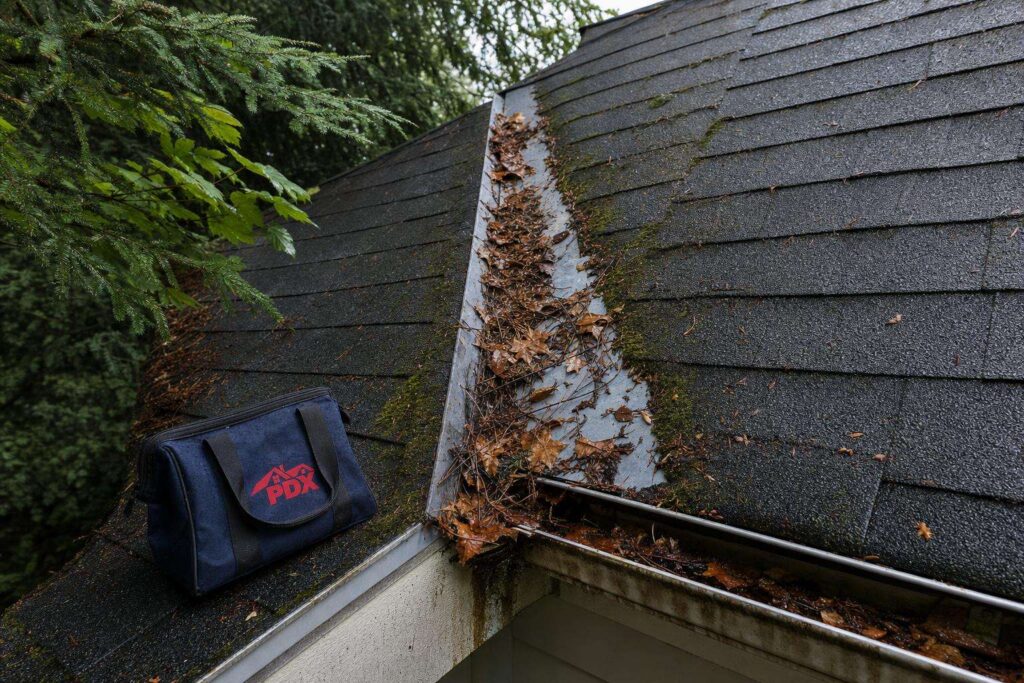
Why Roof Valleys Need Extra Attention Under Heavy Tree Cover
Roof valleys do some of the hardest work on your roofing system. They collect and direct rainwater toward the gutters, which is especially important for Portland and Portland Metro homes that deal with steady seasonal moisture. When a home sits under heavy tree cover, leaves, needles, twigs, moss, and seed pods can gather in the valleys and slow down drainage.
That buildup can trap moisture against asphalt shingle roofing, flashing, and underlayment. Over time, the result may be staining, granule loss, soft decking, or leaks that require roof repair. A consistent maintenance routine helps protect your roof and supports the long-term performance of your roofing materials.
Roof Valley Maintenance Checklist
1. Check Valleys From the Ground After Wind or Heavy Rain
Start with a visual inspection from a safe location. Look for obvious piles of leaves, branches, or moss collecting where two roof planes meet. Binoculars can help you see valley areas without climbing onto a wet or steep roof.
- Look for debris lines sitting directly in the valley channel.
- Check for branches rubbing against shingles.
- Watch for water spilling over gutters below valley areas.
- Note any dark streaks, sagging, or uneven shingle edges.
2. Keep Tree Limbs From Touching the Roof
Overhanging limbs can scrape roofing materials, drop debris into valleys, and reduce sunlight that helps roof surfaces dry. Tree trimming should be handled carefully to avoid damaging shingles, gutters, siding, or flashing.
- Maintain clearance between branches and the roof surface where possible.
- Remove broken limbs before storms if they pose a risk to the roof.
- Pay special attention to branches above valleys and gutter runs.
3. Watch for Moss and Organic Growth in Valley Areas
Portland roof systems are often exposed to shade and moisture, which can support moss growth. Valleys under tree cover are particularly vulnerable because debris can hold moisture in place. Moss should not be ignored, especially if it begins lifting shingle edges or spreading into flashing transitions.
- Look for moss at shingle overlaps and along valley edges.
- Check shaded roof slopes more often than sun-exposed areas.
- Avoid aggressive methods that can strip granules from asphalt shingle roofing.
4. Inspect Valley Flashing for Movement or Damage
Valley flashing helps move water down the roof and away from vulnerable seams. If flashing is bent, corroded, punctured, or poorly aligned, water can get beneath the roof covering. A licensed roofing company can evaluate whether the flashing needs repair or replacement.
- Look for exposed fasteners, lifted edges, or gaps.
- Check whether debris is wedged beneath flashing edges.
- Watch for rust or staining on metal valley components.
5. Check Shingles Along the Valley Edges
Shingles beside roof valleys are exposed to concentrated water flow. Under heavy tree cover, trapped debris can increase wear along these edges. If shingles are cracked, curled, missing granules, or lifting, it may be time to schedule a professional roof repair assessment.
- Look for missing, broken, or displaced shingles.
- Watch for granule buildup in gutters below valley areas.
- Note any areas where shingles appear wavy or uneven.
6. Confirm Gutters and Downspouts Are Draining Properly
Roof valleys often discharge a large amount of water into nearby gutters. If gutters are clogged, undersized, loose, or poorly sloped, water can back up and affect fascia, soffits, siding, and foundation drainage.
- Look for overflow marks below valley discharge points.
- Confirm downspouts direct water away from the home.
- Check for loose gutter sections near heavy water flow areas.
7. Look Inside for Signs of Moisture
Interior warning signs can appear before an exterior leak becomes obvious. After long rain events, check attic spaces and ceilings below valley areas if accessible.
- Look for water staining on ceiling drywall.
- Check attic sheathing for damp spots or dark discoloration.
- Notice musty odors near upper rooms or attic access points.
When to Call a Portland Roofing Contractor
Call a Portland roofing contractor if you see lifted shingles, active leaks, soft roof decking, damaged flashing, repeated debris blockages, or water entering the home. If storm damage has created an immediate leak, emergency roof repair may be needed to help limit further damage while a long-term repair plan is developed.
A professional inspection can also help determine whether routine roof repair is enough or whether roof installation or replacement should be considered. This is especially important for older asphalt shingle roofing systems or homes where valleys have had repeated issues.
How Roof Valleys Fit Into Overall Exterior Maintenance
Roof valleys are connected to the rest of the exterior envelope. Water that does not drain correctly can affect gutters, fascia, trim, and siding. If you are planning home exterior upgrades, it may be smart to evaluate roofing, ventilation, gutters, and siding at the same time.
For Portland homes, siding replacement may also be part of a broader moisture-management plan, especially where water has affected wall surfaces or trim. Durable options such as fiber cement siding can be considered as part of a complete exterior improvement strategy, depending on the home and project goals.
Seasonal Roof Valley Maintenance Schedule
Fall
- Monitor valleys as leaves and needles begin to drop.
- Check gutters before the wet season becomes more consistent.
- Schedule a roof inspection if debris has been sitting in valleys for an extended period.
Winter
- Watch for leaks after heavy rain and wind events.
- Check ceilings and attic areas for moisture warning signs.
- Call for roof repair if shingles or flashing appear damaged.
Spring
- Review roof valleys after storms and tree shedding.
- Look for moss growth that developed during shaded, damp months.
- Plan maintenance before summer exterior projects begin.
Summer
- Evaluate tree clearance while conditions are drier.
- Schedule larger roofing or siding work if needed.
- Review options for roofing materials if your roof is nearing replacement age or showing widespread wear.
Conclusion
PDX Roofing and Siding helps homeowners in Portland, OR, and the Portland Metro area with roof repair, roof installation, siding replacement, and exterior maintenance planning. If roof valleys under heavy tree cover are showing signs of wear, our team can provide honest guidance based on your home’s condition.
Services and offers are subject to availability and approval. For practical next steps, Call roof installation now and talk with the team about timing, scope, and the right path for your situation.