


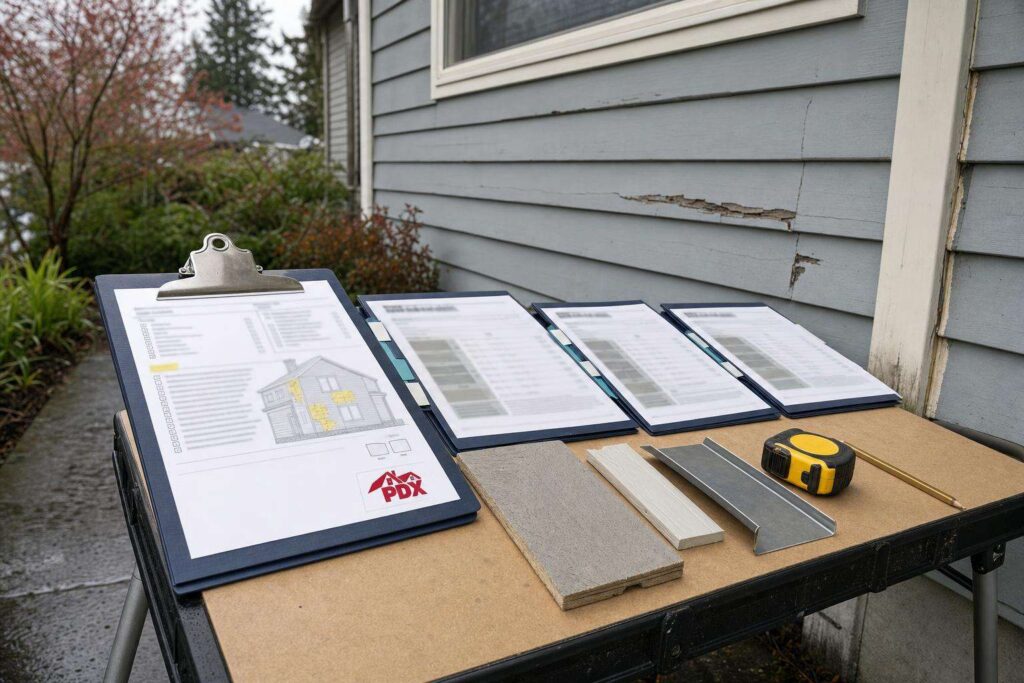
Why Siding Repair Scope Sheets Matter
When siding damage shows up on a Portland-area home, the first estimate is not always easy to compare with the second or third. One contractor may include removal, flashing checks, paint prep, and trim work. Another may only list the visible siding repair. Without a shared scope, homeowners can end up comparing very different projects.
A siding repair scope sheet helps solve that problem. It outlines the work area, material expectations, prep steps, finish details, and any related exterior concerns before estimates are reviewed. For homeowners planning home exterior upgrades, this creates a clearer path to choosing the right contractor and understanding what is included.
At Pdx Roofing and Siding, we believe clear scopes lead to better conversations, better expectations, and more useful estimates for siding repair, siding replacement, roof repair, and related exterior work.
What a Siding Repair Scope Sheet Should Include
A strong scope sheet does not need to be complicated, but it should be specific. The goal is to document the same project details for every contractor so each estimate is based on the same information.
Project Location and Repair Areas
Start by identifying the exact siding sections that need attention. Avoid broad descriptions like “repair siding on the back of the house.” Instead, define the area in a way that can be verified during the site visit.
- Elevation or side of the home, such as north wall, garage wall, or rear elevation
- Approximate dimensions or number of affected siding courses
- Nearby features, such as windows, doors, deck connections, meters, or hose bibs
- Visible symptoms, including cracks, swelling, gaps, soft spots, or failing caulk
This helps a siding contractor determine whether the work is a localized repair or whether a larger siding replacement area should be considered.
Existing Siding Material
Material identification is essential because labor methods, fasteners, trim details, and finishing requirements can vary. A scope sheet should note the known or suspected siding type.
- Fiber cement siding
- Wood siding
- Engineered wood siding
- Vinyl siding
- Panel siding or lap siding
If the material is unknown, the scope sheet should say so. That gives the contractor a chance to verify it during inspection instead of building an estimate around the wrong assumption.
Moisture, Flashing, and Weather-Exposure Details
Portland weather can reveal weaknesses in siding, trim, and roof-to-wall transitions. The scope sheet should identify whether moisture is suspected and where water may be entering or collecting.
- Staining under windows or trim
- Soft sheathing suspected behind damaged siding
- Gaps at vertical joints or trim returns
- Missing or failing flashing at rooflines, decks, or penetrations
- Areas where roof runoff may be hitting siding
Because Pdx Roofing and Siding also handles roofing services, we often look at siding concerns in the context of the full exterior system. In some cases, a siding issue may connect to roof repair needs, roofing materials, or flashing details near asphalt shingle roofing.
How Scope Sheets Keep Estimates Comparable
Comparable estimates are not always identical in price, but they should be based on the same project assumptions. A scope sheet gives every contractor the same starting point.
They Separate Included Work from Exclusions
A detailed estimate should make it clear what is included and what is not. Your scope sheet can ask each contractor to address items such as:
- Removal and disposal of damaged siding
- Inspection of sheathing after siding removal
- Replacement of damaged trim
- Weather barrier or flashing repairs
- Caulking, priming, painting, or finish matching
- Permit considerations, when applicable
If one estimate includes painting and another does not, the scope sheet makes that difference easier to spot.
They Clarify Material Choices
Not all siding products are the same, even when they look similar from the street. If your home has fiber cement siding, the estimate should identify whether the repair uses a compatible product profile, thickness, reveal, and texture where possible.
For broader home exterior upgrades, the same principle applies to roof installation and roofing materials. A Portland roofing contractor should clearly identify product type, installation details, and finish expectations so the homeowner understands what is being proposed.
They Reduce Assumptions About Hidden Damage
Siding repair can involve unknown conditions behind the visible surface. A good scope sheet should ask each contractor how hidden damage will be handled if discovered after removal.
- How will additional sheathing damage be documented?
- Will approval be requested before added work begins?
- How are change orders priced and communicated?
- Will photos be provided during the repair process?
This does not eliminate every unknown, but it creates a more honest framework for dealing with them.
Key Line Items to Request in Every Siding Repair Estimate
When requesting estimates, homeowners can ask each contractor to respond to the same core categories. This keeps the review process organized and prevents important details from being buried in broad descriptions.
Labor and Access
- Estimated work area and access requirements
- Ladder, staging, or protection needs
- Protection for landscaping, decks, windows, and walkways
- Expected project sequence
Materials and Components
- Siding product type and profile
- Trim, flashing, fasteners, sealants, and weather barrier details
- Primer, paint, or finish responsibilities
- Color or texture matching expectations
Related Exterior Work
- Gutter or downspout adjustments near the repair area
- Roof-to-wall flashing concerns
- Window or door trim issues
- Coordination with roof repair or emergency roof repair if active water intrusion is present
Working with a licensed roofing company that also understands siding can be helpful when the damage crosses from one exterior system into another.
Questions to Ask Before Approving a Siding Repair Estimate
Before you approve a siding repair estimate, use your scope sheet to guide a final review. Ask direct questions and look for clear answers.
- Does the estimate match the repair areas listed in the scope sheet?
- Are the siding materials identified clearly?
- Does the estimate explain how hidden damage will be handled?
- Are painting, caulking, and finish details included or excluded?
- Does the contractor address moisture management, flashing, and trim transitions?
- Is the timeline realistic for weather and site conditions?
The best estimate is not just a number. It is a clear plan for what will be repaired, how the work will be handled, and what the homeowner can expect.
When Repair Becomes Replacement
A scope sheet can also reveal when a small repair may not be the best long-term approach. If damage is widespread, if multiple walls have failing material, or if moisture has affected large sections, siding replacement may deserve consideration.
That decision should be based on inspection findings, material condition, and the homeowner’s goals. For some Portland Metro homes, targeted repair is the right choice. For others, a larger exterior plan may better support durability, curb appeal, and future maintenance needs.
Work With Pdx Roofing and Siding
Pdx Roofing and Siding helps homeowners in Portland, OR, and the Portland Metro area evaluate siding repair, siding replacement, roof repair, roof installation, and related exterior needs with practical guidance. We focus on clear communication, detailed scopes, and workmanship that fits the home.
Services and offers are subject to availability and approval. For practical next steps, Book roof installation service and talk with the team about timing, scope, and the right path for your situation.