


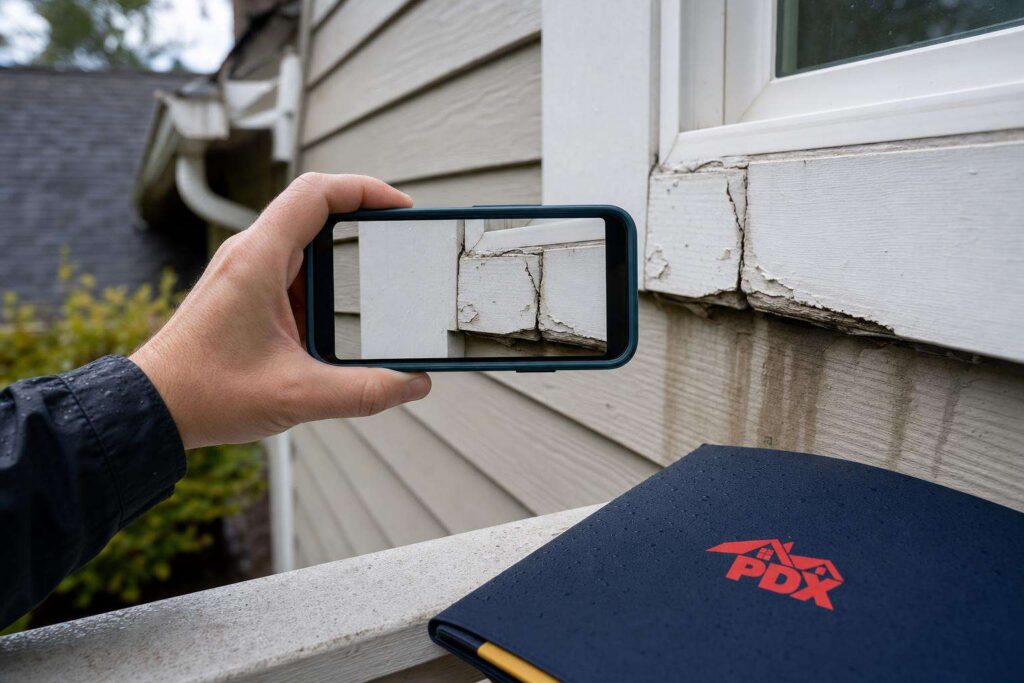
Why Siding Inspection Photos Matter Before Repairs
When you move into a new home, the exterior can tell you a lot about how the property has handled Portland weather. Siding protects the structure from rain, wind, and moisture, but damage is not always obvious from a quick walk around the house.
Taking clear siding inspection photos before repairs helps you document current conditions, communicate concerns, and compare changes over time. It also gives your contractor a better starting point when discussing siding repair, siding replacement, roofing materials near wall transitions, and broader home exterior upgrades.
Photos are not a substitute for a professional inspection, but they are a smart first step for new homeowners in Portland, OR, and the Portland Metro area.
Start With Wide Photos of Every Exterior Wall
Begin with full-view photos before taking close-ups. Wide photos give context and help show how siding, trim, gutters, roofing, windows, and doors work together.
- Stand far enough back to capture each full side of the home.
- Take photos straight on when possible, not only from an angle.
- Include the roofline, gutters, downspouts, foundation, windows, doors, and corners.
- Take additional wide shots after rain if you notice staining or damp areas.
These images are especially useful if your contractor needs to understand whether a siding concern may be connected to drainage, roof repair needs, or flashing details.
Photograph Siding Damage Close Up
After wide shots, move closer and document each visible concern. Try to keep the photo well-lit and steady so the condition is easy to review.
Important close-ups to capture
- Cracked, split, warped, or loose siding boards or panels
- Soft-looking, swollen, or deteriorated areas
- Paint bubbling, peeling, or staining
- Open seams, gaps, or failed caulking
- Nail pops, missing fasteners, or uneven siding lines
- Impact marks from branches, tools, or debris
- Areas where siding meets decks, patios, or soil
If your home has fiber cement siding, wood siding, vinyl siding, or another material, take photos that show both the damaged section and a nearby undamaged section. This helps with material matching and repair planning.
Document Trim, Corners, and Window Areas
Trim and wall openings are common places for moisture to show up. New homeowners should pay close attention to areas where materials meet, because small gaps can become larger repair issues if left unchecked.
Photo checklist for trim and openings
- Window sills, window trim, and the siding directly below windows
- Door frames, thresholds, and surrounding siding
- Outside corners and inside corners
- Garage door trim and lower wall sections
- Utility penetrations, vents, hose bibs, and electrical boxes
Take one close-up photo and one wider photo for each concern. The close-up shows the damage, while the wider photo shows where it is located on the home.
Include Roof-to-Wall and Gutter Areas
Siding issues are sometimes related to water moving from the roof or gutters. If you notice siding staining, algae-like discoloration, or repeated dampness near a roofline, document it carefully.
Useful photos include:
- Where siding meets roof edges or lower roof sections
- Areas under gutters and downspouts
- Wall sections below valleys, dormers, or roof intersections
- Stains below gutter seams or overflowing downspouts
- Siding near decks, porch roofs, and patio covers
A Portland roofing contractor or licensed roofing company may need to review these areas if water is entering behind siding or if roof repair is part of the larger exterior solution. For homes with asphalt shingle roofing, roof-to-wall flashing details should be evaluated by a qualified professional before siding replacement begins.
Take Photos After Rain, If Conditions Are Safe
Portland homes often reveal exterior issues more clearly after wet weather. If it is safe to walk around your property, take follow-up photos after rain to show active staining, pooling, or damp siding.
- Look for water trails under windows, gutters, and roof edges.
- Photograph any areas that stay wet longer than nearby siding.
- Capture puddling near the foundation or siding that is too close to grade.
- Document interior signs that may relate to exterior concerns, such as stains near exterior walls.
If you see active leaking, sagging materials, or storm-related damage involving both siding and roofing, contact a qualified contractor promptly. In some cases, emergency roof repair may be needed before siding repairs can be completed properly.
Use Simple Labels and Keep Photos Organized
Good organization makes your siding inspection photos much more useful. You do not need special software; a clear folder and simple notes are enough.
Helpful ways to organize your photos
- Create folders by side of the home: front, back, left, and right.
- Rename important images with location notes, such as “back-wall-window-trim.”
- Take a wide photo before every close-up so the location is clear.
- Record the date, especially if photos are taken before and after rain.
- Keep original images instead of heavily editing them.
Clear photo records can help you track whether damage is changing and can support a more productive repair estimate conversation.
What Not to Rely On From Photos Alone
Photos are helpful, but they cannot always show what is happening behind siding. Moisture intrusion, hidden sheathing damage, improper flashing, and ventilation concerns may require an in-person inspection.
New homeowners should avoid assuming that a surface stain or small gap is the full extent of the issue. A professional siding inspection can help determine whether targeted siding repair is appropriate or whether siding replacement is a better long-term option.
When to Contact PDX Roofing and Siding
If your photos show cracked siding, soft trim, repeated staining, loose panels, or roof-to-wall moisture concerns, PDX Roofing and Siding can help evaluate the next step. Our team supports Portland Metro homeowners with siding repair and maintenance, siding installation and replacement, roof installation, and roof repair services.
For honest guidance on home exterior upgrades, share your inspection photos and schedule a professional review. Services and offers are subject to availability and approval. For practical next steps, Call roof installation now and talk with the team about timing, scope, and the right path for your situation.