

Why Roof Replacement Design Standards Matter for Rental Communities
Replacing one roof is a construction project. Replacing roofs across a multi-building rental property is an asset management decision. Clear design standards help owners, property managers, and maintenance teams make consistent choices across buildings, reduce confusion during bidding, and support a cleaner long-term exterior plan.
For Portland and Portland Metro rental properties, roof replacement standards should account for weather exposure, tenant access, building age, ventilation, drainage, and the visual consistency of the community. Working with a Portland roofing contractor that understands occupied rental properties can help you plan the work with fewer surprises.
Start With a Property-Wide Roof Assessment
Before setting design standards, document the current condition of each building. Multi-building properties often have roofs at different life stages due to past repairs, shade exposure, drainage patterns, and construction history.
What to Document
- Roof age and known service history
- Existing roofing materials and underlayment details, when available
- Areas with recurring roof repair needs or active leak history
- Ventilation type and attic airflow concerns
- Gutter, flashing, skylight, chimney, and wall intersection conditions
- Tenant access points, parking constraints, and staging areas
This assessment gives owners a practical baseline for prioritizing buildings, comparing proposals, and deciding whether phased roof installation or a full-property replacement approach is appropriate.
Define Consistent Roofing Materials and System Components
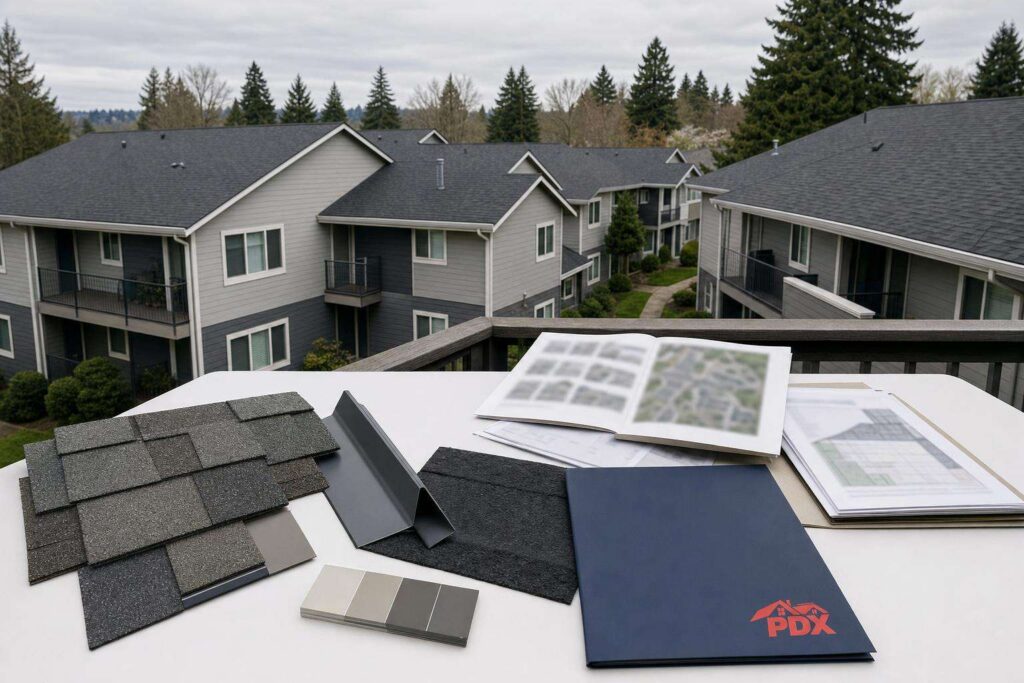
A design standard should be more than a shingle color. It should define the full roof assembly so each building receives a consistent system. This is especially important when work is completed in phases over multiple budget cycles.
Roofing Materials to Standardize
- Primary roof covering: Asphalt shingle roofing is common for many rental properties because it offers a familiar appearance and broad design options.
- Underlayment: Specify the underlayment approach for field areas, valleys, eaves, and penetrations.
- Flashing: Include standards for pipe flashings, wall flashings, step flashing, and roof-to-siding transitions.
- Ventilation: Confirm intake and exhaust ventilation requirements for each building type.
- Gutters and drainage: Coordinate roof replacement with drainage improvements where needed.
Using the same roofing materials across similar buildings helps simplify future maintenance, roof repair planning, and visual consistency across the property.
Coordinate Roof Design With Siding and Exterior Details
Roof replacement can reveal siding issues, especially around wall intersections, dormers, chimneys, and trim. If your rental property is also due for siding replacement, the design standard should coordinate both scopes instead of treating them as separate decisions.
Exterior Details to Review Together
- Roof-to-wall flashing and siding clearance
- Trim boards, fascia, and soffit conditions
- Fiber cement siding transitions near rooflines
- Gutter attachment points and water flow paths
- Paint color, roof color, and overall curb appeal goals
Well-planned home exterior upgrades can improve the appearance of the rental community while supporting better maintenance access over time.
Plan for Tenant Communication and Occupied Property Logistics
Roof replacement on an occupied rental property requires careful coordination. Tenants need clear notice about noise, parking impacts, access restrictions, and expected work areas. A licensed roofing company should help property managers understand the construction sequence before work begins.
Tenant-Focused Planning Standards
- Provide advance notice for each affected building
- Identify temporary parking or access changes
- Set expectations for work hours and noise
- Protect common areas, landscaping, and entries
- Establish a point of contact for tenant concerns
If storm damage or an active leak occurs during the planning process, emergency roof repair may be needed before the larger replacement project begins. Temporary protection and permanent replacement should be documented separately so ownership has a clear record of what was completed.
Use Phasing Standards for Budgeting and Consistency
Many rental properties replace roofs in phases. Phasing can help align the work with capital planning, but it also creates a risk of inconsistent materials or appearance if standards are not clearly written.
What a Phasing Plan Should Include
- Priority order by roof condition and leak risk
- Approved shingle style and color for all phases
- Approved flashing and ventilation details
- Schedule windows that reduce tenant disruption where possible
- Documentation requirements after each building is completed
A strong phasing plan helps future decision-makers continue the same standard, even if a project spans more than one season.
Include Code, Permitting, and Documentation Requirements
Roof replacement standards should not rely on appearance alone. Property owners should confirm permitting requirements, local code considerations, manufacturer installation requirements, and any community or ownership-specific design rules that apply.
Records to Keep
- Approved proposal and scope of work
- Material names, colors, and product documentation
- Permit records when applicable
- Before, during, and after photos
- Maintenance recommendations and inspection notes
Good documentation supports future roof repair decisions, insurance conversations, capital planning, and property resale due diligence.
Set Maintenance Expectations After Replacement
A roof replacement standard should include a maintenance plan. Even a well-installed roof needs periodic review, especially in the Northwest where debris, moss-prone areas, and heavy seasonal moisture can affect roof performance.
Recommended Maintenance Considerations
- Inspect roofs after major weather events
- Keep gutters and downspouts functioning properly
- Monitor trees that drop debris or rub against the roof
- Address small roof repair items before they expand
- Coordinate roof and siding maintenance together when practical
Maintenance standards help protect the investment and make it easier for property teams to respond consistently across every building.
Work With a Roofing Partner That Understands Rental Properties
Multi-building rental properties require more than a single-building estimate. They need planning, communication, material consistency, and reliable project documentation. Pdx roofing and siding helps Portland and Portland Metro property owners evaluate roof installation, roof repair, siding replacement, and exterior project needs with practical guidance.
Services and offers are subject to availability and approval.
Ready to Plan Your Multi-Building Roof Replacement?
Contact Pdx roofing and siding to discuss design standards, roofing materials, tenant-aware scheduling, and exterior upgrades for your rental property. For practical next steps, Book roof installation service and talk with the team about timing, scope, and the right path for your situation.