


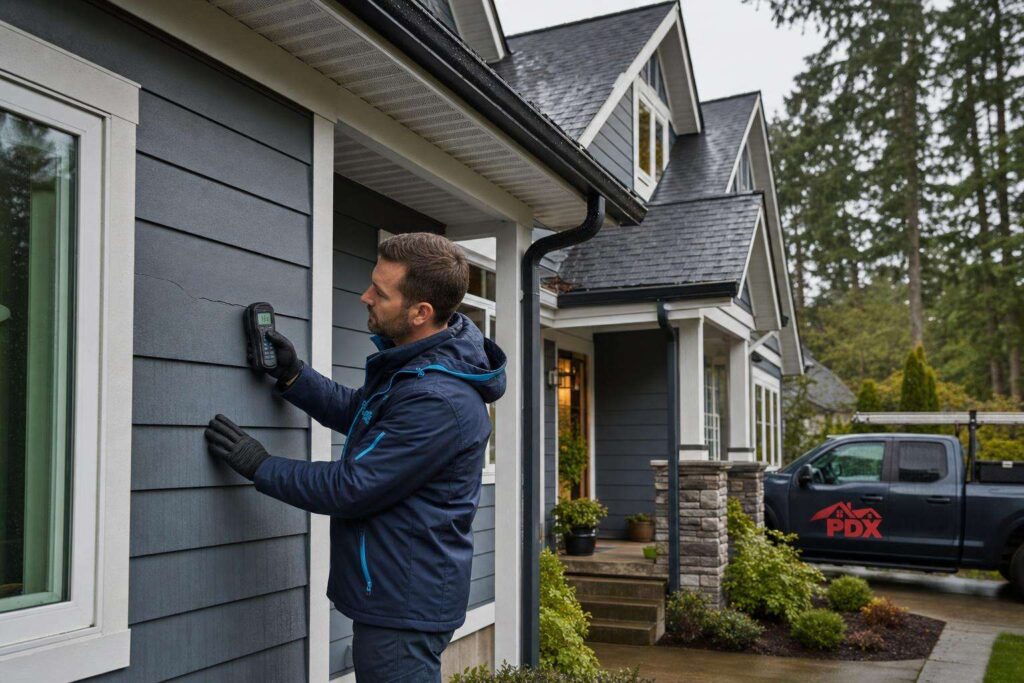
Small Siding Cracks Are Common in Portland, But They Should Not Be Ignored
Portland weather can be tough on exterior materials. Rain, shade, temperature swings, wind, and seasonal moisture all affect siding over time. A small crack may be simple cosmetic wear, or it may be an early warning sign that water is getting behind the surface.
The key is knowing what to look for. PDX Roofing and Siding helps Portland Metro homeowners evaluate siding damage honestly, so you can make informed decisions about siding repair, siding replacement, and broader home exterior upgrades.
When a Small Crack Is Usually Cosmetic
Not every siding crack means your home needs major work. Some cracks are surface-level and may be monitored or addressed as part of routine maintenance.
Signs the Crack May Be Minor
- The crack is hairline-thin and does not appear to widen over time.
- The siding panel remains flat, firm, and securely attached.
- There is no swelling, softness, staining, or bubbling nearby.
- The crack is isolated to one small area.
- Paint or finish wear appears limited to the surface.
These issues are often related to normal aging, surface coating wear, or minor movement in the siding material. Even then, it is smart to keep an eye on the area after heavy rain or seasonal changes.
When a Small Crack May Point to Costly Repairs
Some cracks are more than cosmetic. In Portland’s damp climate, water intrusion can move behind siding and affect sheathing, trim, insulation, or framing if left unaddressed.
Warning Signs to Take Seriously
- The crack is growing, widening, or spreading to nearby boards or panels.
- The siding feels soft, spongy, swollen, or warped.
- You see dark staining, mildew-like marks, or peeling paint around the crack.
- Caulking has separated at seams, corners, trim, or windows.
- There are gaps where siding meets flashing, rooflines, decks, or doors.
- The same area stays damp long after rain has stopped.
If these signs are present, a professional inspection can help determine whether siding repair is enough or whether siding replacement is the better long-term option.
Why Portland Homes Are Prone to Siding Cracks
Local conditions matter. Portland homes often deal with long wet seasons, shaded walls, moss-prone rooflines, and repeated expansion and contraction. Over time, those conditions can stress siding seams and finishes.
Common Causes of Cracking
- Moisture exposure: Water can enter through failed caulking, open seams, or damaged trim.
- Material movement: Siding expands and contracts with temperature and moisture changes.
- Impact damage: Branches, ladders, yard equipment, or wind-blown debris can create small cracks.
- Poor drainage: Overflowing gutters or roof runoff can send excess water down siding.
- Aging materials: Older wood, composite, or brittle panels may crack more easily.
Because roofing and siding work together to protect the building envelope, issues with gutters, flashing, roofing materials, or roof repair needs can contribute to siding deterioration.
How Different Siding Materials Show Damage
The type of siding on your home affects how cracks appear and how urgent they may be.
Fiber Cement Siding
Fiber cement siding is a popular choice for Portland homes because it performs well when properly installed and maintained. Small surface cracks may be cosmetic, but cracks near fasteners, butt joints, or trim should be checked because water can enter at those points.
Wood Siding
Wood siding can crack as it ages, dries, or absorbs moisture. Splits, soft spots, and peeling paint should be evaluated carefully, especially on shaded elevations where drying is slower.
Vinyl or Composite Siding
Cracks in vinyl or composite siding can occur from impact, age, or temperature-related brittleness. If panels are loose, bowed, or cracked near seams, water management behind the siding should be reviewed.
Look Beyond the Crack: Nearby Areas to Inspect
A siding crack rarely tells the whole story by itself. Before deciding whether it is cosmetic or serious, look at the surrounding exterior details.
Check These Areas
- Window and door trim: Look for gaps, failed sealant, swelling, or staining.
- Roof-to-wall transitions: Damaged flashing can send water behind siding.
- Gutters and downspouts: Overflowing or misdirected water can accelerate siding damage.
- Lower wall sections: Siding close to soil, decks, or hardscape can absorb splashback moisture.
- Interior walls: Stains, musty odors, or soft drywall near the exterior wall may indicate water intrusion.
If you notice siding cracks along with roof leaks, missing shingles, or active water entry, a licensed roofing company should evaluate the roof and exterior together. In urgent situations, emergency roof repair may be needed before additional siding damage develops.
Repair or Replace: How to Decide
The right solution depends on the extent of the damage, the siding material, and whether moisture has reached the layers behind the exterior surface.
Siding Repair May Be Appropriate When
- The crack is isolated and the surrounding siding is sound.
- No moisture damage is found behind the affected area.
- The siding profile and finish can be matched reasonably well.
- Trim, flashing, and caulking are still performing properly.
Siding Replacement May Be the Better Choice When
- Cracks appear across multiple walls or many panels.
- There is rot, swelling, delamination, or repeated moisture damage.
- Previous repairs have not stopped the issue.
- The siding is near the end of its useful service life.
- You are planning larger home exterior upgrades.
For homeowners already considering roof installation, asphalt shingle roofing updates, or new exterior trim, coordinating siding replacement with roofing work can help create a cleaner, better-protected exterior system.
Why a Professional Evaluation Matters
Small siding cracks can be deceptive. A surface issue may look concerning but be simple to address, while a narrow opening near a flashing detail may allow water into hidden areas. A trained exterior contractor can inspect the crack, surrounding materials, moisture pathways, and roofline conditions before recommending the next step.
As a Portland roofing contractor and siding team, PDX Roofing and Siding evaluates the full exterior system rather than looking at one isolated symptom. That helps homeowners avoid unnecessary work while still addressing problems before they become more expensive.
Talk With PDX Roofing and Siding
If you have noticed small siding cracks on your Portland home, do not wait for them to spread. PDX Roofing and Siding can help determine whether you need routine maintenance, targeted siding repair, or full siding replacement as part of a broader exterior plan.
Services and offers are subject to availability and approval. For practical next steps, Call roof installation now and talk with the team about timing, scope, and the right path for your situation.