

When Roof Repair Stops Being the Right Plan
For many Oregon property owners, commercial roof issues start small: a leak near a drain, a lifted seam, a damp ceiling tile, or a maintenance call after a heavy storm. A well-timed roof repair can absolutely extend the life of a commercial roofing system. But there comes a point when repeated repairs stop protecting the property and start delaying a bigger decision.
If your building is in Portland, OR, or the broader Portland Metro area, the roof has to stand up to long rainy seasons, wind-driven moisture, debris buildup, and changing temperatures. When those conditions expose aging materials or recurring weak points, replacement may become the more reliable path.
This guide from PDX Roofing and Siding explains how to evaluate timing, reduce tenant disruption, and work with a licensed roofing company before a roof problem becomes an operational problem.
Signs Your Commercial Roof Has Outgrown Repairs
Leaks Keep Returning in the Same Areas
One isolated leak does not always mean the entire roof needs replacement. However, recurring leaks around the same penetrations, drains, seams, skylights, or parapet walls can point to deeper system failure. If repairs are holding for only a short time, the roof assembly may be compromised beyond the surface layer.
Moisture Has Reached Insulation or Decking
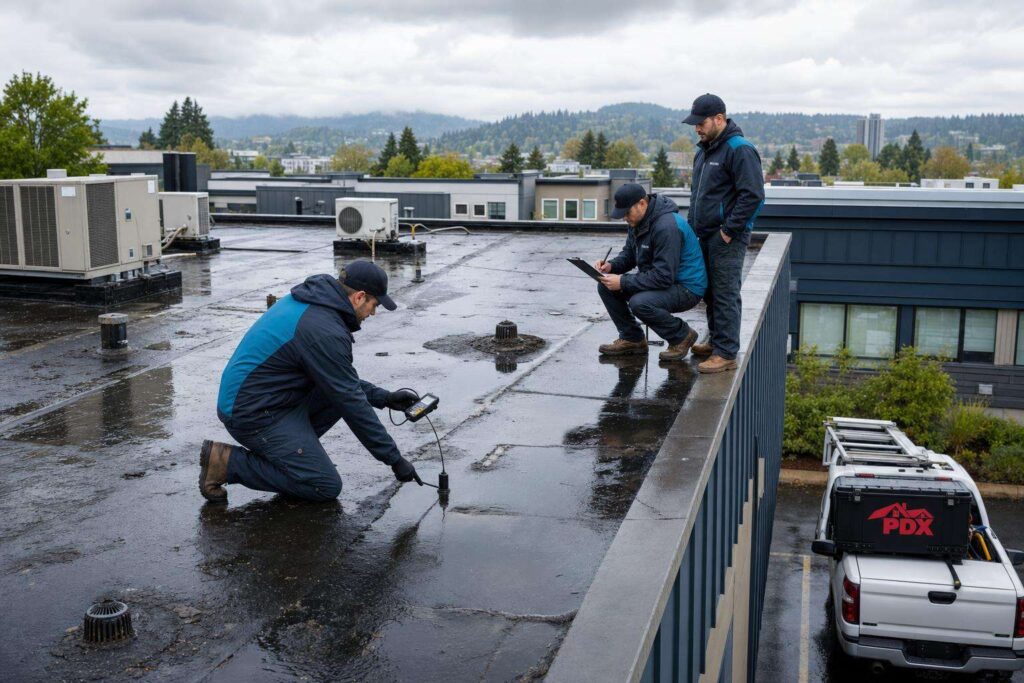
Commercial roofs often hide moisture beneath membranes or layers of roofing materials. Wet insulation can reduce performance, add weight, and make leak tracking more difficult. If an inspection finds widespread trapped moisture, replacement may be needed instead of another patch.
Seams, Flashing, and Edges Are Failing Across the Roof
Perimeter edges, wall transitions, vents, curbs, and HVAC penetrations are common leak points. When these details fail in several locations, it often means the roof is aging as a system. Repairing one area may not prevent the next vulnerable section from opening up.
Ponding Water Has Become Routine
Standing water after storms can accelerate wear and expose drainage problems. In Oregon’s wet climate, ponding water should be evaluated carefully. The issue may involve clogged drains, low spots, structural settling, or an older roof system that no longer sheds water properly.
Maintenance Costs Are Becoming Hard to Predict
If roof service calls are becoming more frequent, it may be time to compare ongoing maintenance costs against a planned roof installation or replacement. Replacement planning gives property owners more control than reacting to leaks during tenant business hours or bad weather.
Why Timing Matters for Oregon Commercial Properties
Waiting too long can affect more than the roof. Moisture intrusion may impact interiors, insulation, inventory, mechanical systems, and tenant satisfaction. For property managers, timing also affects lease obligations, access planning, and communication with occupants.
A planned replacement can help you:
- Coordinate work around tenant schedules and building access needs
- Address insulation, drainage, and ventilation concerns at the same time
- Choose roofing materials suited to the building and Oregon climate
- Reduce emergency calls and unplanned interior damage
- Document the condition of the building envelope for ownership records
In contrast, relying on repeated repairs can make budgeting harder and increase the chance of needing emergency roof repair during a storm event or active business day.
Repair, Restore, or Replace: How to Think Through the Decision
Repair May Make Sense When Damage Is Isolated
Repairs are often appropriate when the roof is generally sound and the issue is limited to a specific area. Examples include a damaged flashing detail, a puncture from service traffic, or a localized leak that has not affected insulation or decking.
Restoration May Be an Option for Some Roofs
Some commercial roofs may qualify for restoration depending on their age, condition, drainage, and material type. This is not the right fit for every building, and it should be based on a professional inspection rather than guesswork.
Replacement Is Often Wiser When Problems Are Widespread
Replacement becomes the stronger option when the roof has extensive deterioration, recurring leaks, moisture below the surface, failing seams, or a history of short-lived repairs. A replacement project can also be a good time to evaluate related home exterior upgrades for mixed-use or multi-family properties, including gutters, fascia, and siding replacement.
Commercial Roof Replacement Planning for Tenant-Occupied Buildings
For tenant-occupied properties, replacement timing is not just a construction decision. It is an operations decision. Clear planning can reduce frustration and help keep businesses, residents, or staff informed.
Before work begins, property owners and managers should discuss:
- Tenant notification timelines and preferred communication methods
- Parking, staging, and delivery areas
- Noise-sensitive hours or business operations
- Interior protection for vulnerable areas
- HVAC, rooftop equipment, and service access
- Weather windows and contingency planning
A knowledgeable Portland roofing contractor can help identify practical sequencing options based on roof type, building access, and Oregon weather conditions.
Roofing Materials and Building Type Considerations
There is no single roofing material that fits every commercial building. Low-slope commercial roofs, steep-slope retail buildings, multi-family properties, and mixed-use structures may all require different assemblies.
Common considerations include:
- Building slope: Low-slope and steep-slope roofs require different systems and details.
- Drainage: Drains, scuppers, gutters, and slope design affect long-term performance.
- Rooftop equipment: HVAC units, vents, and access paths need durable detailing.
- Energy performance: Insulation and reflective surfaces may be part of the replacement discussion.
- Exterior envelope: Siding, trim, and wall transitions can contribute to water intrusion if overlooked.
Some commercial or multi-family properties may include steep-slope sections where asphalt shingle roofing is appropriate. Others may need commercial-grade membrane systems. Buildings with exterior wall concerns may also benefit from reviewing fiber cement siding or other siding options during the same planning process.
Questions to Ask Before Approving Another Repair
If you are deciding whether to approve one more repair or start planning replacement, ask these questions:
- Is the leak isolated, or have similar leaks appeared elsewhere?
- Has moisture testing shown wet insulation or hidden damage?
- Are seams, flashings, and penetrations failing in multiple areas?
- How often have we requested roof service in the last few seasons?
- Could a planned replacement reduce disruption compared with future emergency work?
- Are tenants already experiencing water intrusion, odors, stains, or business interruptions?
- Does the current roof still match the building’s use and maintenance needs?
Honest answers can help you avoid spending more on short-term fixes when a replacement plan would better protect the property.
Work With PDX Roofing and Siding on a Practical Replacement Plan
PDX Roofing and Siding provides direct, knowledgeable guidance for property owners in Portland, OR, and the Portland Metro area. Whether your building needs targeted maintenance, commercial roof replacement planning, siding evaluation, or coordinated exterior improvements, our team can help you understand the next right step.
As a licensed roofing company, we focus on clear recommendations, dependable craftsmanship, and roofing decisions that make sense for your building’s condition. Services and offers are subject to availability and approval. For practical next steps, Book roof installation service and talk with the team about timing, scope, and the right path for your situation.