


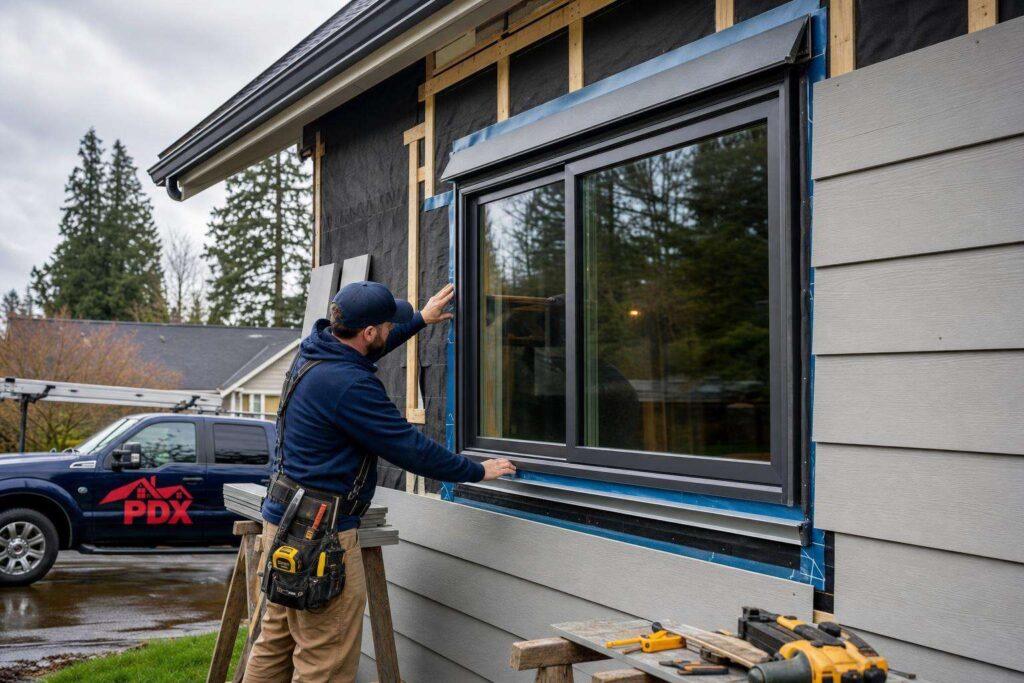
Why Window Flashing Matters During Siding Replacement
When siding comes off a Portland home, it often reveals what has been happening behind the exterior for years. Around windows, small gaps, aging sealant, and poorly integrated flashing can allow rainwater to move behind the siding and into the wall assembly. Over time, that moisture can contribute to hidden wall rot, damaged sheathing, staining, and insulation problems.
That is why window flashing should never be treated as an afterthought during siding replacement. Proper integration helps direct water out and away from the wall rather than trapping it behind new materials.
At PDX Roofing and Siding, our approach to home exterior upgrades is built around long-term weather protection for Portland and the surrounding Portland Metro area.
Portland’s Climate Makes Flashing Details More Important
Portland homes deal with extended wet seasons, wind-driven rain, moss-prone surfaces, and repeated moisture exposure. Even high-quality siding can underperform if the flashing and weather-resistive barrier behind it are not installed correctly.
Window flashing is designed to work as part of a layered system. That system typically includes:
- Window flanges or trim details
- Flashing tape or metal flashing
- A weather-resistive barrier
- Drainage gaps or rainscreen components where appropriate
- Properly installed siding, such as fiber cement siding
- Sealants used in the correct locations, not as the only line of defense
In a damp Northwest setting, relying only on caulk around windows is not enough. Sealant can age, separate, or be applied over surfaces that were not prepared properly. Flashing gives water a planned path to escape.
How Hidden Wall Rot Starts Around Windows
Hidden wall rot usually begins when water enters behind the siding and cannot dry effectively. Windows are common entry points because they interrupt the siding surface and require careful transitions.
Common Causes of Moisture Intrusion
- Missing or damaged head flashing: Water can collect at the top of the window and work behind the trim.
- Improper flashing sequence: Flashing must be layered so upper pieces shed water over lower pieces.
- Unsealed side flanges: Water can travel along the sides of the window frame.
- No sill pan or poor sill drainage: Water that reaches the bottom of the window needs a way out.
- Old siding installed tight to trim: Lack of clearance can hold moisture against vulnerable materials.
- Over-reliance on caulk: Caulk should support the system, not replace proper flashing.
During siding removal, these issues may become visible through soft sheathing, dark staining, deteriorated trim, or musty odors. A qualified siding and roofing team can identify whether repairs are needed before new siding is installed.
What Proper Window Flashing Integration Looks Like
Window flashing is not just one product. It is a process that depends on sequencing, compatibility, and correct tie-in with the siding system.
Inspection Before New Siding Goes On
Before installing new siding, the exposed wall should be inspected for moisture damage, failed trim, compromised sheathing, and old flashing errors. Covering these problems with new siding may make the exterior look better temporarily, but it can leave the underlying issue active.
Correct Layering From Bottom to Top
Flashing should be installed so water naturally sheds downward and outward. This means lower components go in before upper components, and the weather-resistive barrier must be lapped correctly around the window opening.
Head Flashing Above the Window
The head flashing, located above the window, is one of the most important details. It helps move water away from the top edge of the window and prevents water from sitting behind trim or siding.
Sill Protection and Drainage
The sill area should be detailed so incidental water can drain out instead of soaking into the framing. This is especially important for older Portland homes where previous work may not meet current best practices.
Integration With Siding Material
Different siding products require different clearances, fasteners, and trim details. For example, fiber cement siding must be installed with attention to manufacturer requirements, proper gaps, and compatible flashing components.
Why Siding Replacement Is the Best Time to Address Flashing
Once new siding is installed, the flashing system behind it is no longer easy to access. That makes siding replacement the ideal time to correct problems around windows, doors, roof-wall intersections, and trim transitions.
Addressing flashing during the project can help homeowners:
- Reduce the risk of concealed water damage
- Improve the performance of new siding
- Protect wall sheathing and framing
- Support better long-term exterior maintenance
- Avoid covering up existing moisture issues
For Portland homes, the goal is not just a fresh exterior appearance. The goal is a complete moisture-management system that works behind the finished surface.
Where Roofing and Siding Details Overlap
Window flashing is part of the siding system, but water management does not stop there. Roof edges, gutters, kick-out flashing, and roof-wall transitions can all affect how water moves across the exterior.
Working with a team that understands both siding and roofing can be helpful when planning exterior improvements. As a Portland roofing contractor and siding contractor, PDX Roofing and Siding looks at the full building envelope, including areas connected to roof repair, roof installation, asphalt shingle roofing, and siding performance.
If a leak near a window appears after heavy rain, the source may not always be the window itself. Water can travel from roof penetrations, gutter issues, failed step flashing, or other exterior transitions. In urgent situations, homeowners may also need prompt help with emergency roof repair to stop active water intrusion before related siding or wall repairs are completed.
Signs Your Window Flashing May Need Attention
Not every flashing problem is obvious from the outside. However, Portland homeowners should pay attention to warning signs such as:
- Soft or swollen trim around windows
- Peeling paint near window corners
- Interior staining below or beside windows
- Musty smells near exterior walls
- Visible gaps between siding, trim, and window frames
- Cracked or separated sealant
- Siding that appears warped, buckled, or deteriorated near windows
These signs do not automatically confirm hidden wall rot, but they do warrant a closer inspection before a siding replacement project moves forward.
Choosing the Right Contractor for Flashing and Siding Work
Because flashing is mostly hidden after installation, choosing the right contractor matters. Look for a licensed roofing company and siding team that can explain how water will be managed behind the finished exterior.
Questions to Ask Before Your Project Starts
- Will the existing wall sheathing be inspected after siding removal?
- How will window head flashing, sill flashing, and side flashing be handled?
- Will the weather-resistive barrier be integrated with the flashing?
- Are the selected roofing materials and siding materials compatible with the home’s existing exterior details?
- How will roof-wall transitions, gutters, and trim clearances be evaluated?
- What happens if hidden damage is discovered during the project?
A contractor should be willing to discuss these details clearly. Honest guidance before work begins helps homeowners make informed decisions and avoid surprises where possible.
Protect Your Portland Home From Hidden Moisture Damage
New siding can improve curb appeal, but the hidden details behind it are what help protect your home over time. Proper window flashing integration is one of the most important parts of a durable siding replacement project in Portland’s wet climate.
PDX Roofing and Siding provides roofing and siding services throughout Portland, OR, and the Portland Metro area, with a focus on clean craftsmanship, practical recommendations, and moisture-conscious exterior work. Services and offers are subject to availability and approval.
Talk With PDX Roofing and Siding
If you are planning siding replacement or have concerns about water damage around your windows, PDX Roofing and Siding can help evaluate your exterior and recommend the right next step. For practical next steps, Call roof installation now and talk with the team about timing, scope, and the right path for your situation.