


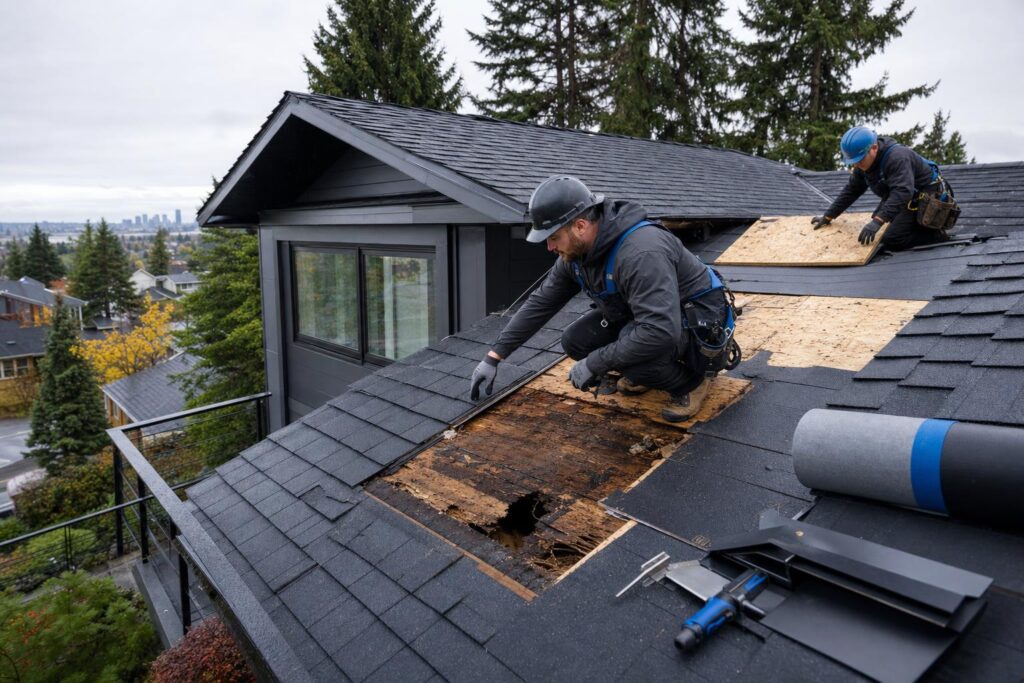
Why Roof Decking Matters During a Portland Roof Replacement
Roof decking is the structural layer beneath your shingles or other roofing materials. It gives the roof system a solid surface to fasten to and helps protect the home from moisture, wind, and long-term wear. When decking is damaged, a roof replacement plan often needs to change before new materials can be installed correctly.
For homes in Portland, OR, decking problems are often connected to moisture exposure, aging materials, ventilation issues, or past roof leaks. A knowledgeable Portland roofing contractor will evaluate the decking during tear-off and explain what needs attention before the new roof installation continues.
Common Signs of Roof Decking Damage
Some decking issues can be suspected before a roof is removed, while others are only visible once the old roofing materials are taken off. Warning signs may include:
- Soft or spongy areas on the roof surface
- Sagging sections or uneven roof lines
- Water stains on attic sheathing or ceilings
- Persistent roof leaks after storms
- Mold-like staining or musty attic odors
- Loose or lifted shingles caused by poor fastener hold
If water is actively entering the home, emergency roof repair may be needed to protect the structure before a full replacement can be scheduled.
How Decking Damage Changes the Replacement Plan
1. The Project Scope May Expand
A standard roof replacement focuses on removing old roofing materials and installing a new system. If decking damage is discovered, the plan may need to include partial or full sheathing replacement. This can affect labor, material needs, disposal, and project sequencing.
2. The Roofing Materials Need a Sound Base
Asphalt shingle roofing and many other roof systems require a stable, properly fastened deck. Installing new shingles over compromised decking can lead to poor attachment, uneven surfaces, and future performance issues. A licensed roofing company should not ignore soft, rotted, or delaminated decking.
3. Ventilation May Need to Be Revisited
Decking damage is not always caused by an exterior leak. In some Portland homes, trapped attic moisture can contribute to sheathing problems. During roof installation, the contractor may evaluate intake and exhaust ventilation to help reduce future moisture buildup.
4. Flashing and Leak-Prone Areas Need Extra Review
Decking damage often appears around chimneys, skylights, valleys, roof-to-wall transitions, and plumbing vents. These areas may require updated flashing details as part of the replacement plan. Addressing only the visible sheathing without correcting the water pathway can allow the problem to return.
5. Timeline and Budget Should Be Adjusted Transparently
Because some decking damage is hidden until tear-off, a roof replacement plan should allow room for discovery. An honest contractor will document the issue, explain the recommended repair, and review the next steps before moving forward.
What Happens When Damaged Decking Is Found
When damaged decking is identified, the contractor typically follows a process like this:
- Stop and assess: The affected areas are inspected to determine the extent of damage.
- Document the condition: Photos and notes help show why replacement is recommended.
- Remove compromised sections: Damaged sheathing is removed so the new roof has a solid base.
- Install suitable decking: Replacement panels are installed and fastened according to the roof system requirements.
- Continue the roof system: Underlayment, flashing, and finish roofing materials are installed after the deck is sound.
Portland Climate Considerations
Portland Metro homes face regular rain, seasonal moisture, shaded roof areas, and debris from trees. These conditions make roof repair and maintenance especially important. A roof that looks acceptable from the street can still have hidden decking issues beneath worn shingles or aging underlayment.
During a replacement, it is also a good time to consider related home exterior upgrades. If the home also needs siding replacement, damaged trim repair, or moisture-resistant options such as fiber cement siding, coordinating the work can help create a more complete exterior plan.
Questions to Ask Before Roof Installation Begins
Before signing off on a roof replacement, ask your contractor:
- How will you inspect the roof decking during tear-off?
- What happens if damaged sheathing is found?
- How will replacement decking be documented and approved?
- Will you evaluate attic ventilation as part of the project?
- Are flashing details included around leak-prone areas?
- Can roof repair and siding-related exterior work be coordinated if needed?
Work With Pdx Roofing and Siding
Roof decking damage does not have to derail your project when it is handled with a clear plan. Pdx Roofing and Siding helps Portland homeowners understand the condition of their roof system, choose appropriate roofing materials, and move forward with practical recommendations for roof installation, roof repair, and exterior improvements.
Services and offers are subject to availability and approval. For practical next steps, Call roof installation now and talk with the team about timing, scope, and the right path for your situation.