


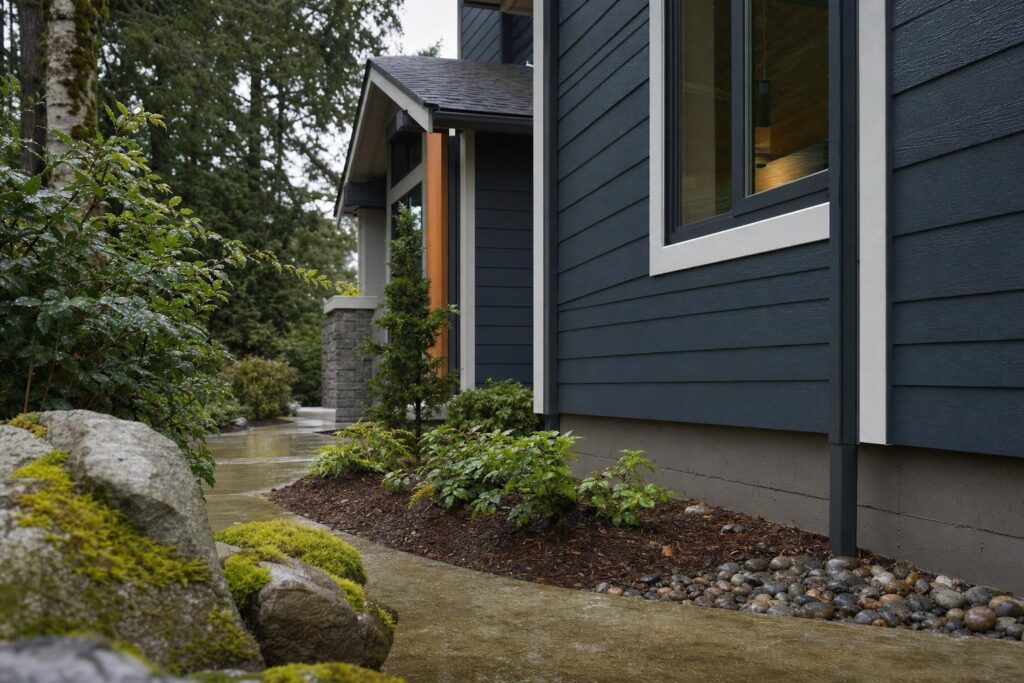
Why Siding Clearance Matters in Portland’s Wet Climate
Portland homes deal with long rainy seasons, shaded lots, moss-prone surfaces, and damp soil conditions. When siding is installed too close to the ground or allowed to touch soil, mulch, concrete, or decking, moisture can stay trapped against the wall system longer than it should.
That trapped moisture can lead to swelling, paint failure, soft trim, hidden sheathing damage, and conditions that may invite pests. For homeowners planning home exterior upgrades, checking siding clearance is one of the most practical ways to reduce moisture risk before it becomes a larger repair.
What Is Siding Clearance?
Siding clearance is the gap between the bottom edge of the siding and nearby surfaces such as:
- Soil or landscaping beds
- Mulch, bark dust, or decorative rock
- Concrete patios, sidewalks, and driveways
- Deck boards and stair landings
- Rooflines, flashing areas, and adjacent lower surfaces
Different siding materials have different clearance requirements, and the correct gap depends on the product, the installation method, and the surrounding surface. A licensed roofing company or siding professional can evaluate whether your current siding follows appropriate manufacturer and site requirements.
How Ground Contact Causes Moisture Damage
Moisture Wicking
When siding touches soil or mulch, it can pull moisture upward. This is especially concerning for wood-based siding, trim, and older cladding systems. Even durable products can have performance issues if they are installed without proper spacing and sealing.
Reduced Drying Time
Exterior walls need the ability to dry. If siding is buried in landscaping or pressed against a hard surface, air circulation is reduced. In Portland’s damp conditions, that can keep the lower wall wet for longer periods.
Paint and Finish Breakdown
Moisture exposure near the bottom edge of siding can cause peeling paint, bubbling coatings, staining, and exposed edges. Once the protective finish fails, water intrusion becomes more likely.
Hidden Wall Damage
The visible siding may only show part of the issue. Behind low or ground-contact siding, moisture can affect housewrap, flashing, trim, framing, or sheathing. This is why a careful inspection matters before deciding between siding repair and siding replacement.
Common Clearance Problems on Portland Homes
Many clearance problems develop over time, even if the original siding was installed correctly. Common causes include:
- Raised landscaping: Soil, bark, or mulch gets added year after year until it covers the lower siding edge.
- Settled drainage areas: Soil shifts and directs water toward the foundation instead of away from the home.
- Patio or walkway changes: New concrete, pavers, or decking can reduce the gap below siding.
- Improper trim details: Bottom trim, corner boards, or flashing may be too close to wet surfaces.
- Roof and gutter issues: Overflowing gutters or missing kick-out flashing can send extra water down siding.
Signs Your Siding May Be Holding Moisture
Look for warning signs along the lowest courses of siding, around corners, near decks, and below windows:
- Soft, swollen, or crumbling siding edges
- Paint peeling near the bottom of the wall
- Dark staining, algae, or persistent damp areas
- Gaps at butt joints or trim connections
- Loose caulking around penetrations and transitions
- Interior musty smells near exterior walls
- Recurring pest activity near siding or trim
If you see these issues, it is better to schedule an evaluation before water reaches more of the wall assembly. Pdx roofing and siding can help assess whether targeted siding repair, improved flashing, drainage correction, or full siding replacement is the right path.
How Different Siding Materials Respond to Moisture
Fiber Cement Siding
Fiber cement siding is a popular choice for Portland homes because it is durable when installed and maintained correctly. However, it still needs proper clearance, flashing, and sealed edges. If fiber cement siding is placed too close to grade or constantly exposed to splashback, finish failure and edge deterioration can occur.
Wood Siding and Trim
Wood can absorb moisture quickly when it touches soil or stays wet. Older Portland homes with wood siding often need close attention around lower walls, decks, and basement-level transitions.
Engineered Wood Siding
Engineered products vary by manufacturer, but most require careful edge protection and proper spacing from wet surfaces. Ground contact or buried lower edges can compromise performance.
Vinyl Siding
Vinyl does not absorb water the same way wood-based products do, but poor clearance can still trap moisture behind the panels. That hidden moisture can affect the wall behind the siding if drainage and ventilation are not working as intended.
Why Roofing and Siding Should Be Evaluated Together
Siding damage is not always caused by siding alone. Roof edges, gutters, downspouts, roof-to-wall transitions, and flashing all influence how water moves across the exterior. A Portland roofing contractor who also understands siding can identify whether water is coming from above, collecting at grade, or entering through a transition point.
This matters when planning roof repair, roof installation, or siding replacement. For example, asphalt shingle roofing, gutter alignment, and wall flashing should work together to move water away from vulnerable siding areas. The best roofing materials and siding products still need correct detailing to perform well in Portland Metro conditions.
What a Professional Inspection Should Include
A thorough siding clearance and moisture review should look beyond surface appearance. A contractor should check:
- Distance between siding and soil, mulch, decks, patios, and concrete
- Condition of lower siding edges and trim boards
- Paint, caulking, and exposed end cuts
- Flashing at windows, doors, rooflines, and wall intersections
- Gutter overflow, downspout discharge, and splashback patterns
- Signs of soft sheathing or hidden deterioration where accessible
- Whether repair or replacement is more appropriate for the affected area
If storm damage or active leaking is involved, emergency roof repair may also be needed to stop water from reaching the wall system before siding work begins.
Repair, Replacement, or Drainage Correction?
The right solution depends on the cause and extent of the moisture damage. In some cases, the siding itself is still sound, and the priority is correcting landscaping, drainage, flashing, or gutter discharge. In other situations, damaged siding and trim need to be removed and replaced so the underlying wall can be checked.
Common professional solutions may include:
- Removing soil or mulch from direct siding contact
- Improving slope so water drains away from the foundation
- Replacing deteriorated lower siding courses or trim
- Installing proper flashing at transition points
- Upgrading to fiber cement siding or another suitable material
- Coordinating siding replacement with roof installation or roof repair when water is coming from above
Protect Your Portland Home from Moisture Damage
Moisture problems rarely improve on their own. If your siding is touching the ground, buried in mulch, or showing signs of deterioration near the bottom edge, a professional evaluation can help you understand the condition of your home exterior and the best next step.
Pdx roofing and siding provides roofing and siding guidance for homeowners, landlords, and property managers across Portland, OR and the Portland Metro area. Services and offers are subject to availability and approval. For practical next steps, Call roof installation now and talk with the team about timing, scope, and the right path for your situation.