


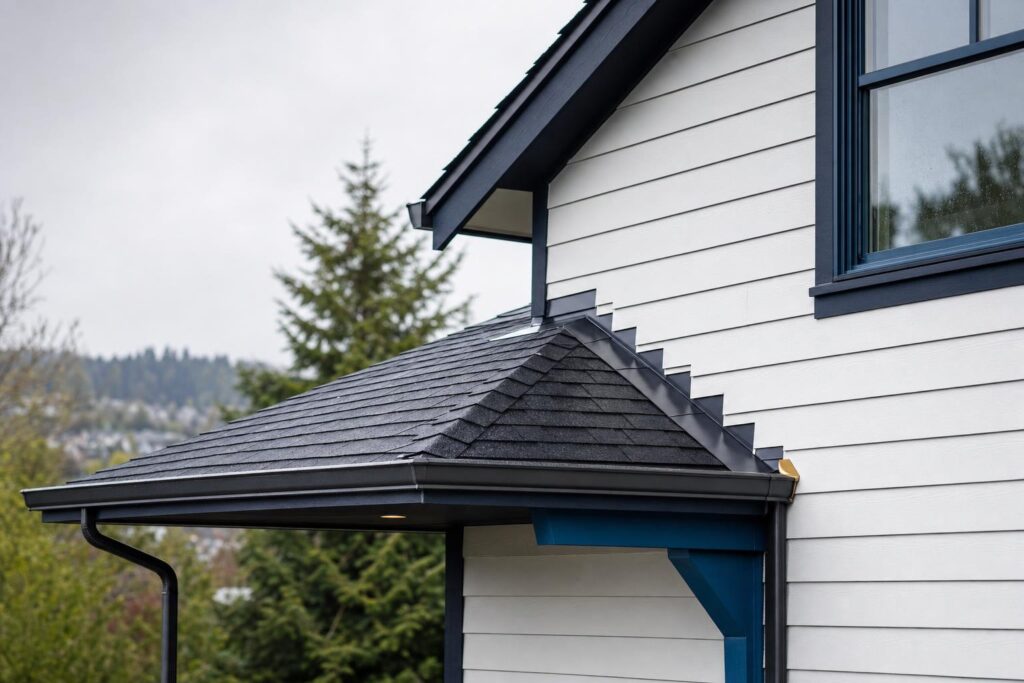
Why Roof-to-Wall Connections Matter in Portland
When a roof meets a vertical wall, that transition becomes one of the most important moisture-control points on the home. In Portland, steady rain, damp seasons, and wind-driven moisture can expose weak spots around sidewalls, dormers, chimneys, additions, and upper-story walls.
A well-built roof-to-wall connection helps direct water away from vulnerable seams. During roof installation, siding replacement, roof repair, or larger home exterior upgrades, this detail should be inspected closely instead of covered over.
What Is a Roof-to-Wall Connection?
A roof-to-wall connection is the area where roofing materials meet siding, trim, or another wall surface. It typically includes layers that work together to move water down and out, not behind the siding or under the roof covering.
Common components include:
- Step flashing: Individual flashing pieces installed with each course of shingles along a sidewall.
- Headwall flashing: Flashing used where a roof slope runs into a vertical wall.
- Kickout flashing: A small but important diverter that moves water into the gutter instead of behind siding.
- Weather-resistant barrier: A protective layer behind siding that helps manage moisture.
- Siding clearance: Proper spacing between siding and roofing to reduce water absorption and debris buildup.
- Sealants and trim details: Supporting elements that must be used correctly, not relied on as the primary waterproofing layer.
How These Connections Protect Your Home
Roof-to-wall details are not just cosmetic. They are part of the home’s water-management system. When installed correctly, they help protect framing, sheathing, insulation, interior finishes, and siding from moisture intrusion.
They help prevent hidden leaks
Leaks at roof-to-wall intersections may not always appear directly below the problem area. Water can travel behind siding, along framing, or into wall cavities before showing visible signs indoors. Proper flashing reduces the chance of water getting behind the exterior system in the first place.
They support longer-lasting siding
Whether your project includes fiber cement siding, other lap siding, or trim replacement, the siding system needs proper clearance and drainage at roof lines. If siding is installed too close to the roof surface, it may absorb moisture, collect debris, or deteriorate sooner than expected.
They protect roofing materials
Asphalt shingle roofing and other roofing materials perform best when water is directed away from seams and penetrations. Step flashing and related details help prevent water from backing up under shingles at wall transitions.
They reduce repair complexity later
If flashing is skipped, buried, or installed in the wrong sequence, future roof repair or siding repair can become more invasive. Coordinating roofing and siding work during the same exterior upgrade can help address the connection properly while the area is accessible.
Why Exterior Upgrades Are the Right Time to Inspect Them
Many roof-to-wall issues are hidden until old siding, trim, or roofing is removed. That makes exterior upgrades an ideal time to check whether flashing is present, correctly layered, and compatible with the new materials being installed.
During roof installation
A roof installation should include careful attention to sidewalls, dormers, chimneys, and additions. A Portland roofing contractor should evaluate whether existing flashing can remain or whether replacement is the better approach based on condition and compatibility.
During siding replacement
Siding replacement can expose old flashing mistakes, water-stained sheathing, or poor clearances. This is especially important with fiber cement siding because manufacturer installation requirements often include specific clearances at roof lines and horizontal surfaces.
During roof repair
If a leak appears near a wall, the cause may be flashing-related rather than a simple shingle issue. A thorough roof repair should look at the full assembly, including the siding edge, weather barrier, gutters, and kickout flashing.
During emergency roof repair
When active leaking occurs during a storm, temporary protection may be needed first. After conditions are safe, the roof-to-wall connection should be evaluated so the underlying problem can be addressed with a durable repair plan.
Warning Signs Around Roof-to-Wall Areas
Homeowners do not need to diagnose the full system, but there are signs that a professional inspection is worthwhile.
- Water stains on ceilings or walls near dormers or upper-story transitions
- Soft, swollen, or deteriorating siding near roof lines
- Peeling paint or trim damage where a roof meets a wall
- Missing, rusted, bent, or heavily sealed flashing
- Debris buildup where siding sits close to shingles
- Gutter overflow near a wall-to-roof intersection
- Past repairs that rely heavily on caulk instead of proper flashing
What a Quality Contractor Should Review
When planning home exterior upgrades in the Portland Metro area, ask how the contractor will handle roof-to-wall transitions. A licensed roofing company or siding contractor should be able to explain the installation sequence and how the materials will work together.
Important questions to ask include:
- Will existing flashing be inspected when roofing or siding is removed?
- Is kickout flashing needed where the roof edge meets a wall and gutter?
- Will siding clearances meet the requirements for the selected product?
- How will the weather-resistant barrier integrate with the flashing?
- Are the selected roofing materials compatible with the siding and trim details?
- How will damaged sheathing or framing be handled if discovered?
Portland Homes Need Coordinated Roofing and Siding Work
Roofing and siding are separate systems, but they depend on each other at transitions. If one trade covers up the other’s critical details, water can find a path behind the exterior. That is why coordination matters during roof replacement, siding installation, and maintenance work.
For Portland, OR homes, a thoughtful approach can make a major difference. Asphalt shingle roofing, fiber cement siding, trim, gutters, and flashing should all be planned as one exterior water-management system rather than isolated pieces.
Work With PDX Roofing and Siding
PDX Roofing and Siding helps Portland Metro homeowners plan roof installation, roof repair, siding replacement, and siding maintenance with attention to the details that protect the whole exterior. If you are upgrading your home, make sure roof-to-wall connections are part of the conversation.
Services and offers are subject to availability and approval. For practical next steps, Call roof installation now and talk with the team about timing, scope, and the right path for your situation.